


Introduction
Selecting a water heater is a significant decision that impacts your home’s comfort, monthly energy costs, and overall efficiency. With advancements in technology and numerous systems available, homeowners must consider several crucial factors before choosing. For residents in New Jersey seeking expertise or urgent upgrades, Water Heater Replacement Manasquan NJ offers specialized services to help guide you through your selection and installation process. Our guide to Truck Accident Lawyer covers this in more detail.
Whether you’re replacing an old unit or outfitting a new property, it’s essential to understand the pros and cons of various water heater models and how these will affect your lifestyle and budget in the long run. Making an informed decision means evaluating the initial investment and the ongoing operational costs, environmental considerations, and comfort features each system provides.
Beyond the basics, current water heating technologies include innovative features, renewable energy capabilities, and high-efficiency models that can significantly reduce your household’s energy usage. The process might seem daunting due to the number of variables involved, but a methodical approach can simplify your decision and ensure your choice stands the test of time.
This guide will explain the different types of water heaters, outline what to look for regarding energy efficiency and size, and explain how installation, maintenance, and technological advancements can affect your water heater’s performance and lifespan. By the end, you’ll have a thorough understanding of how to confidently choose the system that best suits your needs.
Types of Water Heaters
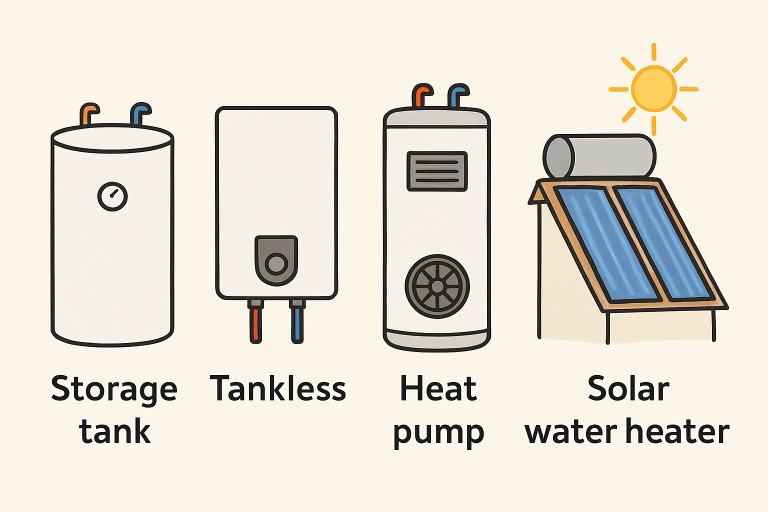
Storage tank water heaters are the traditional units found in many homes and feature an insulated tank where hot water is stored and kept ready for use. These are typically reliable but may cause higher utility bills due to energy loss from heating stored water.
Tankless (on-demand) water heaters only heat water as needed. Since there’s no standby loss, they’re more efficient for many households and supply continuous hot water, which is ideal if space is limited or you want to minimize energy consumption.
Homeowners also increasingly turn to heat pump (hybrid) water heaters, which use ambient air to transfer heat to the water. This technology can be two to three times more energy-efficient than conventional electric water heaters.
For those looking for renewable options, solar water heaters use solar panels to convert sunlight into heat, dramatically lowering energy bills. However, effectiveness depends on home location and roof orientation.
Fuel Types and Availability
The fuel you select will directly impact your system’s performance, operating costs, and carbon footprint:
- Electric-powered water heaters are widely accessible and simple to install. While generally affordable upfront, they may cost more to operate long-term, depending on local energy prices.
- Natural gas units often offer a lower operating cost in areas with gas service, but need existing gas lines for installation.
- Propane is suitable where natural gas isn’t available, offering similar performance but potentially higher prices.
- If your property receives adequate sunlight, solar energy is an eco-friendly, sustainable option. Consider it for long-term savings and environmental benefits.
Energy Efficiency
Prioritizing energy efficiency when selecting a water heater can yield substantial savings over the unit’s lifespan. Look for models with high Uniform Energy Factor (UEF) ratings—a higher UEF indicates better performance and less waste. The U.S. Department of Energy offers comprehensive resources on evaluating energy efficiency, which is especially relevant given modern efficiency standards and potential savings. Heat pump water heaters, for example, are renowned for their low electricity usage compared to conventional electric models.
Sizing and Capacity
Correctly sizing your water heater ensures you always have enough hot water without wasting energy. Standard tank capacities range from 30 to 80 gallons. Tankless units are sized by flow rates (gallons per minute or GPM). For accurate sizing, factor in the number of people, bathrooms, and high-demand appliances used concurrently—proper assessment guarantees comfort and efficiency.
Installation and Maintenance
Professional installation is crucial for meeting local codes, optimizing efficiency, and ensuring safety, especially for gas and hybrid units. Simple routine maintenance like flushing tanks to remove sediment and inspecting pressure relief valves can help extend your water heater’s lifespan and performance. The Consumer Reports Water Heater Guide provides additional maintenance tips and insights for homeowners looking to keep their systems running smoothly.
Cost Considerations
When budgeting, consider the unit’s purchase price and long-term operating costs. Energy-efficient and innovative models may require a higher upfront investment, but their low operating costs and eligibility for rebates or tax incentives can save money over time. Additionally, factor in installation and any upgrades needed for safe operation.
Environmental Impact
Choosing an energy-efficient or renewable water heater helps reduce both energy consumption and household greenhouse gas emissions. Solar and heat-pump systems stand out for their positive environmental impact, offering sustainable solutions tailored to the needs of eco-conscious families.
Special Features and Technology
- Innovative technology lets you monitor, schedule, and adjust water heating remotely from a mobile app, offering unprecedented convenience and efficiency.
- Anti-scale and self-cleaning features combat mineral buildup, which is particularly advantageous in areas prone to hard water and thus improves system longevity.
- Advanced safety features such as scald prevention, lock-out modes, and digital thermostats make modern models safer and more user-friendly.
With proper research and consideration of these factors, selecting the ideal water heater for your home becomes a straightforward and rewarding investment, promising years of reliable, efficient, and cost-effective performance.
Apart from that if you want to know about “Top Signs Your Home May Have a Plumbing Emergency” then please visit our Home Improvement Category.