

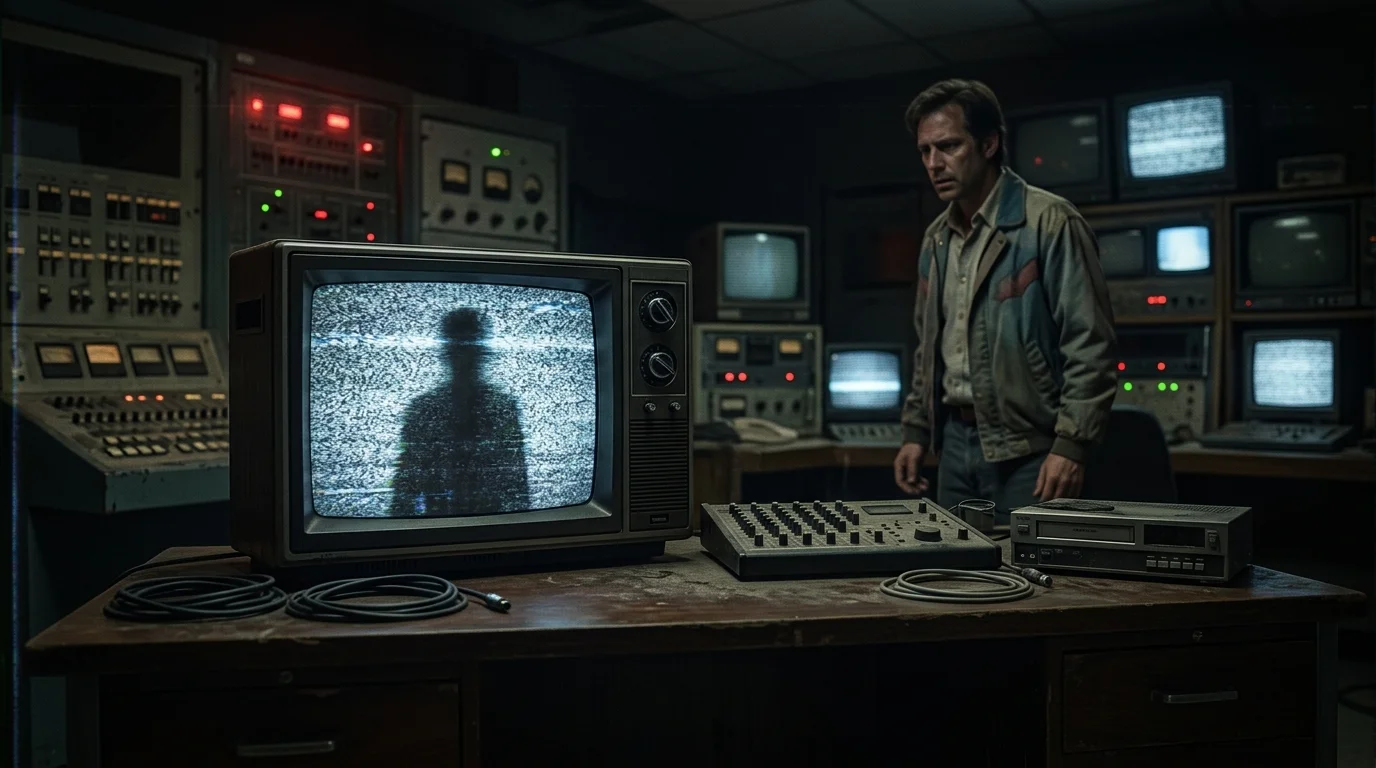
If an emergency broadcast suddenly gives impossible instructions, you may be watching what is analog horror in action. This internet horror style makes fictional events resemble forgotten television recordings, VHS tapes, training films, or public service announcements. Instead of relying mainly on monsters or jump scares, it makes familiar media feel unsafe.
Direct answer: Analog horror is a horror subgenre that imitates old television broadcasts, VHS recordings, emergency alerts, instructional films, and similar media. Its stories often use static, distorted sound, incomplete information, and unsettling messages. The goal is to make fictional footage feel like disturbing evidence someone discovered rather than a traditional movie.
Key Facts at a Glance
| Topic | Quick explanation |
|---|---|
| Main format | Fake broadcasts, VHS recordings, alerts, training tapes, and archived footage |
| Common look | Static, tracking errors, grain, faded colors, and old television graphics |
| Main source of fear | Uncertainty, distorted information, missing context, and familiar systems behaving strangely |
| Popular platform | YouTube and other video-sharing platforms |
| Related genres | Found footage, internet horror, creepypasta, ARGs, and psychological horror |
| Well-known examples | Local58, The Mandela Catalogue, Gemini Home Entertainment, and The Walten Files |
| Typical era imitated | Late twentieth-century television and recording technology |
| Real VHS required? | No. Creators can reproduce the look digitally |
Key Takeaways
- The genre turns trustworthy media formats into sources of anxiety.
- VHS static and dated graphics support the story instead of providing decoration alone.
- Viewers often receive fragments and must determine what happened themselves.
- Many important series developed through independent online video communities.
- The format overlaps with found footage, creepypasta, and alternate reality storytelling.
- Beginners can understand the genre without knowing old recording technology.
What Is Analog Horror and What Makes It Different?
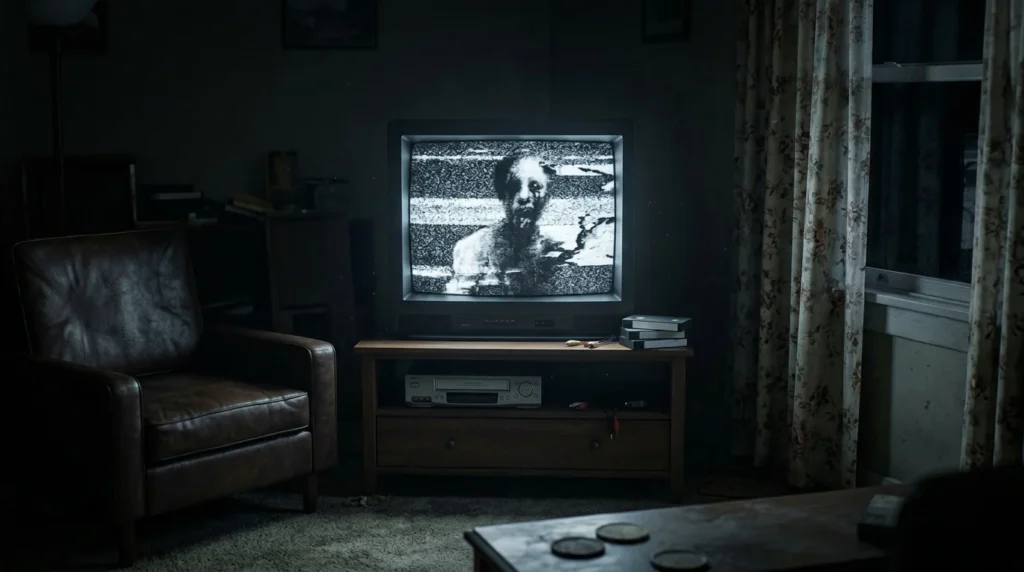
What is analog horror as a storytelling method? It presents fictional horror through media that appears recorded, broadcast, archived, damaged, or recovered. The recording often becomes part of the story itself.
A normal horror movie usually shows events through conventional scenes and characters. This format may instead show a weather warning, security tape, school video, or government announcement. The viewer learns about danger through the material left behind.
That difference changes how fear works. You rarely receive every answer from a narrator or central character. Missing information forces your imagination to fill the gaps.
Researchers and film writers generally describe the genre as a form of internet horror rooted in late twentieth-century media aesthetics. The American spelling “analog” also reflects the term commonly used by U.S.-based audiences and creators. Modern creators usually reproduce these effects with digital editing rather than outdated cameras.
Why Does Old Television Look So Creepy?
Old recordings have limitations that modern viewers no longer expect. Images can blur, audio can drop out, and colors can shift unexpectedly. A creator can turn those imperfections into storytelling tools.
Static may hide a figure for only a moment. Distorted audio may make an important sentence difficult to understand. Tracking errors can create uncertainty about whether something frightening appeared at all.
The strongest examples also exploit familiar authority. Emergency alerts, weather reports, instructional videos, and station announcements normally provide useful information. Horror begins when those trusted formats start delivering impossible or threatening messages.
This technique creates tension without constant violence. Your attention moves toward small changes in text, sound, timing, and background images. That slow observation makes the viewer participate in creating the fear.
The Most Common Features of the Genre
Several visual techniques appear frequently, but no single effect defines the entire style. Creators may use scan lines, artificial tape damage, low-resolution images, CRT distortion, old fonts, or narrow television framing. Sound design often includes buzzing, clipping, silence, or warped voices.
The narrative structure matters even more than the visual filter. Information usually arrives through pieces rather than straightforward scenes. One recording may explain a rule while another reveals why that rule exists.
Ordinary institutions also appear frequently. Television stations, schools, companies, research facilities, governments, or local authorities may seem to understand part of the threat. Their calm presentation makes the disturbing information feel strangely official.
Good projects resist explaining everything immediately. They give viewers enough evidence to develop theories without answering every mystery. That balance can make a short fictional broadcast feel larger than its running time.
Where Did Analog Horror Come From?
The genre has older influences, including found-footage films and fictional broadcasts. Movies such as The Blair Witch Project demonstrated how recorded material could make invented events feel unusually immediate. Earlier internet fiction also encouraged audiences to treat mysterious media as clues.
The modern online form developed more clearly during the 2010s. Kris Straub’s Local58 became especially influential through fictional broadcasts from a television station that should not exist. Media scholarship also identifies the series as an important early work in establishing the modern style.
YouTube proved especially suitable for this storytelling. Independent creators could publish short fragments without building a traditional feature film. Viewers could then discuss details, organize timelines, and exchange theories between uploads.
The format later expanded through projects such as Gemini Home Entertainment, The Mandela Catalogue, and The Walten Files. Each uses retro-media techniques differently rather than following one fixed formula. Their success helped turn a niche internet style into a recognizable horror category.
Famous Examples Beginners Can Watch
| Series | What makes it notable | Good starting point for |
|---|---|---|
| Local58 | Disturbing fictional television broadcasts and emergency messages | Understanding the basic format |
| The Mandela Catalogue | Doppelgängers, religious imagery, and unsettling instructional media | Psychological and supernatural horror |
| Gemini Home Entertainment | Educational-style tapes hiding a larger cosmic threat | Slow mystery and worldbuilding |
| The Walten Files | Corporate recordings, animation, missing people, and disturbing characters | Character-focused mystery |
| The Backrooms projects | Recovered-camera aesthetics and impossible spaces | Found-footage fans |
Local58 is an especially useful starting point because individual videos can stand alone. Its television-station format clearly demonstrates how ordinary broadcasts become threatening. You can understand the basic appeal without following a complicated timeline first.
Viewers who prefer supernatural stories may enjoy The Mandela Catalogue. It builds fear around entities that imitate humans and around instructions that cannot be trusted. The series also shows how modern digital production can imitate old media convincingly.
People interested in wider horror entertainment can also explore Mindspaper’s coverage of Emily Blunt’s movies. Her work in A Quiet Place shows another approach to tension built through limited sensory information. The film is not part of this internet subgenre, but the comparison helps show how withholding information increases suspense.
Analog Horror vs. Found Footage
Found footage usually asks viewers to believe characters recorded events while experiencing them. The camera may belong to filmmakers, investigators, security systems, or ordinary people. The story often follows those recordings relatively directly.
Retro-broadcast horror can feel more institutional and fragmented. A recording might come from a television station rather than a frightened character. Several unrelated media artifacts may slowly reveal the same threat.
The two categories frequently overlap. A project can contain handheld footage, surveillance recordings, and fake television broadcasts together. Labels matter less than understanding how each format controls information.
Fans of supernatural television may recognize similar mystery techniques in shows such as Stranger Things. Mindspaper’s guide to Madelyn Cline’s movies and television appearances includes her early appearance in that series. Traditional television tells its story differently, but both styles reward attention to unexplained details.
Is It the Same as Creepypasta?
Creepypasta originally refers to internet horror stories copied and shared across online communities. Most classic examples are primarily text-based, although many later stories expanded into images and video. Their effectiveness often depends on presenting fiction with an uncertain or supposedly true origin.
Retro-media projects are usually more dependent on audiovisual presentation. A distorted face, broken broadcast, or strange voice can carry information that plain text cannot reproduce. The recording format itself becomes part of the narrative.
Both forms grew through participatory internet culture. Fans discuss hidden meanings, build theories, and share discoveries with other viewers. This community activity can extend a short story far beyond its original upload.
Why Is Analog Horror So Popular Online?
The format works well with online viewing habits. A creator can publish one short recording without explaining an entire fictional universe. Each new upload can then add another part of the mystery.
The genre also encourages discussion. Viewers pause frames, analyze background details, compare dates, and interpret coded messages. That behavior turns watching into a form of investigation.
Production can also be accessible for independent filmmakers. A compelling project does not require expensive locations or large casts. Strong editing, sound design, typography, and storytelling can carry a convincing episode.
Younger audiences also encounter horror through platforms where short-form video already feels natural. Netflix’s KPop Demon Hunters uses a different entertainment format, but Mindspaper’s Jinu character guide shows how online audiences actively discuss supernatural storytelling and hidden character details. That same theory-driven behavior helps internet horror communities grow.
Why the Genre Can Feel More Disturbing Than Jump Scares
Jump scares create a sharp physical reaction. They surprise viewers through sudden movement, sound, or visual change. The fear usually peaks quickly and then drops.
This style often uses anticipation instead. You may stare at an ordinary image while expecting something to change. The delay can become more uncomfortable than an immediate reveal.
The recording also creates emotional distance. You may feel that a terrible event already happened before you found the evidence. That idea produces dread because the viewer cannot intervene.
The best examples also challenge systems people normally trust. A television emergency warning should provide safety instructions. When it becomes unreliable, the viewer loses both information and reassurance.
Can Someone Make Analog Horror Without Real Analog Equipment?
Yes. Actual VHS cameras, cassette systems, or CRT televisions are optional. Modern editing programs can reproduce static, tape errors, color bleeding, low resolution, and broadcast graphics.
The more difficult task is making those effects meaningful. Random glitches rarely create lasting fear without a story behind them. Each distortion should reveal, hide, or complicate information.
Creators should also understand the media they imitate. A convincing local television bulletin should resemble how that material was structured during its supposed period. Small historical details can make the fictional recording feel more believable.
Is Analog Horror Appropriate for Kids?
The genre does not have one universal age rating. Individual projects vary greatly in violence, disturbing imagery, suicide references, religious themes, and psychological intensity. Parents should evaluate specific series rather than treating the category as automatically mild.
A video may contain little visible gore but still be frightening. Distorted faces, threatening instructions, disappearance themes, and implied deaths can affect younger viewers strongly. The slow presentation can also make disturbing ideas linger after the video ends.
Parents can preview episodes or read content descriptions before allowing younger viewers to watch. Older teenagers may handle many projects comfortably, but maturity differs between individuals. Familiarity with horror should guide the decision more than the VHS appearance.
Frequently Asked Questions
What is analog horror in simple terms?
What is analog horror in simple language? It is scary fiction made to resemble old recordings, television broadcasts, warning messages, or training videos. The media looks familiar, but something inside it has gone dangerously wrong.
Does the genre always use VHS tapes?
No. VHS is common, but creators can imitate television signals, audio recordings, security cameras, educational films, or other dated media. The important feature is how the chosen format shapes the story.
Digital files can also reproduce these effects. The project does not need to originate on physical tape. Storytelling matters more than the equipment.
Is The Mandela Catalogue part of the genre?
Yes, it is widely discussed as a major modern example. The series combines instructional material, altered imagery, doppelgängers, and supernatural threats. Its approach helped introduce the format to a larger online audience.
It also demonstrates how the style can evolve beyond simple VHS effects. Digital imagery remains central to its presentation. The fictional media still controls how viewers receive information.
Is The Backrooms analog horror?
Some Backrooms projects overlap strongly with the style, especially those using recovered-camera presentation. Others fit found footage or internet horror more comfortably. The broader concept is not limited to one genre label.
Kane Pixels’ popular video interpretation uses old-camera aesthetics and fragmented evidence. That makes comparison with retro-media horror reasonable. Still, individual Backrooms works can use different storytelling approaches.
Why do creators hide information?
Uncertainty gives viewers room to imagine possibilities that a direct explanation would remove. Hidden information also encourages close viewing and theory building. A tiny clue can change how an earlier scene feels.
The technique must still provide enough evidence to remain engaging. Pure confusion rarely creates strong suspense for long. Effective mysteries give the audience something meaningful to assemble.
Where to Start
Start with Local58 if you want to understand the core idea quickly. Then try Gemini Home Entertainment for slow worldbuilding or The Mandela Catalogue for supernatural dread. Watching several approaches shows that the genre is bigger than a VHS filter.
Pay attention to how each creator controls information. Notice when text appears, when audio disappears, and when ordinary instructions become suspicious. Those choices explain why the style can create tension with surprisingly little on screen.
Mindspaper readers can continue exploring horror, supernatural entertainment, and screen culture through the site’s Entertainment coverage. Comparing different storytelling methods makes it easier to see why certain horror techniques work. It also shows why unsettling old broadcasts remain such a powerful internet storytelling format.
—–