


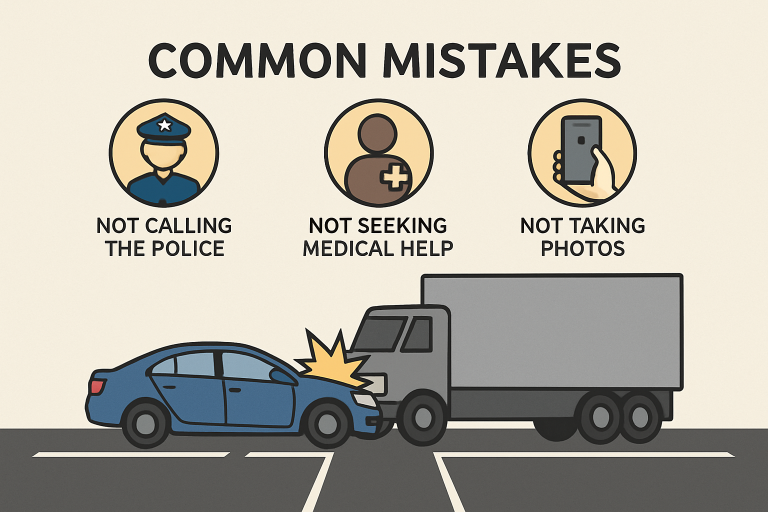
Key Takeaways
- Seek immediate medical attention, even if injuries seem minor, to protect your health and strengthen your legal case.
- Always report the accident to law enforcement and avoid admitting fault or making speculative statements at the scene.
- Document evidence thoroughly, including photos, witness information, and environmental details.
- Do not accept early settlement offers without legal guidance to ensure full compensation for all damages.
- Avoid posting about the accident on social media and consult a qualified Houston truck accident lawyer promptly to safeguard your rights.
Introduction
Commercial truck accidents can unfold in a matter of seconds, yet the consequences can change a victim’s life forever. In the immediate aftermath, it is easy to feel overwhelmed by confusion, stress, and concern over medical bills and damages. Many individuals do not realize that the decisions made in these early moments can have a lasting impact on their health, legal rights, and financial recovery. Connecting with an experienced Houston truck accident lawyer early can be instrumental in safeguarding your interests and avoiding costly mistakes.
Failing to take appropriate steps can inadvertently harm your case and reduce the compensation you deserve. This article details the most common missteps victims make after truck accidents to help you navigate this difficult time with greater confidence. These insights can help ensure your physical well-being and your ability to seek justice remain protected.
Truck accidents present unique challenges, with large vehicles, severe injuries, and multiple parties involved. Legal processes are often more complicated than standard car crashes, and insurance companies are quick to act. By understanding what not to do, victims can take proactive measures to avoid common pitfalls that may arise before, during, and after the claims process.
Equally important is recognizing that insurance companies and opposing legal teams may not always have your best interests at heart. Knowledge is power, and knowing how to respond to a truck accident is essential for both immediate safety and long-term recovery.
Failing to Seek Immediate Medical Attention
Many victims underestimate their injuries in the shock following a truck accident, assuming initial pain or soreness will fade on its own. Unfortunately, some injuries, including internal bleeding, traumatic brain injuries, or spinal injuries, may not show symptoms until hours or days later. Seeking immediate medical evaluation is critical, both for your safety and as a foundation for your legal case. Medical records from a prompt evaluation create a crucial link between the accident and your injuries, which can be powerful evidence in insurance negotiations and court proceedings.
If you wait too long, insurance companies may argue your injuries were unrelated to the crash or worsened by your lack of care. Early medical attention ensures you receive appropriate treatment, and it supports your claim for damages throughout the legal process. It is not only about documentation but also about protecting your well-being in the uncertain aftermath of a traumatic event.
Not Reporting the Accident to Law Enforcement
Some individuals might feel tempted to resolve the matter privately, especially if there is minimal visible damage or if both drivers appear cooperative. However, failing to alert the police and secure an official accident report is a major mistake. A police report offers an objective, third-party account of the events and often serves as the first document insurance companies and lawyers will review when evaluating your case.
This report contains vital information about the accident scene, vehicle positioning, weather, and road conditions, initial witness statements, and any citations issued. Without it, you may lack crucial evidence that can make the difference between a successful claim and a denied one. Law enforcement involvement can also deter the other party from changing their story later or disputing the basic facts of the incident. According to the National Highway Traffic Safety Administration, timely reporting is a critical step in holding at-fault parties accountable and ensuring public safety.
Admitting Fault or Making Incriminating Statements
It is natural to feel apologetic or anxious after a collision, but making statements that could be interpreted as admitting fault can jeopardize your case. Even seemingly harmless comments, like saying “I’m sorry,” could later be used by insurance adjusters or attorneys to allocate blame. At the accident scene, it is crucial to exchange information and answer police questions truthfully, but do not speculate about the cause or accept liability.
After the incident, let your lawyer handle communications with other parties and insurers. Insurance companies often seek recorded statements to find inconsistencies or admissions that reduce their payout. Politely decline to speak to the other side’s insurer until you have sought legal advice and understand your rights fully.
Accepting Early Settlement Offers
Insurance companies typically act quickly to close claims, sometimes presenting victims with early settlement offers that may seem generous at first glance. However, these offers rarely account for the full spectrum of your losses, including ongoing medical treatment, rehabilitation, lost future earnings, and emotional suffering. Accepting a settlement too soon usually means waiving your right to pursue additional compensation once the true extent of your damages becomes known.
Before agreeing to any settlement, consult a knowledgeable attorney who can accurately assess your claim and calculate fair compensation. A thorough evaluation of medical prognosis, work limitations, and long-term consequences is needed to avoid financial hardship later.
Not Gathering Evidence at the Scene
If your injuries allow, collecting evidence at the accident scene can significantly strengthen your case. Take photographs of vehicle positions, visible damages, skid marks, traffic signs, and immediate injuries. Obtain contact information for witnesses who may have seen the collision unfold. Make written notes about environmental conditions, traffic patterns, and any statements made by the truck driver or others involved.
This immediate documentation preserves valuable information that may fade with time or be lost altogether. It also gives your attorney tangible proof to refute conflicting accounts or defend against disputes during the claims and litigation process.
Posting About the Accident on Social Media
With the ubiquity of social media, many accident victims feel compelled to share updates or photographs about their health and recovery. However, these posts can work against you. Insurance companies and defense attorneys actively monitor social media accounts for evidence to undermine or deny your claims. Even innocent posts, such as photos taken at social events, can be misconstrued and used to suggest injuries are not as serious as stated.
It is best to avoid posting anything related to an accident while your case is pending. Set social accounts to private, and caution friends and family not to discuss your situation online until litigation or settlement is complete.
Delaying Legal Consultation
Truck accident claims are far more complex than routine car crash cases. They may involve several responsible parties, including drivers, trucking companies, maintenance contractors, and manufacturers. Strict legal deadlines (statutes of limitations) and complex regulations from agencies such as the Federal Motor Carrier Safety Administration also apply. Waiting too long to consult with an attorney can result in missed deadlines, lost evidence, and weakened claims.
Speak to a qualified truck accident lawyer as soon as possible after your accident. Legal counsel can manage communication, thoroughly investigate your case, preserve evidence, and fight for the compensation you deserve. Early assistance is critical to navigating the complexities of liability and protecting your rights throughout the process.
Final Thoughts
Knowing what mistakes to avoid after a commercial truck accident can make a significant difference in recovery and justice. Prioritize immediate medical attention, carefully document the scene, withhold potentially incriminating statements, and avoid social media discussions. Engage an experienced attorney early to maximize your chances of a fair outcome. Taking these steps empowers you to move forward from a traumatic experience with stronger legal, financial, and personal security.
Apart from that, if you want to know more about What Sets Navi Auto Transport Apart from Montway, Sherpa, and Other Competitors then visit our Automobile category.