


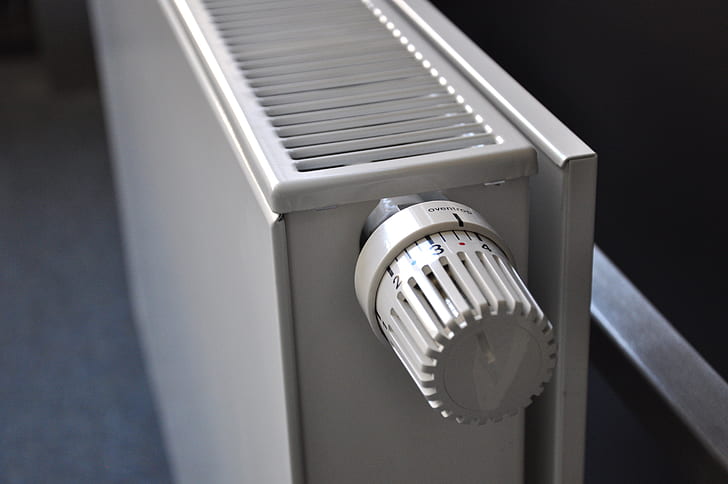
When it comes to home heating, most people don’t really think beyond the thermostat. Either the room feels warm, or it doesn’t. The fine-tuned mechanics behind that comfort—how quickly heat fills a space, how evenly it spreads, and how long it lingers—tend to go unnoticed. That is, until you find yourself in a room that’s toasty by the window but freezing by the door.
Central heating systems are only as good as the components that make them up, and radiators sit at the heart of that setup. While they may not command the same design attention as, say, lighting or furniture, the type of radiator you choose can significantly alter the comfort and efficiency of your living environment.
Why radiator design still matters
It’s tempting to treat radiators as generic hardware: pick one that fits the wall, plug it in (or rather, plumb it in), and move on. But there’s nuance in this quiet corner of home design. The structure of a radiator, its size, shape, and most importantly, the number of panels, affects not just how it looks, but how it functions.
Most UK homes still rely on single-panel radiators, and for smaller or well-insulated spaces, they may suffice. But these days, with larger open-plan layouts and variable insulation, the need for consistent heat distribution becomes more pressing. That’s where dual-panel options come into play.
The efficiency edge of dual-panel radiators
Enterdual-panel radiators for consistent warmth. Unlike single-panel units, these radiators contain two panels set slightly apart, with convector fins positioned between them. The result is a greater surface area that heats up faster and releases warmth more evenly into the room.
This isn’t just a minor tweak. With two active surfaces instead of one, heat disperses more broadly, meaning fewer cold zones and a steadier overall temperature. For households juggling different room uses, such as a home office that needs to stay warm during working hours and a living room that only comes alive in the evening, this kind of responsive performance becomes more than a luxury. It’s a way of maintaining comfort without cranking up the boiler or layering yourself in wool from November through March.
There’s also a bit of physics at play. Heat naturally rises, but with dual-panel designs, convector fins pull cooler air upward more efficiently. This turns the radiator into a quiet engine for air circulation. The room warms not just faster, but more uniformly. It’s not an exaggeration to say that your perception of warmth changes when you eliminate those jarring temperature differences between one end of the room and the other.
Real-world implications for households
Let’s set aside the jargon and think practically. Picture two homes of similar size and layout, both with central heating. One uses standard single-panel radiators, the other opts for dual-panel models in its most-used rooms. Over the course of a winter, the second home is likely to enjoy quicker warm-up times, fewer complaints about cold spots, and possibly even lower energy bills, provided the system is used smartly.
That doesn’t mean dual-panel radiators are a silver bullet. They won’t solve issues like poor insulation or a badly sized boiler. But when paired with a thoughtful approach to heating, they can significantly elevate the day-to-day experience. It’s a bit like switching from a regular kettle to one with rapid boil. You don’t realise what you were putting up with until you make the change.
Aesthetic and space considerations
One of the most common objections to dual-panel radiators is size. They’re bulkier than single-panel versions, which can be a dealbreaker in tighter spaces. But modern designs have come a long way. Many now feature slimline profiles that blend more easily into room layouts without sacrificing efficiency. Some households even use them as focal points, particularly when paired with contemporary finishes or vertical orientations.
Installation is generally straightforward if you’re replacing an old radiator, although it’s always worth double-checking wall brackets and pipe alignments. And if aesthetics are really top of mind, there are customisable covers and finishes that can turn even the most industrial-looking unit into something far more discreet.
Conclusion: small changes, big results
Swapping out your radiators isn’t exactly a thrilling home renovation project. It’s not going to impress your guests the way a new kitchen splashback might. But when it comes to lived experience, how warm your toes are on a January morning, how quickly your lounge heats up after work, it might be one of the most impactful upgrades you can make.
Dual-panel radiators offer a small but meaningful step toward greater comfort and energy efficiency. For households willing to look beyond surface fixes, they present a quietly effective solution. One that improves not only the warmth of a room, but the feel of the entire home.
In addition, if you are interested in learning more about “Temporary Window Coverings visit our “Home Improvement” category.