



North American soccer is no longer a quiet corner of the global game. Today, it has evolved into the home of one of the most passionate, lucrative, and fiercely contested rivalries in sports: MLS vs Liga MX. For decades, this cross-border rivalry was defined by a massive gap in quality. Mexican clubs treated continental tournaments as their personal trophy playgrounds, while American and Canadian teams were viewed as ambitious but deeply flawed underdogs.
However, with major structural changes, massive financial injections, and the emergence of mega-tournaments like the expanded Leagues Cup, the tectonic plates of CONCACAF soccer have shifted permanently. What was once a rivalry largely dominated by Mexican clubs has transformed into a much more balanced and fiercely contested battle.
MLS organizations now benefit from world-class training facilities, modern soccer-specific stadiums, advanced analytics, growing youth academies, and the ability to attract internationally recognized stars. Meanwhile, Liga MX continues to rely on its rich football heritage, passionate fan culture, technical excellence, and decades of continental success to maintain its status as a regional powerhouse.
This comprehensive guide breaks down the history, cultural differences, core statistics, and modern performance metrics in the MLS Vs Liga MX debate to answer the ultimate question: Which league truly dominates modern North American football? Furthermore, it explores how both competitions are shaping the future of soccer in the region and why their rivalry has become one of the most fascinating stories in the global game today.
MLS Vs Liga MX Key Facts and Comparisons
| MLS Vs Liga MX Topic | Key Detail |
|---|---|
| Founded | MLS: 1993 (played in 1996), Liga MX: 1943 |
| Countries Represented | MLS: USA & Canada |
| Football Tradition | Liga MX has a longer football history |
| League Structure | MLS uses a franchise model |
| Promotion/Relegation | Historically associated with Liga MX |
| Salary Cap | MLS operates with a salary cap |
| Spending Flexibility | Liga MX clubs have greater flexibility |
| Global Stars | MLS attracts more international superstars |
| Domestic Talent | Liga MX develops strong local players |
| Fan Culture | Liga MX is known for passionate supporters |
| Stadium Infrastructure | MLS features modern soccer-specific stadiums |
| Technical Quality | Liga MX emphasizes technical football |
| Physical Intensity | MLS focuses on athletic and fast-paced play |
| Youth Academies | MLS has heavily invested in academies |
| Regional Influence | Liga MX has dominated CONCACAF historically |
| Commercial Growth | MLS has experienced rapid expansion |
| Media Exposure | MLS enjoys growing global coverage |
| Club Valuations | MLS club values continue to rise |
| Transfer Activity | Both leagues are active in player transfers |
| Leagues Cup Impact | Increased MLS and Liga MX competition |
| International Recognition | MLS has improved significantly worldwide |
| Match Atmosphere | Liga MX stadiums offer intense environments |
| Competitive Balance | MLS promotes parity through league rules |
| Historical Dominance | Liga MX leads in continental success |
| Future Outlook | Both leagues are expected to keep growing |
Executive Overview: The Contemporary Battleground in MLS Vs Liga MX
To understand the rivalry between MLS vs Liga MX, we must look at how both leagues are built. They represent two entirely different philosophies of how a football ecosystem should function.
MLS: The Financial and Commercial Powerhouse
- Structure: Single-entity system with no promotion or relegation. Closed franchise model focusing on long-term stadium infrastructure and commercial security.
- The Vibe: A fast-evolving, high-tech, and entertainment-first spectacle. Driven by Designated Player rules (allowing stars like Lionel Messi to light up the league) and massive broadcast deals like the Apple TV partnership.
Liga MX: The Deep-Rooted Cultural Titan
- Structure: Traditional club-based ecosystem. Though promotion and relegation have been temporarily suspended, it functions on the unique Apertura (Opening) and Clausura (Closing) short-season format.
- The Vibe: A chaotic, high-pressure, emotionally charged football environment. It relies on decades of deep tribal loyalty, technically elite domestic academies, and terrifying home-field advantages at high altitudes like Estadio Azteca.
The Historical Foundation: From Roots to Rivalry
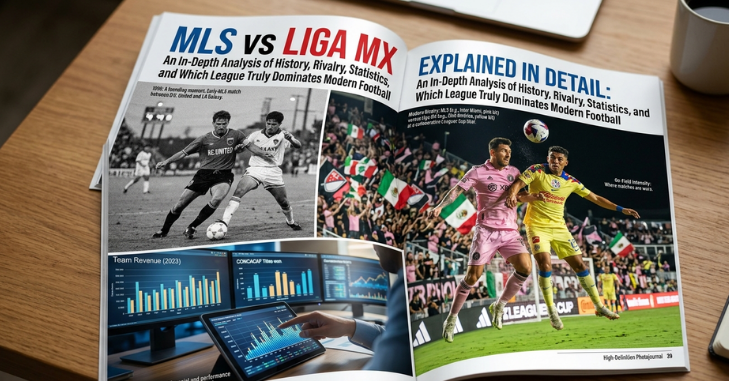
To appreciate where we are today in MLS Vs Liga MX, we must look back at how both leagues began. Liga MX has roots dating back to 1902 and professionalized in 1943. By the time Major League Soccer kicked off in 1996, Mexican clubs already possessed over half a century of deep-rooted football culture. Teams like Club América, Chivas de Guadalajara, and Cruz Azul were institutions passed down through generations.
MLS, on the other hand, was built from scratch as part of the United States’ promise to FIFA after hosting the 1994 World Cup. Its early days were clunky, featuring strange countdown clocks, shootout tiebreakers from the 35-yard line, and massive empty American football stadiums.
For the first 15 years of MLS’s existence, the rivalry between MLS vs Liga MX was incredibly one-sided. When MLS clubs traveled south of the border for the Concacaf Champions Cup (formerly the Champions League), they faced brutal heat, blinding smog, crushing altitudes, and vastly superior technical play. Mexican teams routinely fielded reserve squads against full-strength MLS teams and still walked away with comfortable victories.
Financial Muscle vs. Deep Soccer Culture
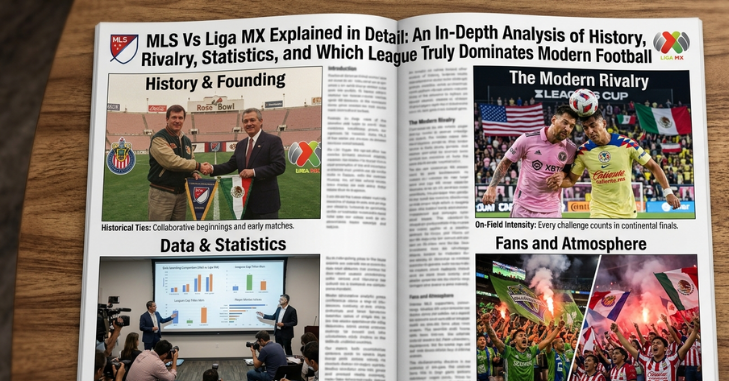
The modern era has complicated this dynamic. MLS has used its economic stability to close the competitive gap, setting up a fascinating contrast.
Side-by-Side Identity Comparison
MLS Landscape
- Targeted Growth: MLS focuses heavily on building custom, soccer-specific stadiums in downtown urban cores, ensuring long-term growth in financial assets.
- Global Scouting: The league has successfully transitioned away from being a “retirement home” for aging European stars. It is now a high-value launchpad for young South American talents and top-tier elite attackers.
- The Roster Ceiling: While the top 3-4 players on an MLS roster can be world-class, strict salary caps mean the bottom half of the roster consists of budget players, creating a noticeable depth issue.
Liga MX Landscape
- Squad Depth: Free from salary caps, top Mexican clubs like Monterrey, Tigres UANL, and Club América can pay massive wages across their entire 25-man roster. Their bench players could easily start for most MLS teams.
- Domestic Passion: Soccer is the undisputed king of media and culture in Mexico. Television ratings and fan engagement are consistently massive, driving huge domestic sponsorships.
- Market Insularity: Liga MX excels at retaining top Mexican and South American talent by paying massive salaries, though this sometimes discourages players from testing themselves in Europe.
MLS Vs Liga MX Statistical Comparison Overview
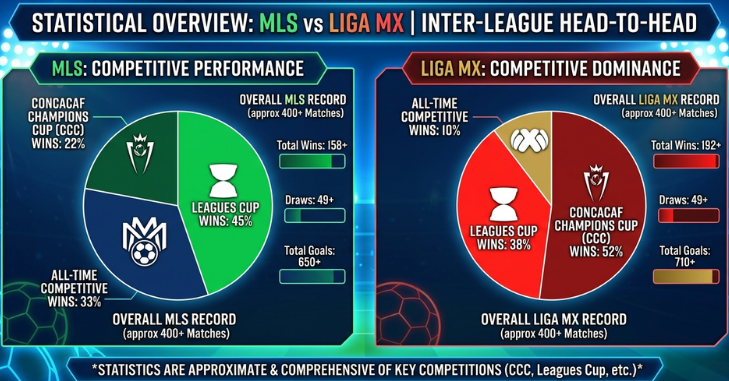
The following pie chart provides a visual snapshot of the current competitive balance between MLS and Liga MX. While Liga MX maintains a slight edge due to its historical success, continental trophies, and long-established football culture, MLS has rapidly narrowed the gap through financial growth, infrastructure investment, and increased international recognition.
The comparison highlights how close the rivalry has become in recent years. Rather than showing a dominant leader, the chart illustrates a nearly even split, reflecting the growing competitiveness of MLS and the continued strength of Liga MX in North American football.
The Cold Hard Data: Head-to-Head Statistics
Let’s step away from opinions and look directly at what the scoreboard tells us across all competitive inter-league match records in the MLS Vs Liga MX rivalry.
All-Time Match Outcome Distribution
- Liga MX Wins: █ █ █ █ █ █ █ █ █ █ (48.1%)
- MLS Wins: █ █ █ █ █ █ █ █ ░ ░ (39.6%)
- Draws: █ █ ░ ░ ░ ░ ░ ░ ░ ░ (12.3%)
When analyzing nearly 400 competitive meetings across the Concacaf Champions Cup, Leagues Cup, Superliga, and Campeones Cup, Mexican clubs hold a historical advantage, though MLS is steadily chipping away at that lead.
Concacaf Champions Cup Knockout Era (Since 2008)

- Liga MX Match Wins: █ █ █ █ █ █ █ █ █ █ (52.1%)
- Draws: █ █ █ █ █ ░ ░ ░ ░ ░ (25.8%)
- MLS Match Wins: █ █ █ ░ ░ ░ ░ ░ ░ ░ (22.1%)
The premier continental tournament remains Liga MX’s ultimate stronghold. The grueling home-and-away format exposes MLS clubs’ squad depth issues when they are forced to travel to Mexico.
Champions Cup Continental Titles
- Liga MX Champions: █ █ █ █ █ █ █ █ █ ░ (85.7% of modern matchups)
- MLS Champions: █ ░ ░ ░ ░ ░ ░ ░ ░ ░ (14.3% of modern matchups)
Since the tournament structure modernized, Liga MX sides have ruthlessly dominated the finals, with clubs like Monterrey, Pachuca, Club América, and Tigres regularly taking the crown. The Seattle Sounders (2022) stand as the lone modern MLS outlier.
Continental Dominance vs. Commercial Growth
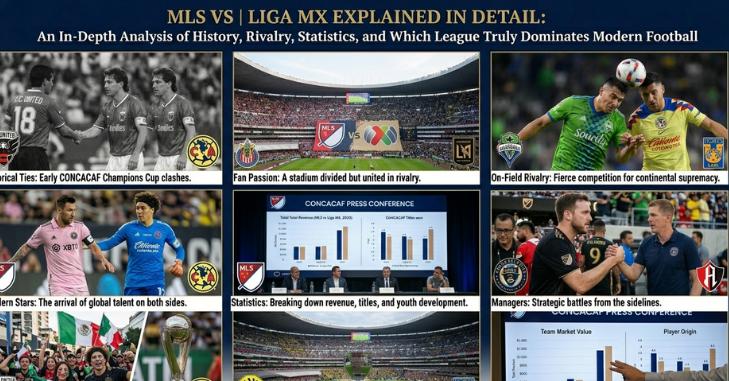
| Pillar | Major League Soccer (MLS) | Liga MX | The Verdict |
| Continental Play | Struggles in intense, two-legged away ties south of the border. | Dominates traditional home-and-away series with superior squad depth. | 🇲🇽 Liga MX Wins |
| Tournament Play | Excels on home soil during single-elimination summer formats. | Challenged logistically by constant cross-border travel schedules. | 🇺🇸 MLS Wins |
| Financial Growth | Skyrocketing valuations, global media deals, and massive star appeal. | High domestic passion but slower international commercial expansion. | 🇺🇸 MLS Wins |
The Changing Paradigm of Modern Football
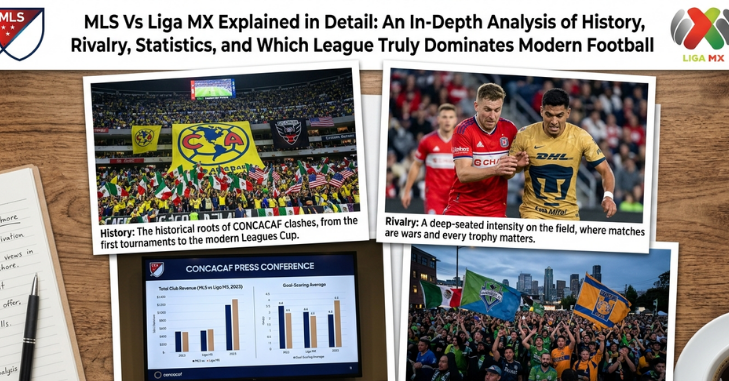
The old rulebook of this rivalry is officially out the window. What used to be a predictable story of Mexican dominance has evolved into a highly nuanced battle. The creation of the expanded Leagues Cup has forced both leagues into a constant state of comparison under MLS Vs Liga MX. However, this tournament format has drawn criticism from Mexican managers and fans, who point out that playing every match on U.S. soil gives MLS clubs a massive logistical and psychological advantage.
Traveling constantly across time zones disrupts Liga MX squads, whereas MLS sides stay comfortably at home. Yet, when MLS clubs travel south for the Concacaf Champions Cup, the reverse remains true. The immense atmospheric pressure from Mexican fans, the staggering altitude, and the high-pressing intensity of Liga MX tactics still leave MLS sides looking completely overwhelmed.
Conclusion
So, who truly rules modern North American football? The honest answer depends entirely on what metric you value most in the MLS Vs Liga MX debate. If football dominance is defined strictly by on-pitch execution, tactical quality, roster depth, and continental trophies, Liga MX still wears the crown. Mexican clubs know how to win matches when it matters most, and their multi-layered rosters hold up better under pressure.
However, if dominance is measured by financial growth, global media presence, infrastructure, and the ability to attract worldwide attention, MLS is the clear winner. The gap between the two leagues has evolved from a massive chasm into a razor-thin margin. As both sides continue to push each other to their absolute limits, the ultimate winner of this fierce cross-border rivalry is the fan watching the beautiful game evolve right before their eyes.
Apart from that, if you want to know more about The Journey of Young Athletes: From Dreams to Diamonds then visit our Sports category.
Frequently Asked Questions (FAQs)
The MLS Vs Liga MX rivalry is a football competition between Major League Soccer and Mexico’s Liga MX. It focuses on which league is stronger in terms of performance, talent, and overall dominance in North American football.
Historically, Liga MX has been stronger due to its success in regional tournaments. However, MLS has been rapidly improving and has become more competitive in recent years, narrowing the gap.
This rivalry is popular because both leagues frequently compete in tournaments like the Leagues Cup and CONCACAF competitions. These matches create excitement and directly compare the strength of both leagues.
MLS now attracts more global superstars, while Liga MX develops highly skilled local and regional talent. Both leagues have different strengths in player quality and development.