


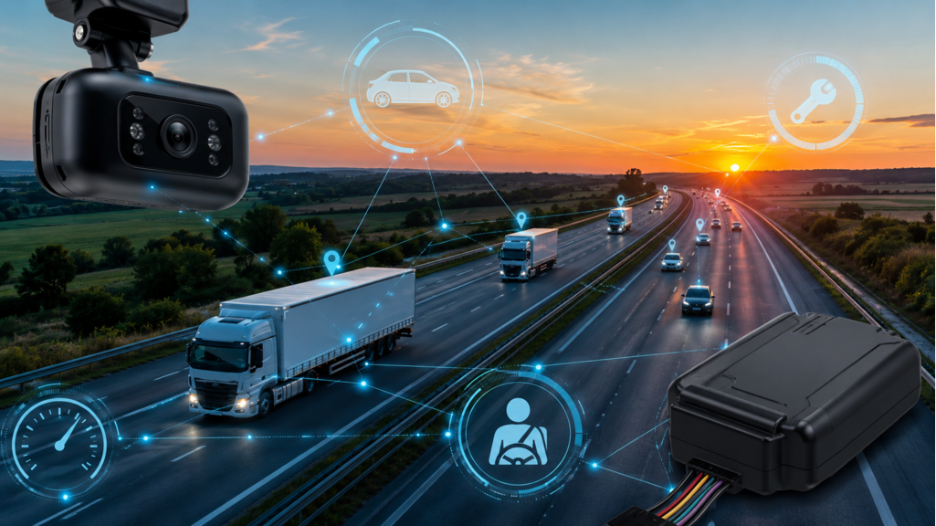
For many years, vehicle monitoring technology was viewed primarily as a way to determine where a vehicle was located at any given moment. While real-time positioning remains an important capability, today’s connected fleet technologies have evolved into comprehensive systems that provide valuable insights into vehicle condition, driver performance, operational efficiency, and long-term maintenance planning. A modern GPS Tracker, when paired with complementary technologies such as a dash cam with gps and advanced vehicle tracking equipment, enables businesses to make informed decisions based on data rather than assumptions.
Rather than serving as simple navigation tools, these technologies collect and analyze information from multiple vehicle systems. The result is a clearer understanding of how vehicles are being driven, how efficiently they are operating, and when maintenance may be needed. For businesses that rely on commercial vehicles, this information can improve safety, reduce operating costs, and extend vehicle lifespan while supporting better customer service.
The Evolution of Vehicle Monitoring Technology
Vehicle tracking has changed dramatically over the past decade. Earlier systems focused almost exclusively on mapping a vehicle’s position and recording travel history. Although location visibility remains valuable for dispatching and theft recovery, modern telematics solutions gather a much broader range of operational data.
Today’s connected platforms integrate information from vehicle sensors, onboard diagnostics, engine control modules, accelerometers, and driving event records. Instead of simply answering “Where is the vehicle?” they can also answer questions such as:
- Is the engine operating efficiently?
- Are maintenance issues developing?
- Is the driver frequently braking aggressively?
- How much time is spent idling?
- Are routes being driven efficiently?
- Is excessive speeding affecting fuel consumption?
These insights provide a more complete picture of fleet performance and individual vehicle health.
Understanding Vehicle Health Beyond Engine Warning Lights
Many drivers wait until a dashboard warning light appears before addressing maintenance. However, connected monitoring systems can identify subtle performance changes well before a visible warning occurs.
For example, gradual increases in engine temperature, unusual battery voltage fluctuations, excessive idle hours, or recurring fault codes may indicate developing mechanical issues. Identifying these patterns early allows maintenance teams to schedule inspections before small concerns become expensive repairs.
Preventive maintenance offers several operational advantages:
- Reduced unexpected breakdowns
- Lower repair costs
- Longer vehicle service life
- Improved scheduling efficiency
- Increased vehicle availability
Instead of reacting to failures, organizations can shift toward predictive maintenance based on actual operating conditions.
Monitoring Engine Performance
Engine performance is one of the strongest indicators of overall vehicle condition. Modern monitoring systems collect operational information that helps identify inefficiencies before they become serious problems.
Examples include:
- Engine operating hours
- Idle duration
- Fuel consumption trends
- RPM patterns
- Cooling system performance
- Battery health
- Diagnostic fault codes
When viewed over weeks or months, these measurements reveal trends that would otherwise remain unnoticed.
For instance, if one vehicle consistently consumes significantly more fuel than similar vehicles operating on comparable routes, managers can investigate possible mechanical issues, tire inflation problems, or driving habits contributing to reduced efficiency.
Driver Behavior Tells an Important Story
Vehicle performance is influenced not only by mechanical condition but also by how the vehicle is driven.
Driving style directly affects:
- Fuel efficiency
- Brake wear
- Tire lifespan
- Engine stress
- Suspension wear
- Accident risk
Modern fleet platforms monitor numerous driving events that help organizations understand operational patterns without relying on subjective observations.
Common behaviors evaluated include:
- Rapid acceleration
- Harsh braking
- Sharp cornering
- Excessive speeding
- Long idle periods
- Seat belt compliance
- Route deviations
Rather than using this information solely for disciplinary purposes, many organizations incorporate it into coaching programs that encourage safer and more efficient driving practices.
The Relationship Between Driving Habits and Vehicle Health
Mechanical wear rarely occurs in isolation. Driver behavior often has a measurable impact on long-term maintenance costs.
Frequent hard braking accelerates brake pad wear.
Aggressive acceleration increases drivetrain stress.
High-speed driving raises fuel consumption and engine temperatures.
Repeated sharp turns place additional strain on suspension components.
Extended idling wastes fuel while increasing engine operating hours without generating productive mileage.
By understanding these relationships, businesses can reduce maintenance expenses while improving fleet reliability.
Fuel Efficiency Depends on More Than Distance
Fuel consumption is influenced by numerous factors beyond the number of miles traveled.
These include:
- Driver acceleration patterns
- Route selection
- Traffic conditions
- Vehicle loading
- Idle time
- Tire condition
- Engine performance
Data collected over time allows organizations to identify avoidable inefficiencies.
For example, reducing unnecessary idling by only a few minutes per vehicle each day may produce meaningful annual fuel savings across an entire fleet.
Likewise, selecting more efficient routes can lower both fuel usage and travel time while improving customer satisfaction through more accurate arrival estimates.
Predictive Maintenance Versus Reactive Repairs
One of the most valuable capabilities of connected fleet technology is its ability to support predictive maintenance strategies.
Reactive maintenance occurs after a component has already failed.
Predictive maintenance attempts to identify warning signs before breakdowns occur.
The advantages of predictive maintenance include:
- Fewer roadside breakdowns
- Lower emergency repair costs
- Better maintenance scheduling
- Reduced service interruptions
- Longer equipment lifespan
However, predictive maintenance also requires consistent monitoring, proper interpretation of data, and organizational commitment to preventive servicing.
Simply collecting information is not enough. Organizations must establish maintenance processes that translate insights into action.
Driver Coaching Through Objective Data
Historically, driver evaluations relied heavily on supervisor observations or customer feedback.
Modern monitoring systems introduce objective performance metrics that provide a more balanced assessment.
Instead of making assumptions, managers can review measurable trends such as:
- Average speeding frequency
- Smoothness of acceleration
- Braking consistency
- Idle percentages
- Route efficiency
- Compliance with company driving policies
Constructive coaching based on objective information often produces better results than relying on isolated incidents.
Many drivers also appreciate receiving measurable feedback that helps improve fuel economy, safety, and professional performance.
The Growing Role of Video Evidence
Location and operational data explain what happened during a trip, but video can provide important context when unexpected events occur.
For example, harsh braking may appear problematic in driving reports.
Video footage may reveal that the driver was avoiding a pedestrian or reacting to another vehicle’s unsafe maneuver.
Combining operational metrics with visual evidence creates a more complete understanding of driving events while reducing uncertainty during accident investigations.
This balanced approach helps organizations distinguish between avoidable risks and appropriate defensive driving decisions.
Balancing Safety and Driver Privacy
Although increased visibility offers numerous operational benefits, organizations must also consider employee privacy.
Drivers may feel uncomfortable knowing their driving activities are continuously monitored.
Finding an appropriate balance requires transparency.
Many organizations establish clear policies explaining:
- What information is collected
- Why it is collected
- How long it is stored
- Who has access
- How the information supports safety rather than surveillance
When employees understand that monitoring primarily protects both drivers and company assets, acceptance often improves.
Open communication helps build trust while encouraging responsible driving behavior.
Data Volume Creates Both Opportunities and Challenges
Modern telematics systems generate substantial amounts of operational data every day.
Without effective analysis, this information can become overwhelming.
Organizations face several challenges:
- Identifying meaningful trends
- Eliminating unnecessary alerts
- Prioritizing maintenance issues
- Interpreting complex diagnostic information
- Integrating multiple data sources
Successful fleet management depends not only on collecting information but also on presenting it in ways that support timely decision-making.
Dashboards, automated reports, and exception-based alerts help managers focus attention where it is most needed.
Cost Versus Long-Term Value
Advanced monitoring technology represents an investment.
Organizations must evaluate hardware costs, software subscriptions, installation expenses, and employee training requirements.
For smaller fleets, initial costs may appear significant.
However, long-term savings often offset these investments through:
- Reduced fuel consumption
- Lower maintenance costs
- Fewer accidents
- Improved vehicle utilization
- Better insurance outcomes
- Reduced downtime
The actual return depends on fleet size, operating conditions, and how effectively collected information is used.
Technology alone does not create savings; operational improvements do.
Supporting Regulatory Compliance
Many industries operate under transportation regulations requiring accurate vehicle records and safe operating practices.
Connected monitoring systems simplify compliance by automatically documenting:
- Vehicle usage
- Operating hours
- Maintenance schedules
- Driver activities
- Trip histories
Automated documentation reduces administrative effort while improving reporting accuracy.
Organizations can also demonstrate proactive safety management during inspections or audits.
Improving Fleet Utilization
Vehicle utilization measures how effectively available assets are being used.
Some vehicles may operate continuously while others remain underused.
Monitoring systems help organizations identify:
- Frequently idle vehicles
- Underutilized assets
- Uneven workload distribution
- Seasonal demand fluctuations
- Opportunities for fleet optimization
Rather than purchasing additional vehicles, businesses may discover opportunities to improve scheduling using existing resources more efficiently.
This approach reduces unnecessary capital expenditures while maximizing asset productivity.
The Importance of Context When Interpreting Data
Raw numbers rarely tell the complete story.
For example, one driver may exhibit frequent hard braking because they operate primarily in dense urban traffic.
Another driver covering long highway routes may naturally have fewer braking events.
Similarly, higher fuel consumption may reflect heavier cargo loads rather than inefficient driving.
Managers should evaluate performance within the context of vehicle type, operating environment, weather conditions, and assigned responsibilities.
Balanced interpretation prevents inaccurate conclusions while encouraging fair performance evaluations.
Integrating Multiple Sources of Information
The most effective fleet management strategies combine several forms of operational intelligence rather than relying on a single measurement.
Location information provides travel visibility.
Diagnostic information reveals vehicle condition.
Driving analytics highlight behavioral trends.
Maintenance records identify recurring issues.
Video evidence adds valuable context during incidents.
When analyzed together, these data sources provide a comprehensive understanding of both vehicle performance and operational efficiency.
This integrated perspective enables organizations to make better-informed decisions regarding maintenance scheduling, driver development, route planning, and long-term fleet investments.
Preparing for the Future of Connected Fleets
As connected vehicle technology continues to evolve, monitoring capabilities will likely become even more predictive.
Artificial intelligence and machine learning are increasingly identifying maintenance trends, recognizing risky driving behaviors, and recommending operational improvements based on historical data.
Future systems may anticipate component failures with greater accuracy, optimize routes dynamically using real-time traffic conditions, and provide personalized driver coaching based on individual performance patterns.
While these innovations offer significant opportunities, organizations will continue to balance technological advancement with cybersecurity, privacy protection, and responsible data governance.
Businesses that adopt thoughtful, data-driven strategies will be better positioned to improve safety, reduce costs, and maintain reliable operations in an increasingly connected transportation environment.
Final Thoughts
Vehicle monitoring has progressed far beyond simple location tracking. Modern connected technologies provide meaningful insights into mechanical performance, maintenance needs, fuel efficiency, and driver behavior, allowing organizations to make informed operational decisions based on objective information rather than guesswork. By carefully balancing data collection with employee privacy, investing in preventive maintenance, and interpreting information within its proper context, businesses can improve reliability, enhance safety, reduce operating expenses, and extend vehicle lifespan. As fleet technologies continue to advance, organizations that focus on responsible data use and continuous improvement will be better equipped to meet evolving operational challenges while delivering more efficient and dependable transportation services.