


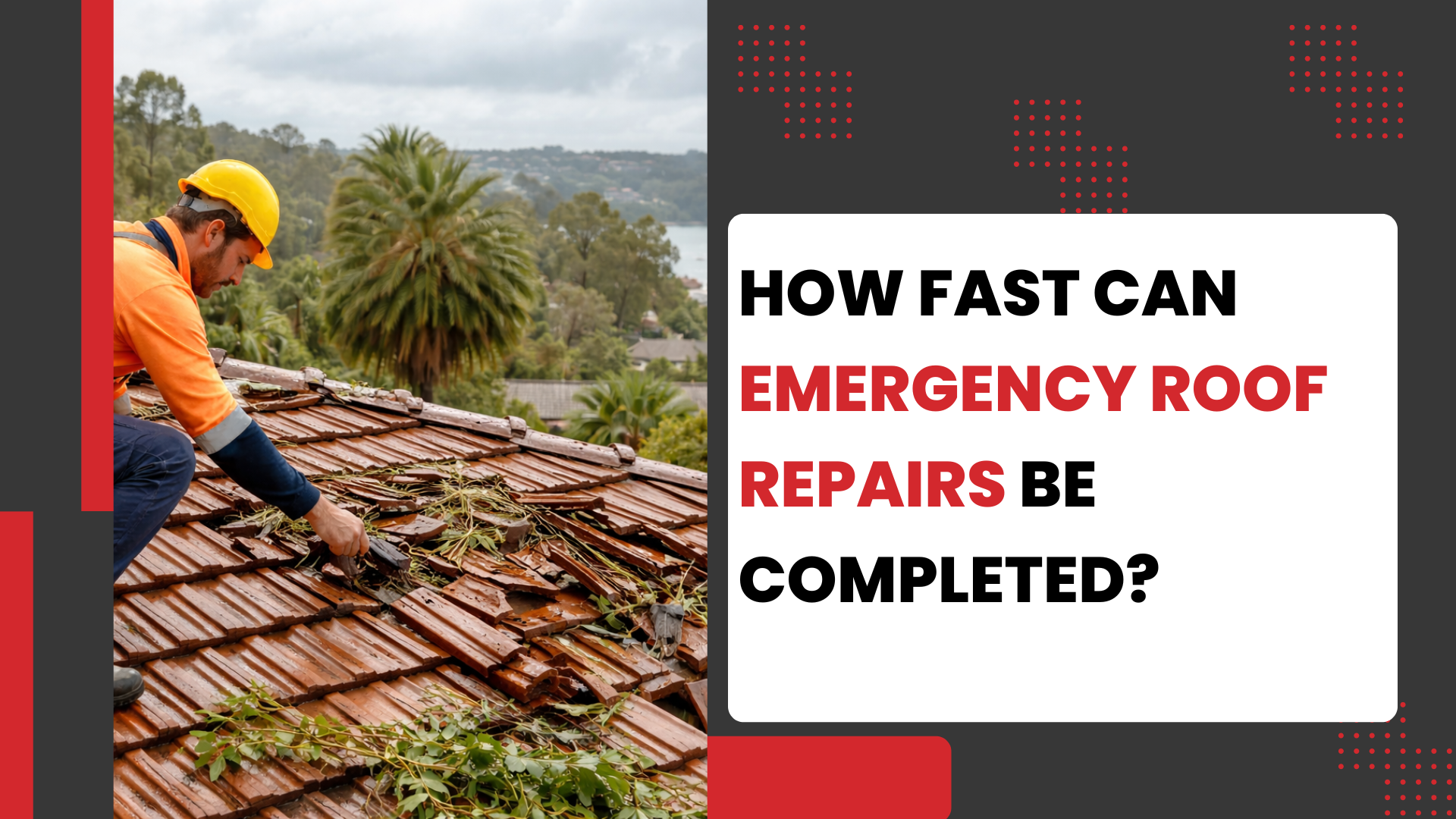
A leaking roof is one of the most stressful problems a homeowner can face. Water stains on the ceiling, dripping during rain, or sudden storm damage can quickly turn into a major issue if not handled quickly. The main purpose of emergency roof work is to stop water from entering the property as soon as possible and prevent further damage to ceilings, insulation, walls, and electrical systems.
In many situations, a roof can be made safe on the same day. However, permanent repairs may take a little longer depending on weather conditions and the extent of the damage. Acting early is always the best way to reduce repair costs and protect your home.
What Counts As An Emergency Roof Repair?
An emergency roof repair is needed when there is active water entering the property or when the roof has been damaged by severe weather. This includes leaks during rain, water dripping from ceilings, or damp patches spreading across internal walls.
Storm-related issues such as missing tiles, lifted metal sheets, damaged flashing, or fallen branches also require urgent attention. Even a small leak should not be ignored. Water often travels through the roof space before becoming visible, which means the actual damage may be larger than it appears. Quick action helps prevent mould, timber rot, and long-term structural problems.
Typical Repair Timeframes And What “Fast” Really Means
Emergency roof work is usually completed in stages. The first step is the make-safe visit, which is often completed within hours or on the same day. During this visit, the technician identifies the source of the leak and stops or reduces water entry.
The second stage involves temporary repairs. This may include sealing the damaged area, securing loose materials, or applying weatherproof protection. In most cases, this is completed immediately or within 24 hours.
Permanent repairs come next. Depending on weather, material availability, and the size of the repair, this stage may take a few days to a week. The priority is always to stabilise the situation first and then complete a long-lasting repair when conditions are suitable.
The Key Factors That Decide How Quickly Repairs Can Be Finished
Several factors affect how quickly a roof can be repaired. Weather is the most important. Heavy rain, strong winds, or storms can make it unsafe to work at height.
The type of roof also plays a role. Tile roofs, metal roofs, and flat roofs all require different repair methods. Roof height and access difficulty can also impact timing.
The location of the damage matters as well. Problems around valleys, ridges, flashing, skylights, or roof penetrations may take longer to repair.
The extent of the damage is another key factor. A single leak is much faster to manage than widespread storm damage. In some cases, matching tiles or custom flashings may need to be ordered, which can extend the timeframe.
What A Same-Day Emergency Roof Repair Visit Usually Includes
A same-day visit focuses on quick inspection and immediate protection. The technician will assess the roof externally to locate the entry point and check the surrounding areas for additional damage. If safe, the ceiling cavity may also be checked to see how far moisture has travelled.
Immediate actions often include sealing the leak, replacing or repositioning loose tiles, tightening metal sheets, or applying temporary waterproofing. Debris that blocks drainage areas may also be cleared to prevent water overflow.
The goal of the visit is simple. Stop the leak, protect the property from further damage, and plan the next steps if permanent repairs are required.
Temporary Repair Vs Permanent Repair: What Gets Done First
Temporary repairs are designed to protect your home straight away. These solutions are strong enough to handle normal weather conditions until full repairs can be completed. Examples include sealant patches, short-term flashing adjustments, or protective coverings.
Permanent repairs restore the roof’s long-term strength and performance. This may involve replacing damaged sheets or tiles, installing new flashing, resealing skylights, or completing structural repairs.
Rushing permanent work in poor weather or unsafe conditions can lead to poor results. A staged approach ensures the repair is completed properly and reduces the chance of future leaks.
Realistic Examples Of Repair Speed By Common Roof Problems
Some roofing issues can be fixed quickly, while others require follow-up work. Minor leaks around flashing or roof penetrations can often be sealed on the same day. If the flashing is severely damaged, a full replacement may be scheduled later.
Cracked or displaced tiles can usually be replaced quickly if matching materials are available. Metal roofs with loose fasteners or lifted sheets can often be secured during the first visit.
Blocked valleys or drainage paths can be cleared quickly, but any underlying water damage may need further inspection.
After major storms, roofs with multiple damage points are usually stabilised first. Permanent repairs are then completed in stages once weather conditions improve.
How To Help Get Your Repair Done Faster (Without Cutting Corners)
Homeowners can help speed up the process by providing clear information when reporting the issue. Let the technician know where the leak appears and when it occurs. Photos can also help with early assessment.
Ensure there is clear access to the property, including driveway space and unlocked gates. Move valuables away from the affected area and place buckets under active leaks to limit internal damage.
Avoid climbing onto the roof or attempting DIY repairs, especially during wet or windy weather. Safety should always be the priority.
Long-Term Solutions After An Emergency Repair
Once the immediate issue is controlled, it is important to address the root cause. Professional Roof Leak Detection Sydney services can identify hidden entry points and prevent ongoing problems.
In some cases, ageing or heavily damaged sections may need upgrading through professional Roofing Installation Sydney work. This ensures the roof remains strong and weather-resistant for years to come.
If sudden damage occurs again during storms or extreme weather, prompt Emergency Roof Repair Sydney services help minimise disruption and protect your home from further loss.
Conclusion: The Fastest Path Is Make-Safe First, Then Finish Properly
The speed of emergency roof repairs depends on weather conditions, access, material availability, and the level of damage. In many situations, a roof can be made safe on the same day to stop water entering the home. Permanent repairs are then completed once conditions allow.
The most important step is acting quickly. Small leaks can turn into major structural problems if left untreated. A make-safe approach first, followed by proper long-term repairs, ensures your property stays protected and reduces the risk of repeat issues in the future.