

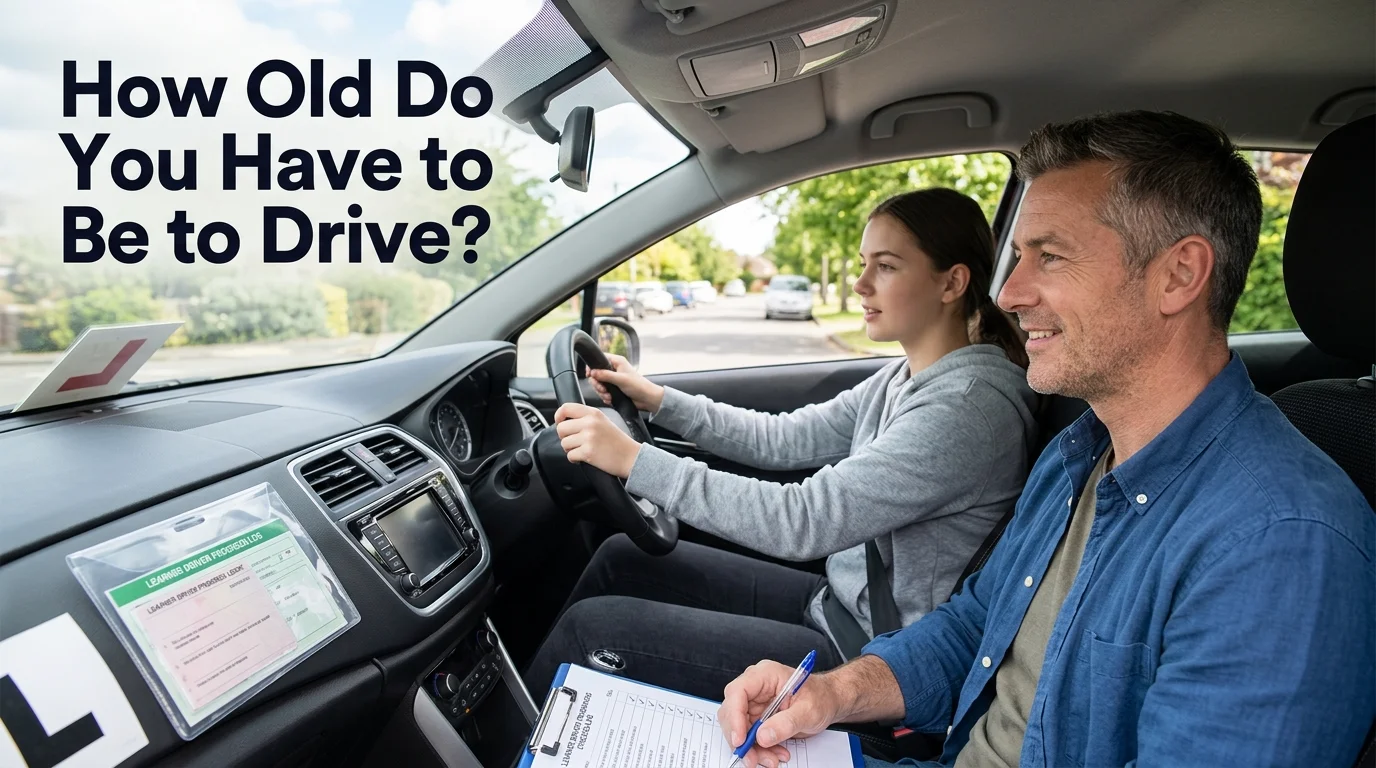
The answer to How Old Do You Have to Be to Drive? depends on your state and on which kind of driver’s licence you mean.
In most states, you can get a learner’s permit at 15 or 15 and a half. You can then drive alone on a restricted licence at 16, and hold a full unrestricted licence at 17 or 18. Six states issue permits at 14. Every state uses a staged system, so the age depends on which stage you want.
Key Takeaways
- Permit ages run from 14 to 16 across the states. Alaska, Arkansas, Iowa, Kansas, North Dakota and South Dakota all start at 14.
- Most teens can drive alone at 16 under a restricted or intermediate licence.
- Full driving privileges usually arrive at 17 or 18, sometimes sooner if you finish a holding period early.
- Expect 30 to 70 hours of logged supervised practice before your road test, depending on the state.
- Night curfews and passenger caps apply during the middle stage in almost every state.
- At 18 or older, you skip most of the staged system, though the written and road tests still apply.
The Three Stages at a Glance
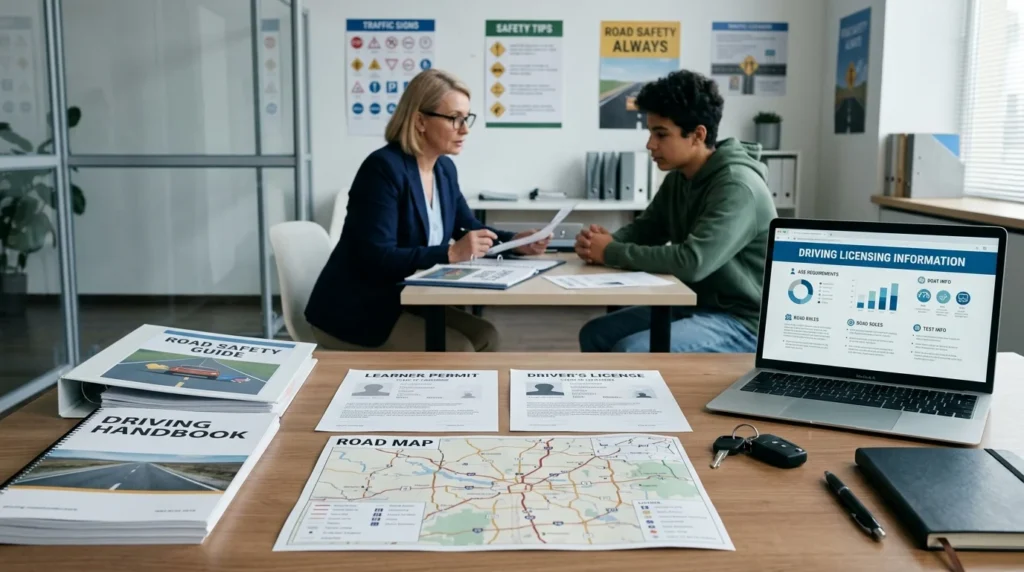
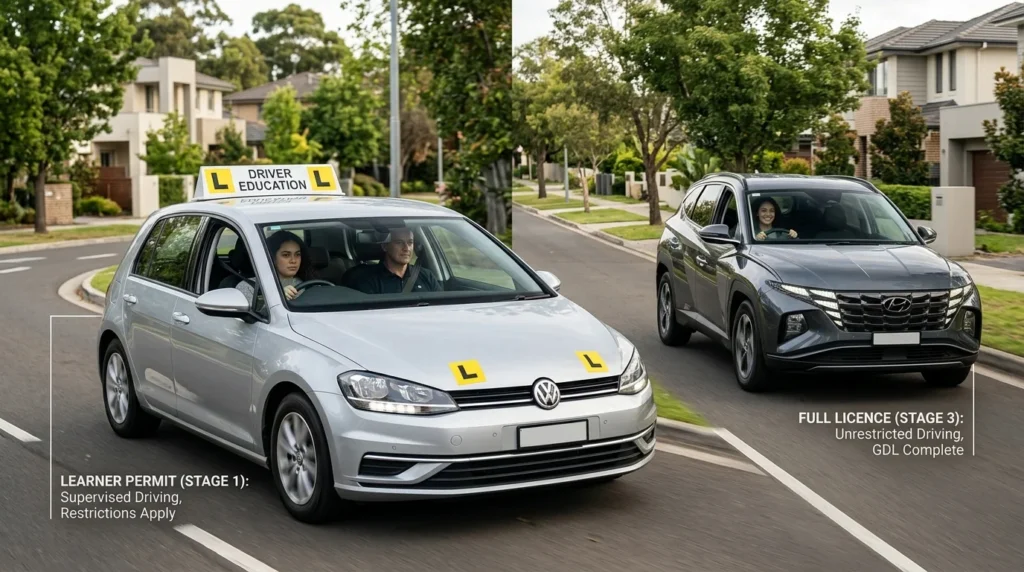
Every state runs some version of graduated driver licensing, usually shortened to GDL. You earn privileges in three steps rather than all at once.
| Stage | Typical age | What you can do | What you cannot do |
|---|---|---|---|
| Learner’s permit | 14 to 16 | Drive with a licensed adult beside you, log practice hours | Drive alone, drive at night in some states |
| Intermediate or restricted license | 16 to 17 | Drive alone for school, work, errands or sports | Drive late at night, carry young passengers |
| Full unrestricted driver’s license | 17 to 18 | Drive any time, carry anyone | Nothing extra beyond normal traffic law |
Why States Stagger the Ages
Staggering is a safety measure, not paperwork for its own sake. New drivers crash at a much higher rate than experienced ones, and that first year behind the wheel is the worst of it.
The Centers for Disease Control and Prevention, in guidance last reviewed on January 29, 2026, reports a stark gap. Drivers aged 16 to 19 have a fatal crash rate almost three times as high as drivers aged 20 and older, per mile driven. That gap is the reason your state makes you log supervised hours before it hands over a full licence. You can read the CDC teen driver risk factors page for the underlying numbers.
GDL programs spread the risk out. You build hours with an adult in the car, then drive alone under limits, then earn full privileges once you have a track record.
Learner’s Permit Age by State
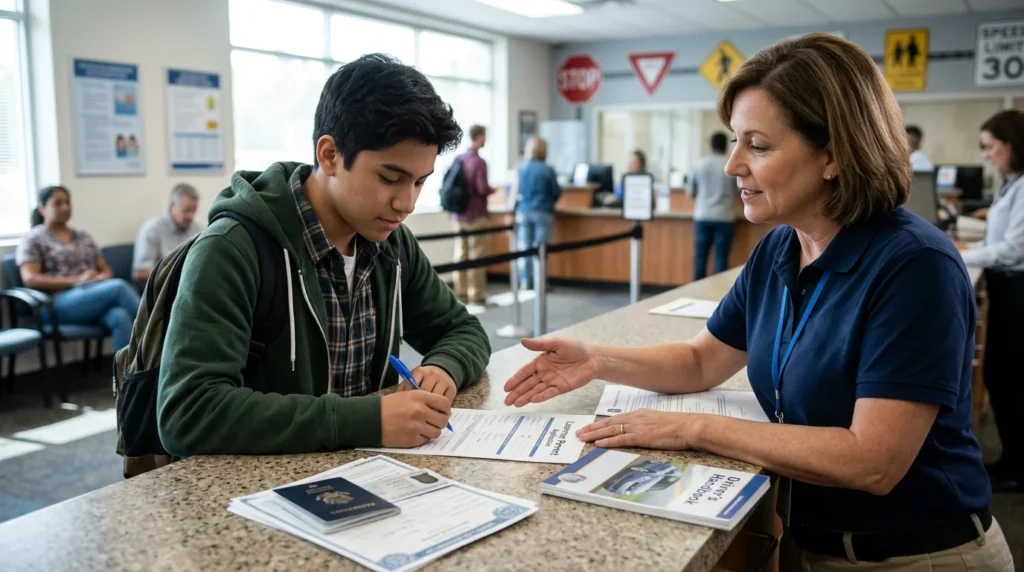
Everyone starts with the permit, the first step toward a driver’s licence. Six states allow it at 14: Alaska, Arkansas, Iowa, Kansas, North Dakota and South Dakota. Idaho and Montana follow at 14 and a half, and Michigan at roughly 14 years and 9 months.
Most states settle on 15. Nine states plus the District of Columbia make you wait until 16, including New York, New Jersey, Pennsylvania, Massachusetts plus Connecticut.
Most states also attach a holding period. You keep the permit for six months to a year before you can test for the next stage, so an early permit does not always mean an early licence.
Driving Alone: The Intermediate Stage
Age 16 is the common answer here. It applies in roughly two-thirds of states. South Dakota allows solo driving at about 14 years 9 months, and Kansas, Idaho, Montana and North Dakota all permit it at 15.
This is the stage where most families start shopping. If you are pricing a first vehicle, our review of the 2022 Honda Civic hatchback covers the safety features worth paying for. A cheaper option like a used Volkswagen Passat works too, provided you budget for inspection and repairs.
Insurance is the shock for most parents. Adding a teen often doubles a policy, pushing an annual premium from around $1,800 to $3,500 or more. Permit and licence fees are minor by comparison, usually $20 to $60 each. Get quotes before you sign for a car.
Full Unrestricted Licenses
Eighteen is the most common age for an unrestricted driver’s licence. Arkansas, Florida, Georgia, New Jersey, Texas, Virginia plus Washington, D.C. all use it.
Plenty of states let you clear restrictions earlier. Alabama, Hawaii, Kansas, Louisiana, Michigan, Minnesota, Mississippi, Nebraska, Rhode Island, Utah, as well as Wyoming, can release you at 17. North Dakota and South Dakota finish earliest, at 16 and 15.5.
How Old Do You Have to Be to Drive in Your State?
Here is every stage for every state. Ages shown with decimals mean part years, so 15.5 reads as 15 years and six months.
| State | Permit | Intermediate | Full license |
|---|---|---|---|
| Alabama | 15 | 16 | 17 |
| Alaska | 14 | 16 | 16.5 |
| Arizona | 15.5 | 16 | 18 |
| Arkansas | 14 | 16 | 18 |
| California | 15.5 | 16 | 17 |
| Colorado | 15.5 | 16 | 17 |
| Connecticut | 16 | 16.33 | 18 |
| Delaware | 16 | 16.5 | 17 |
| District of Columbia | 16 | 16.5 | 18 |
| Florida | 15 | 16 | 18 |
| Georgia | 15 | 16 | 18 |
| Hawaii | 15.5 | 16 | 17 |
| Idaho | 14.5 | 15 | 17 |
| Illinois | 15 | 16 | 18 |
| Indiana | 15 | 16.25 | 18 |
| Iowa | 14 | 16 | 17 |
| Kansas | 14 | 15 | 17 |
| Kentucky | 16 | 16.5 | 18 |
| Louisiana | 15 | 16 | 17 |
| Maine | 15 | 16 | 18 |
| Maryland | 15.75 | 16.5 | 18 |
| Massachusetts | 16 | 16.5 | 18 |
| Michigan | 14.75 | 16 | 17 |
| Minnesota | 15 | 16 | 17 |
| Mississippi | 15 | 16 | 17 |
| Missouri | 15 | 16 | 18 |
| Montana | 14.5 | 15 | 18 |
| Nebraska | 14.17 | 16 | 17 |
| Nevada | 15.5 | 16 | 18 |
| New Hampshire | 15.75 | 16 | 18 |
| New Jersey | 16 | 17 | 18 |
| New Mexico | 15 | 15.5 | 18 |
| New York | 16 | 16.5 | 17 or 18 |
| North Carolina | 15 | 16 | 16.5 |
| North Dakota | 14 | 15 | 16 |
| Ohio | 15.5 | 16 | 18 |
| Oklahoma | 15 | 16 | 16.5 |
| Oregon | 15 | 16 | 18 |
| Pennsylvania | 16 | 16.5 | 18 |
| Rhode Island | 16 | 16.5 | 17 |
| South Carolina | 15 | 15.5 | 17 |
| South Dakota | 14 | 14.75 | 15.5 |
| Tennessee | 15 | 16 | 18 |
| Texas | 15 | 16 | 18 |
| Utah | 15 | 16 | 17 |
| Vermont | 15 | 16 | 18 |
| Virginia | 15.5 | 16.25 | 18 |
| Washington | 15 | 16 | 18 |
| West Virginia | 15 | 16 | 18 |
| Wisconsin | 15 | 15.5 | 18 |
| Wyoming | 15 | 16 | 17 |
Rules change, so confirm your own state on its DMV site before you plan a test date.
Supervised Driving Hours You Have to Log
Age alone will not get you a licence. Nearly every state also wants a logged number of supervised hours, and the totals vary widely.
- Maine sits at the top with 70 hours, including 10 at night.
- Pennsylvania asks for 65 hours, with 10 at night and 5 in bad weather.
- Kentucky and Maryland each require 60 hours, as does North Carolina.
- Many states land on 50 hours, with 10 of those after dark.
- Arizona sits lowest at around 30 hours, with Texas and Wisconsin close behind.
Some states cut the requirement if you finish an approved driver education course. Keep your own log even when the state gives you a form, because a lost sheet can cost you a test appointment.
Night and Passenger Restrictions
Real limits live in the intermediate stage. Two rules show up almost everywhere. Night curfews typically block driving between about 11 p.m. and 5 a.m. Some states start as early as 9 p.m. Exceptions usually cover work, school activities, medical emergencies, and religious services.
Passenger caps are the other one. Most states allow zero or one non-family passenger under 21 for the first six to twelve months. Both rules lift when you move to full driving privileges.
Moving to Another State Mid GDL
This trips up a lot of families. States do not have to honour another state’s permit or intermediate licence, and many restart parts of the process.
Here is the usual pattern. Your new state credits the time you already held the permit, then applies its own age minimums and its own restriction schedule. If you move from a 14 permit state to a 16 permit state at 15, you may not be able to drive at all until you turn 16.
Bring your old permit and proof of residency to the new DMV, along with any completed hour logs. Some states accept a driver education certificate from elsewhere, and some will not.
Farm and Hardship Permits
A handful of states create exceptions below the standard minimum. Farm permits let teens as young as 14 operate a vehicle for agricultural work, often within a set radius of the property.
Hardship licenses cover a different case. Texas and Florida, plus several other states, issue them when a family has a genuine transportation need, such as a parent who cannot drive. These come with tight limits on routes and times.
Getting a Driver’s License at 18 or Older
Adults get a shorter path to a driver’s license. If you apply at 18 or older, most states waive the graduated stages and the passenger and curfew rules that go with them.
You still take the written knowledge test, a vision check, a road test, and any required fee payment. Several states require a short permit holding period first, often 30 to 60 days. A few, including New Jersey, keep new adult drivers on a probationary licence for a year.
Your Next Step
Look up your state in the chart above, then open your DMV site and confirm the current holding period and hour requirement. Book the written test as soon as you hit the permit age, since practice hours cannot start until the permit is in hand.
After that, focus on the car. Learning to check tire pressure, fluid levels, wiper blades, and spark plugs costs an afternoon and saves a breakdown on the highway. A new driver who understands the vehicle is a safer driver in it.
Frequently Asked Questions
Sixteen in most states, on a restricted or intermediate licence. South Dakota allows solo driving at about 14 years 9 months, and Kansas, Idaho, Montana, and North Dakota allow it at 15.
Alaska, Arkansas, Iowa, Kansas, North Dakota, and South Dakota issue learner’s permits at 14. In all six, you still need a licensed adult in the car.
No. New Jersey holds solo driving until 17, and Connecticut, Delaware, Kentucky, Maryland, Massachusetts, New York, Pennsylvania, and Rhode Island all sit past a straight 16.
It depends on your age and state. Teens under 18 usually must complete a course. Many states also shorten the supervised hour requirement if you finish an approved program.
South Dakota. A permit at 14, restricted driving at about 14 years 9 months, and full privileges at 15 and a half beat every other state.
Sometimes, but not reliably. A permit is proof of driving status, and many agencies will not accept it as primary identification.
How old do you have to be to drive alone?
Sixteen in most states, on a restricted or intermediate licence. South Dakota allows solo driving at about 14 years 9 months, and Kansas, Idaho, Montana, and North Dakota allow it at 15.
Which states let you drive at 14?
Alaska, Arkansas, Iowa, Kansas, North Dakota and South Dakota issue learner’s permits at 14. In all six, you still need a licensed adult in the car.
Can you get a licence at 16 in every state?
No. New Jersey holds solo driving until 17, and Connecticut, Delaware, Kentucky, Maryland, Massachusetts, New York, Pennsylvania, and Rhode Island all sit past a straight 16.
Do you need driver’s education?
It depends on your age and state. Teens under 18 usually must complete a course. Many states also shorten the supervised hour requirement if you finish an approved program.
What is the fastest state to get a licence?
South Dakota. A permit at 14, restricted driving at about 14 years 9 months, and full privileges at 15 and a half beat every other state.
Does a learner’s permit count as ID?
Sometimes, but not reliably. A permit is proof of driving status, and many agencies will not accept it as primary identification.