

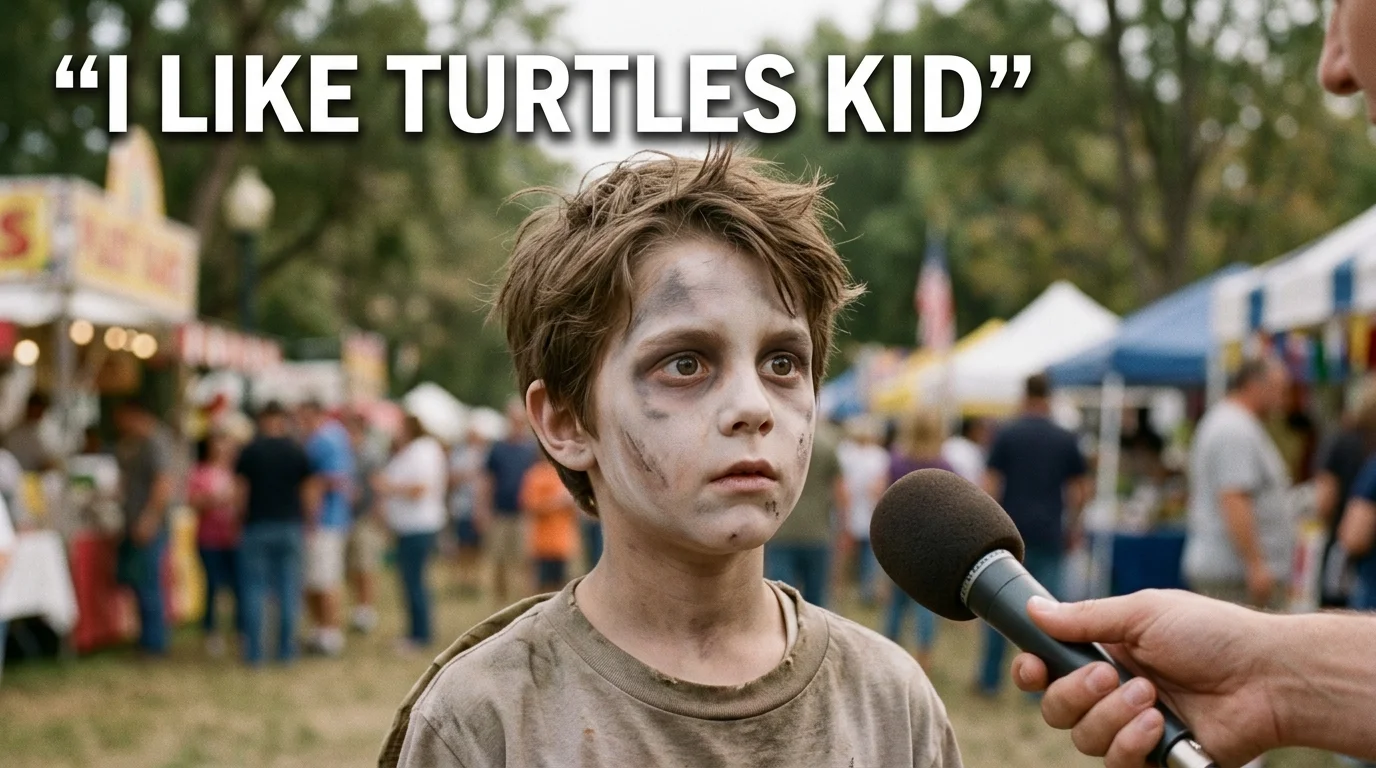
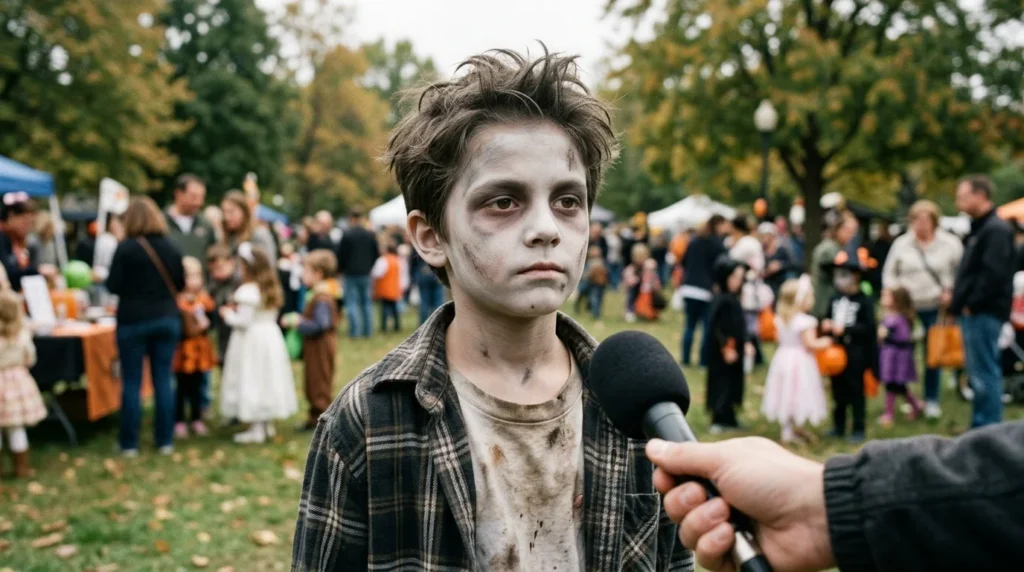
The I Like Turtles Kid became an early internet celebrity after one wonderfully unexpected television answer. Ten-year-old Jonathon Ware appeared on local news in Portland, Oregon, during the 2007 Rose Festival. Asked about his zombie face paint, he looked toward the camera and calmly said, “I like turtles.”
That tiny moment became much bigger once viewers shared the clip online. Remixes, reaction videos, merchandise, and repeated quotes helped keep the joke alive for years. Nearly two decades later, Ware remains closely connected with one of early YouTube’s most recognizable viral moments.
Quick answer: Jonathon Ware is the boy behind the famous 2007 “I like turtles” clip. He was 10 when KGW interviewed him at Portland’s Rose Festival while wearing zombie face paint. His unexpected answer spread online, became a lasting meme, and later led to television appearances and a 2023 Teenage Mutant Ninja Turtles promotion.
Quick Facts About the Viral Moment
| Detail | Information |
|---|---|
| Name | Jonathon Ware |
| Age in original clip | 10 years old |
| Original event | Portland Rose Festival |
| Location | Portland, Oregon |
| Date | May 31, 2007 |
| News station | KGW |
| Reporter | Nancy Francis |
| Famous response | “I like turtles” |
| Later TV appearance | Tosh.0 |
| Major comeback | 2023 Teenage Mutant Ninja Turtles: Mutant Mayhem promotion |
The basic facts have remained remarkably consistent across contemporary reporting and later meme histories. Ware attended Portland’s Rose Festival and received zombie-style face paint before the interview. The short exchange happened on May 31, 2007, before spreading rapidly through online video sharing.
Who Was the I Like Turtles Kid?
Jonathon Ware was a 10-year-old attending the Rose Festival with his family in Portland. A KGW reporter approached him after he received an elaborate zombie face-paint design. The reporter expected him to describe his makeup, but his thoughts were somewhere entirely different.
Ware’s answer worked because it had almost no obvious connection with the question. His serious delivery made the contrast even funnier for viewers. Nothing about the exchange appeared designed for internet attention, which helped give it lasting charm.
Modern viral clips often arrive with polished editing, captions, and planned reactions. Ware’s appearance came from an era when a local television moment could unexpectedly spread across the web. That accidental quality became an important part of the clip’s appeal.
Readers interested in how online attention can build public careers can also explore Mindspaper’s profile of Lil Tecca’s rise from viral attention to music success. His story comes from a different era, yet both examples show how online sharing can transform public recognition.
What Happened During the Original 2007 Interview?
KGW reporter Nancy Francis was broadcasting from Waterfront Village during Portland’s Rose Festival. She introduced Ware, praised his zombie face paint, and asked what he thought about it. Instead of reviewing the makeup, the child supplied the three-word answer people still remember.
The reporter recovered quickly and continued the live segment. That brief awkwardness strengthened the comedy because viewers could immediately see the unexpected nature of his response. The entire memorable exchange occupied only a few seconds.
A copy later appeared on YouTube and spread widely as the platform grew. By July 2007, The Washington Post was already documenting Ware’s sudden online fame. The newspaper described merchandise, media inquiries, and strangers recognizing the young viral star.
Why Did Jonathon Ware Say “I Like Turtles”?
The answer was not a secret code or carefully planned joke. Ware later explained that turtles were genuinely on his mind around the time of the interview. Meme histories report that he had recently encountered a turtle exhibit before getting his face painted.
In a 2023 Yahoo Entertainment interview, Ware gave an even simpler explanation. He said that he genuinely liked turtles and needed something to say while unexpectedly facing a news camera. His childhood mind produced the answer that happened to become famous.
That explanation makes the clip easier to understand without losing its humor. Children often answer questions by following their immediate train of thought rather than an adult conversation structure. Here, that ordinary childhood behavior happened during a televised interview.
Why Did the Meme Become So Popular?
The humor starts with a sharp mismatch between the reporter’s question and Ware’s answer. Viewers expect a comment about frightening face paint but receive an unrelated statement about an animal. His expression and calm delivery make the contrast stronger.
The clip was also remarkably easy to share and imitate. People could quote three familiar words without needing to explain a complicated joke. Remixes and parodies soon appeared, while shirts and other merchandise extended the phrase beyond the original video.
Its timing also mattered because YouTube was still creating new forms of viral fame. A short local-news recording could suddenly reach people far beyond its original broadcast market. Ware became an example of internet celebrity before influencer careers became routine.
The meme’s structure has survived because the phrase still works as a humorous non-answer. Dictionary.com notes that people have used it when responding playfully to unrelated or unwanted questions. The meaning grew beyond one child’s television appearance while keeping the original joke recognizable.
What Happened After Jonathon Ware Went Viral?
Sudden fame reached Ware and his family quickly. The 2007 Washington Post report documented television interest, merchandising offers, and recognition from strangers. His family had not initially expected the television segment to become an internet phenomenon.
Ware later participated in a Tosh.0 “Web Redemption” segment in 2010. The appearance revisited his viral identity and allowed him to discuss the original moment. Know Your Meme records the episode as one of several later developments that kept the joke visible.
He also experimented with online content in the years that followed. Know Your Meme reports that Ware launched the gaming-focused ItsTurtleTime YouTube channel in 2013. Yet he generally avoided turning his childhood fame into constant public exposure.
That choice differs from many present-day internet personalities who build careers around frequent posting. For another look at modern digital celebrity, Mindspaper covers Devon Waller’s social media and entertainment career. The comparison shows how dramatically online fame has changed since 2007.
Where Is Jonathon Ware Now?
Ware largely protected his privacy as he entered adulthood. He told Yahoo Entertainment in 2023 that staying hidden had been intentional because he valued that privacy. By then, he was 26, married, and more open to revisiting his unusual place in internet history.
His biggest return came alongside Teenage Mutant Ninja Turtles: Mutant Mayhem in 2023. Paramount brought him back for a promotional recreation connected with the film. An adult Ware returned and repeated the line that made him famous as a child.
Ware also discussed creating social accounts around his “Turtle Boy” character after the promotion. He told Yahoo that he wanted to release ideas gradually rather than post constantly. His renewed public presence therefore remains more deliberate than his accidental introduction to fame.
Recent 2026 coverage continues identifying Ware as the genuine person behind the original clip. That distinction matters because other people have previously claimed the identity online. Know Your Meme documented one false claim and confirmed Ware as the original boy.
Jonathan or Jonathon Ware: Which Spelling Is Correct?
You may see his first name spelled both Jonathan and Jonathon online. The spelling Jonathon Ware appears in major meme histories and contemporaneous reporting about the original event. The Washington Post used that spelling when covering him in July 2007.
Search variations help explain why the alternate spelling remains widespread today. People often remember the clip better than the name attached to it. Reliable source checking is therefore more useful than repeating whichever spelling appears most often in social posts.
Mindspaper readers can see a similar name-focused entertainment format in its coverage of Brandi Short’s background and public profile. Biographical searches often contain conflicting details, so primary and reputable sources should carry more weight.
Why the Clip Still Feels Funny Nearly Two Decades Later
Many viral videos depend on temporary references, platform trends, or current celebrities. This one requires almost no background knowledge because the humor appears immediately. A reporter asks one question, and a zombie-painted child answers something completely unexpected.
Its simplicity also makes the clip resistant to changing internet formats. The joke can work as video, text, an image, or a reaction reference. New viewers can understand it without remembering what social media looked like in 2007.
The 2023 revival gave the moment another generation of exposure. Paramount could reference the original without substantially changing its setup or punch line. That recognition demonstrates how deeply the short exchange became embedded in online popular culture.
The Meme as a Snapshot of Early Internet Culture
Ware’s story arrived before TikTok, Instagram Reels, and professional creator strategies shaped most viral video distribution. People commonly discovered memorable clips through YouTube, blogs, forums, email, and early social networks. A television recording could spread because viewers copied, remixed, and shared it.
The story also shows how little material a successful meme sometimes needs. The clip had no complex narrative or manufactured challenge behind it. One unexpected answer, a memorable face, and easy sharing created enough material for years of references.
That simplicity gives the episode historical value beyond its humor. It captures a period when accidental internet stars often became famous before they could plan a public persona. Ware later chose when and how to return rather than remaining continuously visible.
For broader entertainment reading, Mindspaper also covers personalities whose recognition grew through newer media channels, including Demi Burnett’s television and social media career. Those stories offer a useful contrast with early viral fame.
Frequently Asked Questions
Who is the I Like Turtles Kid?
Jonathon Ware is the child shown in the famous 2007 viral television clip. He was 10 years old when KGW interviewed him during Portland’s Rose Festival. His unexpected response became a widely shared early internet meme.
How old was Jonathon Ware in the original video?
Ware was 10 when the original interview occurred in May 2007. Contemporary reporting that summer also described him as 10. Later profiles have consistently repeated that age.
Why was his face painted like a zombie?
Ware got face paint while attending Portland’s Rose Festival. The zombie design is why the reporter approached him for the television segment. That dramatic makeup became inseparable from the meme’s visual identity.
Did Jonathon Ware really like turtles?
Yes, according to Ware himself. He told Yahoo Entertainment in 2023 that he genuinely liked turtles. Earlier explanations also connected his answer with seeing turtles shortly before the television interview.
Was the viral moment scripted?
Available accounts describe the exchange as an ordinary live-news interaction rather than a scripted comedy scene. Ware was unexpectedly asked about his face paint and supplied his famous answer. Its spontaneous nature is central to why the clip became memorable.
Did the turtle kid return as an adult?
Yes, Ware returned publicly in 2023 for a promotion tied to Teenage Mutant Ninja Turtles: Mutant Mayhem. He recreated the familiar setup and repeated his famous line. The campaign introduced the early internet joke to newer audiences.
A Tiny Interview With an Unusually Long Life
Jonathon Ware never needed an elaborate performance to earn a permanent place in meme history. A few seconds of local television gave the early internet something simple, strange, and endlessly reusable. The result still feels authentic because nobody appears to have planned its popularity.
His later return gives the story an unusually satisfying ending. The child behind the zombie makeup grew up, protected his privacy, and eventually chose to revisit the joke himself. For more pop-culture histories and entertainment profiles, browse Mindspaper’s entertainment coverage and follow the stories behind memorable public figures.