


Key Takeaways
- Routine maintenance is the building block of effective HVAC system management.
- Upgrading to high-efficiency equipment offers substantial and compounding cost savings.
- Smart technologies provide enhanced control and real-time system optimization.
- Building design and occupant-friendly operational practices reinforce energy efficiency.
Maintaining an efficient commercial HVAC system goes far beyond ensuring basic comfort in your building. With energy prices on the rise and sustainability a growing concern, businesses are under increasing pressure to reduce operational costs and environmental impact. To learn more about top-tier HVAC solutions and support, click here. Implementing strategic practices can not only deliver significant energy savings but also prolong the lifespan of costly mechanical equipment and maintain superior indoor air quality.
Whether managing a sprawling corporate headquarters or a compact retail space, properly designed and maintained HVAC systems serve as the backbone of a productive, healthy workplace. Neglecting system efficiency often results in higher utility bills, more frequent repairs, and diminished comfort for building occupants. Strategic investment in upgrades, staff training, and intelligent controls can help turn these challenges into opportunities for long-term savings and reliability.
Regular Maintenance: The Foundation of Efficiency
Regular professional maintenance is the most effective way to maximize HVAC system performance. Scheduled inspections and preventative care, such as filter changes, coil cleaning, and airflow calibration, keep components running smoothly. Ignoring these basic steps can lead to excessive energy use as blocked filters, dirty coils, and worn belts force the equipment to work harder. Additionally, deferred maintenance often results in premature breakdowns and expensive emergency repairs.
Upgrading to Energy-Efficient Equipment
Replacing outdated units with modern, high-efficiency equipment is one of the fastest ways to cut energy costs. Energy Star-certified HVAC systems, advanced rooftop units, and modular chillers use less energy while delivering improved comfort and reliability. These investments frequently qualify for utility rebates, tax incentives, and accelerated payback periods. In addition to hardware upgrades, variable refrigerant flow (VRF) systems provide zoned climate control that reduces wastage. The U.S. Department of Energy offers valuable resources for evaluating the efficiency ratings and benefits of replacing legacy systems.
Integrating Smart Technologies
The integration of building automation and smart controls transforms how HVAC systems are managed. Technologies such as programmable thermostats, demand-controlled ventilation, and building management systems enable precise adjustments based on real-time building occupancy and external weather data. These systems can automate temperature schedules, detect inefficiencies, and generate actionable alerts if performance deviates from pre-set baselines. Implementing such controls has been shown by the U.S. Department of Energy to reduce energy consumption by as much as 20 percent in some commercial settings.
Building Design and Operational Habits
Efficiency starts with the building envelope. Well-insulated roofs, energy-efficient window systems, and properly sealed doors and gaps prevent energy losses and reduce the burden on HVAC systems. Architectural features such as reflective roofs and window awnings also help maintain comfortable indoor temperatures. Beyond the building design, training staff and occupants on proper equipment use, such as closing exterior doors and windows during operation, enhances system performance. These habits minimize unnecessary cycling and extend the lifespan of both old and new equipment.
Implementing Zoning Systems
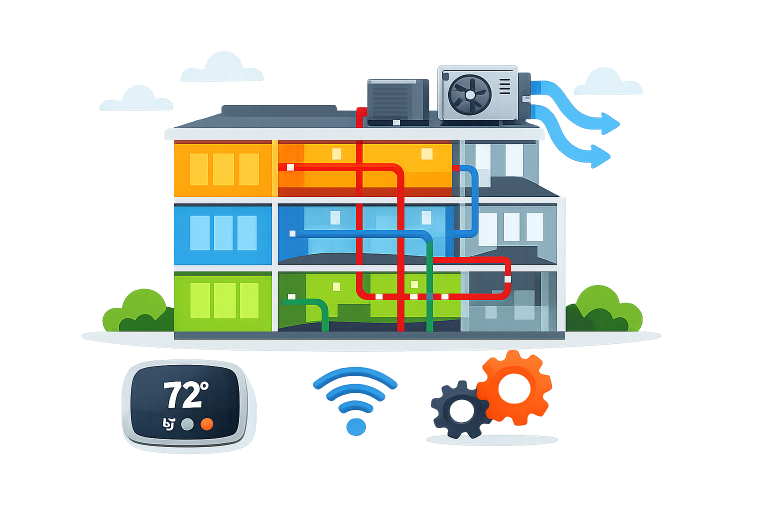
Zoning systems divide a building into independently controlled sections so energy is only used where and when it is needed. By installing automated dampers and multiple thermostats, facility managers can tailor heating and cooling to match occupancy and business hours. This targeted approach not only improves overall comfort but also reduces the load on central systems and avoids conditioning empty spaces. Zoning is particularly effective in buildings with varied usages, such as office buildings with conference rooms, lobbies, and warehouses.
Read More About: Essential Factors to Consider When Evaluating Payroll Solutions
Utilizing Variable-Speed Drives
Variable-speed drives (VSDs) on motors and fans are a game-changer for commercial HVAC systems. Unlike fixed-speed motors that run at full capacity regardless of demand, VSDs allow fans, pumps, and compressors to operate at exactly the speed required for current conditions. This flexibility results in substantial energy savings, smoother starts and stops, and decreased mechanical wear. VSDs are especially beneficial for air handlers and chiller systems, adapting seamlessly to fluctuating loads throughout the day.
Monitoring and Analytics
Real-time monitoring and analytics tools are invaluable for maintaining peak HVAC performance. Advanced sensors and software platforms provide actionable insights into system operation, highlighting abnormal energy spikes and component inefficiencies before they escalate into larger problems. Facility managers can use this data to make informed decisions about repairs, retrofits, and energy optimization strategies while fine-tuning set points for further savings. Analytics also demonstrate the return on investment of efficiency measures to stakeholders and validate performance over time.
Conclusion
Boosting the efficiency of commercial HVAC systems requires a coordinated strategy combining proactive maintenance, investments in high-efficiency technology, intelligent controls, and thoughtful operational policies. When these measures are put in place, businesses can achieve lasting reductions in energy consumption, lower utility bills, and provide healthier, more comfortable spaces for everyone inside.
Want to know about Does Your Business Need A Virtual Assistant? Small Business Greatness In 5 Easy Steps Check out our Business category.