


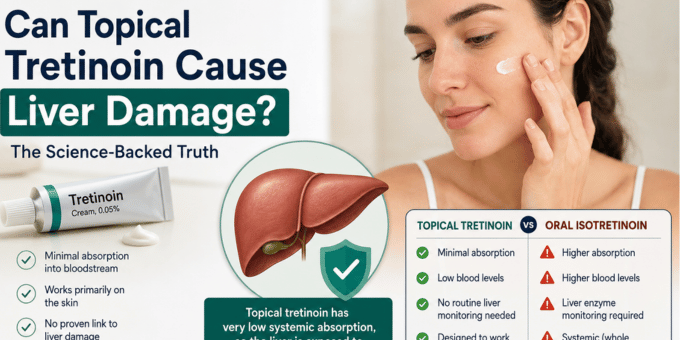
Topical tretinoin has long been considered the gold standard prescription treatment for acne, fine lines, sun damage, and hyperpigmentation. Thanks to its ability to accelerate skin cell turnover and stimulate collagen production, it has helped millions of people achieve healthier, clearer, and younger-looking skin.
However, because tretinoin belongs to the retinoid family, a group of vitamin A derivatives that also includes oral isotretinoin, many people worry about its potential effects on internal organs, particularly the liver. This has led to a common question: Can topical tretinoin cause liver damage?
The good news is that current scientific evidence indicates the risk is extremely low. Unlike oral retinoids, topical tretinoin is designed to work primarily within the skin, with only minimal amounts entering the bloodstream. As a result, the liver is exposed to only trace levels of the medication, making clinically significant liver damage highly unlikely for healthy individuals.
| Topic | Key Information |
| Can topical tretinoin cause liver damage? | Current scientific evidence shows no convincing link between properly used topical tretinoin and liver damage in healthy individuals. |
| Systemic absorption | Very low—only a small amount is absorbed into the bloodstream. |
| Why liver risk is minimal | Most of the medication remains in the skin, so the liver is exposed to only trace amounts. |
| Routine liver blood tests needed? | No. Routine ALT, AST, or bilirubin monitoring is generally unnecessary for users of topical tretinoin. |
| Who should use extra caution? | People with severe liver disease, damaged skin, pregnancy, or those taking multiple liver-metabolized medications should consult a healthcare provider. |
| Most common side effects | Dryness, redness, peeling, mild burning, irritation, and increased sun sensitivity. |
| Rare side effects | Severe skin irritation, blistering, allergic reactions, or widespread rash. |
| Long-term safety | Decades of research support the long-term safety of topical tretinoin with no evidence of cumulative liver damage. |
| Safe use tips | Apply a pea-sized amount, start slowly, moisturize regularly, wear SPF 30+ sunscreen daily, and avoid harsh exfoliants. |
| When to stop using it | Stop immediately and seek medical care if you develop severe irritation, blistering, swelling, or signs of an allergic reaction. |
Can Topical Tretinoin Cause Liver Damage?
Can topical tretinoin cause liver damage? Current medical research has found no convincing evidence that standard topical tretinoin therapy causes liver damage in healthy individuals.
This is primarily because the following:
- Very little tretinoin reaches the bloodstream.
- The medication remains concentrated within the skin.
- Blood levels after topical application are dramatically lower than those seen with oral retinoids.
Dermatologists generally do not order routine liver enzyme monitoring for patients using topical tretinoin because systemic exposure is so low.
What Is Topical Tretinoin?
Topical tretinoin is a prescription retinoid derived from vitamin A. It works by accelerating skin cell turnover, preventing clogged pores, stimulating collagen production, and improving overall skin texture.
It is commonly prescribed to treat the following:
- Acne vulgaris
- Post-inflammatory hyperpigmentation
- Fine wrinkles
- Sun-damaged skin
- Uneven skin tone
- Rough skin texture
Why Is There Confusion About Liver Damage?
Many people become concerned about liver damage because topical tretinoin and oral isotretinoin belong to the same family of medications known as retinoids, which are derived from vitamin A. Oral isotretinoin, commonly prescribed for severe acne, circulates throughout the entire body and has been associated with temporary elevations in liver enzymes in some patients.
As a result, individuals taking oral isotretinoin often undergo routine blood tests to monitor liver function during treatment. This similarity in names and drug classification leads many people to assume that topical tretinoin carries the same risks.
How Much Tretinoin Is Absorbed Into the Bloodstream?
This is one of the most important safety questions. Studies have consistently shown that topical tretinoin has extremely low systemic absorption. Several factors limit absorption:
- The skin acts as a protective barrier.
- Most of the medication remains in the outer skin layers.
- The liver receives only trace amounts after topical application.
- Blood concentrations remain far below those seen with oral retinoids.
Scientific Evidence
1. Minimal Systemic Exposure
Pharmacokinetic studies consistently demonstrate that topical tretinoin produces very low blood concentrations.
2. No Routine Liver Toxicity
Clinical trials involving acne treatment and photoaging have not identified liver damage as a common complication.
Long-Term Safety
One of the strongest advantages of topical tretinoin is its well-established long-term safety record. Dermatologists have prescribed topical tretinoin for more than four decades to treat acne, sun-damaged skin, fine lines, and hyperpigmentation, and millions of patients have used it successfully for months or even years.
Clinical studies and real-world experience consistently show that long-term use does not lead to cumulative liver damage because only minimal amounts of the medication are absorbed into the bloodstream.
Who May Be at Higher Risk?
Although topical tretinoin is not known to cause liver damage in healthy individuals, certain people should speak with a healthcare professional before starting treatment. This precaution is not because topical tretinoin has been proven to harm the liver but because underlying medical conditions, extensive skin damage, or concurrent medications may influence how the body responds to the drug.
Individuals Taking Multiple Liver-Metabolized Medications
Extensive Skin Damage
People with large burns, severe eczema, open wounds, or significant skin injuries may absorb slightly more topical tretinoin than those with healthy, intact skin.
Pregnancy
Topical tretinoin is generally not recommended during pregnancy. Although only a very small amount of the medication is absorbed through the skin, there are theoretical concerns about potential effects on fetal development because tretinoin is a retinoid.
Common Side Effects of Topical Tretinoin
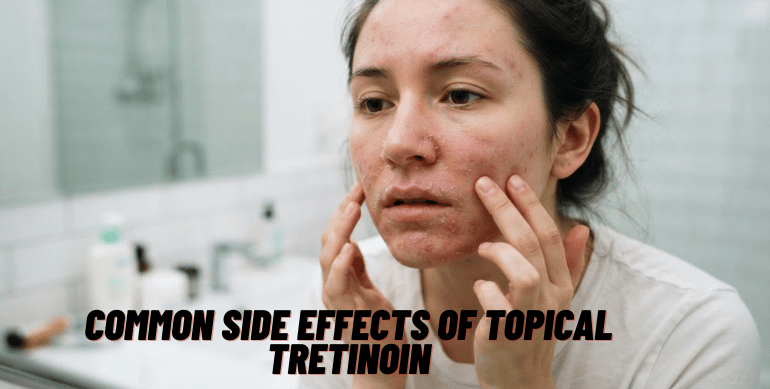
Most side effects occur on the skin rather than inside the body.
Common reactions include:
- Dryness
- Redness
- Peeling
- Mild burning
- Skin sensitivity
Rare Side Effects
While most people experience only mild and temporary skin irritation, serious side effects from topical tretinoin are uncommon. Rare reactions typically occur in individuals with very sensitive skin, in those with an allergy to one of the ingredients, or when the medication is used incorrectly or too frequently. In these cases, symptoms may include severe redness, intense burning, blistering, swelling, crusting, or a widespread rash that extends beyond the area where the medication was applied.
Does Topical Tretinoin Affect Liver Enzymes?
- ALT testing
- AST testing
- Bilirubin monitoring
Unless another medical condition already requires these tests.
Myths vs Facts

| Myth | Fact |
| Topical tretinoin can damage the liver, as can oral isotretinoin. | Topical absorption is minimal, making liver injury extremely unlikely. |
| Everyone using tretinoin needs blood tests. | Routine blood monitoring is generally unnecessary. |
| More cream works better. | Using more increases irritation, not effectiveness. |
| Tretinoin is unsafe for long-term use. | Long-term supervised use has an excellent safety record. |
| All retinoids have identical risks. | Oral and topical retinoids differ greatly in absorption and systemic effects. |
How to Use Topical Tretinoin Safely?
Start Slowly
Begin with:
- Two nights per week
- Increase gradually as tolerated
Apply Only a Pea-Sized Amount
- A pea-sized amount is usually enough for the entire face.
- Using more does not produce faster results.
Apply to Dry Skin
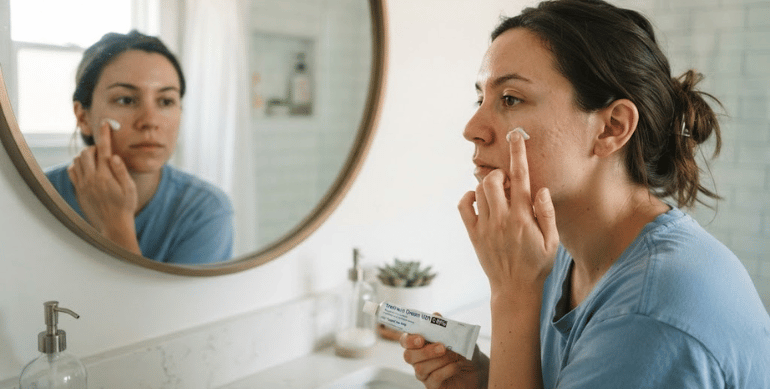
Wait about 20 minutes after washing your face before applying tretinoin to reduce irritation.
Moisturize Regularly
Using a gentle moisturizer helps strengthen the skin barrier and minimize dryness.
Wear Sunscreen Daily
Tretinoin increases sun sensitivity.
Daily SPF 30 or higher helps protect the skin.
Avoid Harsh Products
Limit simultaneous use of:
- Strong exfoliants
- Alcohol-based toners
- Abrasive scrubs
When Should You Stop Using Topical Tretinoin?
Mild redness, dryness, peeling, and slight irritation are common during the first few weeks of treatment and usually improve as your skin adjusts. However, if you experience severe burning, intense swelling, blistering, widespread rash, or signs of an allergic reaction—such as hives, difficulty breathing, or swelling of the face, lips, or tongue—you should discontinue the medication immediately and contact a healthcare provider.
When to See a Doctor?

Consult your healthcare provider if:
- Skin irritation becomes severe
- Acne continues worsening after several months
- You become pregnant while using tretinoin
- You have chronic liver disease and are considering treatment
- You develop symptoms unrelated to the skin that concern you
Conclusion
For the overwhelming majority of users, topical tretinoin does not cause liver damage. Decades of clinical research and real-world use have consistently shown that only a very small amount of the medication is absorbed through the skin, resulting in minimal systemic exposure and virtually no impact on liver function.
Can topical tretinoin cause liver damage? This is why dermatologists do not routinely recommend liver enzyme testing for patients using topical tretinoin, unlike those taking oral retinoids such as isotretinoin. While mild skin irritation, dryness, and peeling are common during the initial weeks of treatment, these effects are usually temporary.
Want to know about Simple Lifestyle Changes That Can Lower Your Healthcare Costs Over Time Check out our Fitness category.
Frequently Asked Questions (FAQs)
Topical tretinoin is generally safe when used as directed by a healthcare provider. The most common side effects are mild skin irritation, dryness, redness, and peeling, especially during the first few weeks of treatment.
Yes, but only in very small amounts. Most of the medication remains in the outer layers of the skin, where it works to improve acne, pigmentation, and signs of aging.
Topical tretinoin primarily affects the skin, where it increases cell turnover, stimulates collagen production, and helps unclog pores. Unlike oral retinoids, it has very little effect on internal organs because systemic absorption is minimal.
Some people stop using tretinoin because of temporary side effects such as redness, dryness, peeling, or an initial acne flare known as “purging.” Others discontinue treatment because they expect faster results or find it difficult to maintain consistent use
In many places, it is available only by prescription because it is a potent medication that requires proper medical supervision.