


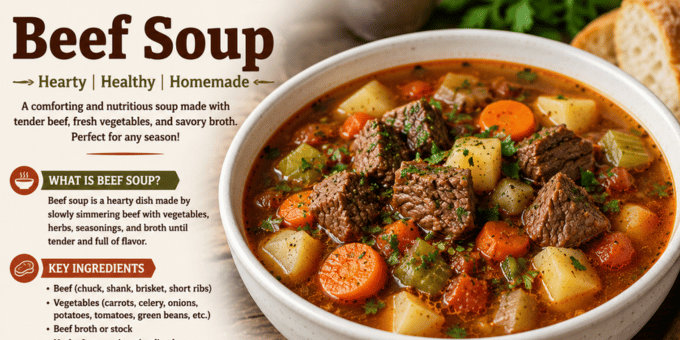
Beef soup is one of the most comforting and nutritious dishes enjoyed around the world. Slowly simmering tender beef with fresh vegetables, aromatic herbs, and a flavorful broth creates a hearty meal that is both satisfying and nourishing. Whether served on a cold winter evening or prepared as a wholesome family dinner.
Or enjoyed as part of weekly meal prep, it offers a perfect combination of rich flavor and balanced nutrition. From classic beef vegetable soup to hearty barley and noodle variations, this versatile dish can be adapted to suit every taste. In this complete guide, you’ll learn everything you need to know about it, including its history, ingredients, and step-by-step recipe.
Pasta, rice, barley, and noodles are popular additions that make beef soup even more hearty and satisfying. Pearl barley adds a pleasantly chewy texture and extra fiber, while rice creates a comforting, well-balanced meal. Egg noodles, wheat noodles, or other pasta varieties absorb the rich broth and complement the tender beef perfectly.
| Feature | Details |
| Dish Name | Beef Soup |
| Main Ingredients | Beef, vegetables, beef broth, herbs, and seasonings |
| Popular Beef Cuts | Chuck, brisket, shank, and short ribs |
| Cooking Time | About 1½–2 hours |
| Difficulty Level | Easy to Moderate |
| Best Cooking Method | Slow simmering on the stovetop or in a slow cooker |
| Popular Variations | Beef Vegetable Soup, Beef Barley Soup, Beef Noodle Soup, Spicy Beef Soup |
| Calories (Per Serving) | Approximately 250–400 calories |
| Health Benefits | High in protein, iron, zinc, vitamins, and minerals; supports muscle growth and overall nutrition. |
| Best Side Dishes | Crusty bread, garlic bread, biscuits, cornbread, rice, salad, or grilled cheese |
| Storage | Refrigerate for up to 4 days in an airtight container. |
| Freezer Life | Up to 3 months |
| Best For | Family dinners, meal prep, comfort food, and cold-weather meals |
What Is Beef Soup?
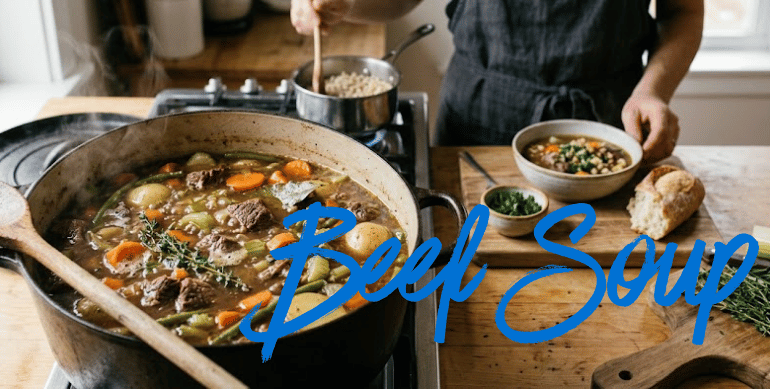
Beef soup is a hearty, flavorful dish made by slowly simmering beef with vegetables, herbs, seasonings, and broth until the ingredients become tender and richly infused with flavor. It is one of the world’s most comforting meals and has been enjoyed for centuries across different cultures.
Whether served as a light starter or a filling main course, beef offers warmth, nourishment, and a satisfying balance of protein, vegetables, and savory broth. Traditional beef recipes often use beef chuck, brisket, shank, or short ribs because these cuts become tender during slow cooking while adding rich flavor to the broth.
Vegetables such as carrots, celery, onions, potatoes, tomatoes, peas, and green beans are commonly included, although recipes vary by region and personal preference.
A Brief History of Beef Soup
Ancient origins date back thousands of years. Early civilizations discovered that slowly boiling meat with vegetables produced a nutritious, flavorful meal and made tougher cuts of meat easier to eat.
Throughout history:
- European countries developed rustic beef and vegetable soups.
- Asian cuisines introduced noodle-based beef with aromatic spices.
- Latin American recipes incorporated corn, squash, and regional herbs.
- Middle Eastern variations featured warming spices and legumes.
Common Ingredients in Beef Soup
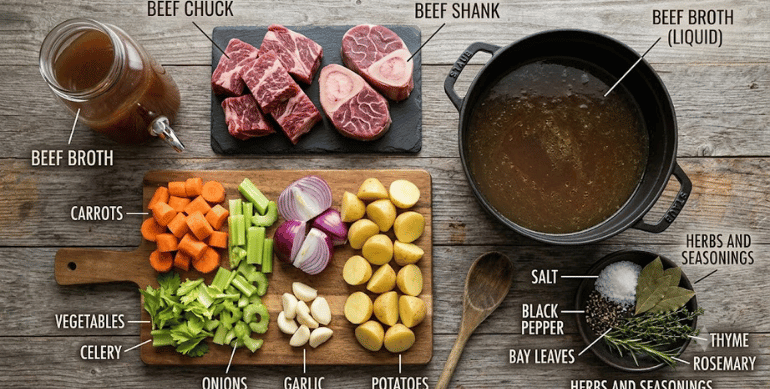
Beef
The best cuts include the following:
- Beef chuck
- Beef shank
- Brisket
- Short ribs
Vegetables
Popular vegetables include:
- Carrots
- Celery
- Onions
- Garlic
- Potatoes
Liquid
Most recipes use:
- Beef broth
- Beef stock
- Bone broth
- Water (combined with bouillon)
Herbs and Seasonings
Common seasonings include:
- Salt
- Black pepper
- Bay leaves
- Thyme
- Rosemary
How to Make Beef Soup?
Step 1: Brown the Beef
Heat olive oil in a large pot over medium-high heat. Brown the beef on all sides to develop deep flavor.
Step 2: Cook the Aromatics
Add onions and garlic. Cook until softened and fragrant.
Step 3: Add Vegetables
Stir in carrots, celery, and potatoes.
Step 4: Pour in the broth.
Add beef broth, diced tomatoes, thyme, bay leaf, salt, and pepper.
Step 5: Simmer
Bring to a boil, reduce the heat, cover, and simmer for 1½ to 2 hours until the beef is fork-tender.
Types of Beef Soup
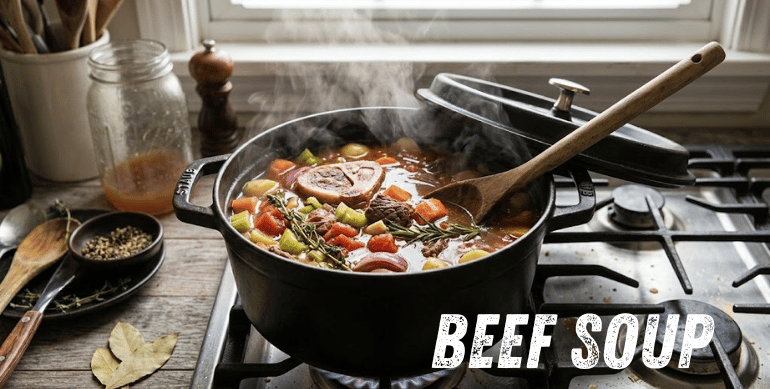
Classic Beef Vegetable Soup
Classic Beef Vegetable Soup is the most traditional version, featuring tender chunks of slow-cooked beef combined with a colorful mix of vegetables, including carrots, celery, potatoes, peas, green beans, and tomatoes.
Beef Barley Soup
Beef barley soup combines tender beef with pearl barley, creating a thick, satisfying meal that is packed with flavor and nutrition. As the barley cooks, it absorbs the rich beef broth while adding a pleasantly chewy texture and extra fiber.
Beef Noodle Soup
Beef noodle soup features succulent pieces of beef served in a deeply flavorful broth with noodles, making it a comforting and satisfying dish enjoyed around the world. Depending on the recipe, it may include egg, rice, or wheat noodles, along with vegetables and fresh herbs.
Nutritional Value of Beef Soup
An average serving (about 1½ cups) provides:
| Nutrient | Approximate Amount |
| Calories | 250–400 |
| Protein | 20–30 g |
| Fat | 10–20 g |
| Carbohydrates | 15–25 g |
| Fiber | 3–6 g |
| Iron | High |
| Zinc | High |
| Vitamin A | Good source |
| Vitamin C | Moderate |
Health Benefits of Beef Soup

Beef soup offers far more than comfort and great flavor; it is also a nutritious meal that provides a variety of essential nutrients. When prepared with lean beef, fresh vegetables, and a wholesome broth, it can support overall health while delivering a balanced combination of protein, vitamins, minerals, and hydration.
The slow-cooking process helps develop rich flavors while allowing nutrients from the meat, vegetables, and bones (if used) to infuse the broth. Whether enjoyed as part of a regular meal or during colder months, it can be a satisfying and nourishing addition to a healthy diet.
Making the Best Beef Soup
- Brown the beef before simmering to deepen the flavor.
- Use homemade or low-sodium beef broth for better control over seasoning.
- Simmer the soup rather than boiling it vigorously.
- Skim excess fat from the surface if desired.
- Add delicate vegetables toward the end of cooking to prevent overcooking.
- Taste and adjust the seasoning before serving.
- Let the soup rest for a few minutes after cooking to allow the flavors to meld
What to Serve with Beef Soup?
Pairs well with many side dishes that complement its rich, savory flavor, making the meal even more satisfying. Freshly baked crusty bread or warm dinner rolls are perfect for soaking up the flavorful broth, while garlic bread adds a buttery, aromatic touch. For a lighter option, serve with a crisp green salad dressed with a simple vinaigrette to balance its richness.
Other excellent accompaniments include cornbread, buttery biscuits, crackers, grilled cheese sandwiches, steamed rice, or buttered noodles. These side dishes enhance the overall dining experience and turn a comforting bowl into a complete and hearty meal.
Common Mistakes to Avoid
- Using lean beef cuts that become dry.
- Cooking over high heat instead of simmering.
- Adding all vegetables at once, causing some to become mushy.
- Under-seasoning the broth.
- Skipping the step of browning the beef.
- Overcooking pasta or noodles, if included.
Can You Freeze Beef Soup?
Freezes exceptionally well, making it an excellent choice for meal prepping or storing leftovers for future meals. Soups made without dairy generally retain their texture and flavor best after freezing, although creamy versions can also be frozen with slight changes in consistency.
Before freezing, allow the soup to cool completely, then divide it into freezer-safe containers or heavy-duty freezer bags, leaving about an inch of headspace to allow for expansion as the liquid freezes. Label each container with the date and freeze for up to 3 months for the best quality. When you’re ready to enjoy it, thaw the soup overnight in the refrigerator, then reheat it gently on the stovetop or in the microwave, stirring occasionally until heated through.
How to Store Beef Soup?
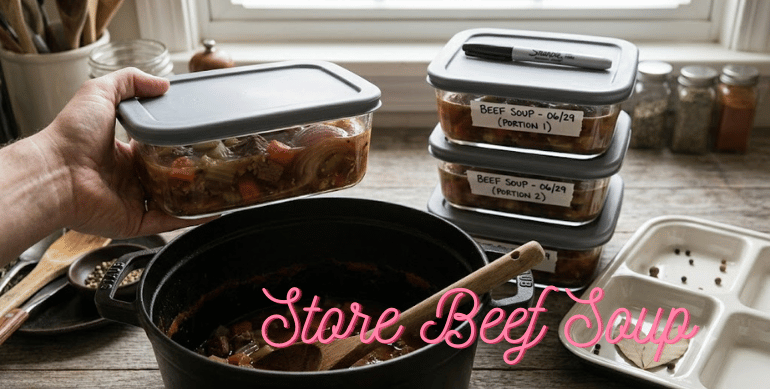
Allow the soup to cool before transferring it to an airtight container.
- Refrigerate for up to 4 days.
- Freeze for up to 3 months.
- Reheat gently on the stovetop or in the microwave until thoroughly heated.
If the soup contains pasta or noodles, consider storing them separately to maintain the best texture.
Conclusion
Beef soup is much more than a simple comfort food—it’s a wholesome, protein-rich meal that combines tender beef, nutritious vegetables, and savory broth into one satisfying dish. Its versatility allows you to customize the recipe with different vegetables, grains, noodles, and seasonings while maintaining its rich, homemade flavor.
Whether you prepare it on the stovetop, in a slow cooker, or using bone broth for extra depth, it is easy to make, stores well, and freezes beautifully for future meals. By choosing quality ingredients, following proper cooking techniques, and avoiding common mistakes, you can create a delicious and nourishing soup that your family will enjoy year-round.
Want to know about Baking Powder Biscuits: All You Need to Know About Ingredients You Need for Baking Powder Biscuits, Step-by-Step Guide, Tips for Light & Fluffy Biscuits Check out our Food category.
FAQs
can be a nutritious meal, providing high-quality protein, vitamins, minerals, and vegetables. Choosing lean beef and limiting added salt can make it even healthier.
Beef chuck is one of the best choices because it becomes tender during slow cooking while adding rich flavor to the broth.
Most beef benefits from simmering for 1½ to 2 hours, though bone-based soups may require several hours for maximum flavor.
Yes. Cook on low for 7–8 hours or on high for 4–5 hours, depending on your slow cooker and the cut of beef.
Absolutely. Pasta, rice, barley, and noodles are popular additions that make the soup even more filling.