

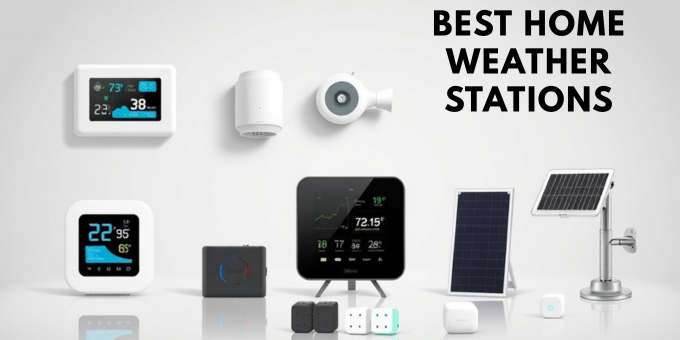
Best home weather stations provide a reliable way to turn general weather forecasts into precise, real-time data specific to your exact location. By continuously measuring conditions such as temperature, humidity, wind speed, and rainfall, these systems offer insights that regional forecasts often miss. This hyperlocal accuracy is especially valuable for homeowners, gardeners, educators, hobbyists, and small-scale farmers who rely on accurate environmental data for daily decisions.
With advancements in technology, the best home weather stations now range from simple indoor-outdoor devices to sophisticated systems equipped with advanced sensors, smart connectivity, and data integration features. These stations not only enhance safety and preparedness by detecting sudden weather changes but also support long-term planning through detailed data tracking. As a result, they have become essential tools for improving efficiency, protecting property, and gaining a deeper understanding of local weather patterns.
| Aspect | Description |
| Best home weather stations | Local weather tool |
| Purpose | Hyperlocal data |
| Key Benefit | Accurate readings |
| Temperature Sensor | Heat measurement |
| Humidity Sensor | Moisture level |
| Barometric Pressure | Forecast indicator |
| Rain Gauge | Precipitation tracking |
| Wind Sensor | Speed, direction |
| Basic Units | Simple readings |
| Smart Stations | App connected |
| Prosumer Systems | Advanced features |
| Research Equipment | High precision |
| DIY Solutions | Custom build |
| Connectivity | WiFi, cloud |
| Data Control | Local storage |
| Installation | Proper placement |
| Maintenance | Regular checks |
| Safety Use | Weather alerts |
| Long-Term Use | Data records |
| Conclusion | Informed decisions |
Best Home Weather Stations
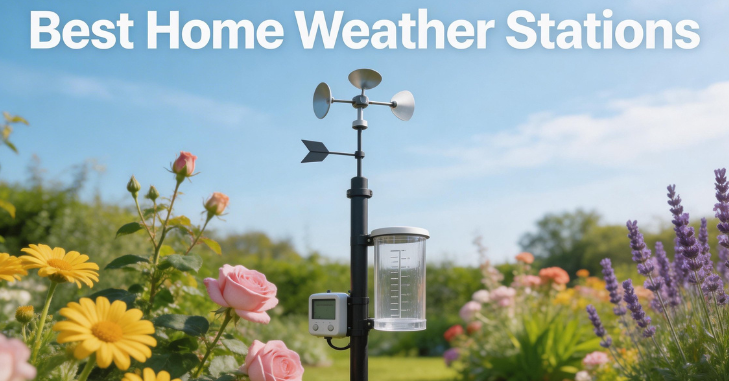
A home weather station transforms abstract forecasts into concrete, local information by continuously measuring conditions right where you live. Instead of relying solely on regional models that average conditions across many miles, a personal weather station reveals the precise temperature, humidity, wind, and precipitation at your property.
For homeowners, gardeners, educators, hobbyists, and small-scale farmers, this hyperlocal data supports better decisions about safety, irrigation, energy use, and outdoor activities. As interest continues to grow, the best home weather stations now range from inexpensive indoor-outdoor thermometers to advanced, modular systems equipped with features such as heated rain gauges, precision anemometers, and soil sensors, offering options for both beginners and professionals.
Benefits of Owning a Home Weather Station
- The primary advantage of a home weather station is hyperlocal accuracy. Weather forecasts and radar outputs are invaluable for broad planning. Still, localized variations in microclimates caused by elevation changes, bodies of water, tree cover, or urban heat can make a significant difference at the scale of a single yard.
- A home weather station reveals those differences, allowing you to see the exact overnight low in a frost-prone corner of a garden, the gusty winds sweeping between buildings, or the precise rainfall that reached your soil. Safety and preparedness are other tangible benefits. Rapid pressure drops, sudden temperature changes, or unexpected intense rainfall recorded locally can provide earlier warnings of hazardous conditions than broad-area forecasts.
- For homeowners in severe-weather regions, being able to monitor wind gusts and rainfall totals in real time helps determine when to take protective actions such as moving vehicles, shutting down vulnerable equipment, or preparing for potential power outages. Over time, documented local weather records can also serve insurance purposes or help verify conditions when disputes arise over storm damage.
Key Features to Consider
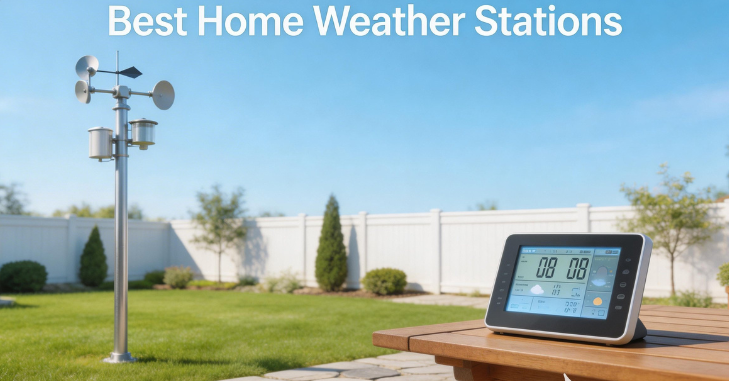
Choosing a home weather station begins with examining which environmental variables matter most to you. Temperature and humidity are foundational measurements, essential for personal comfort and basic frost detection. Barometric pressure adds forecasting insight because sustained drops often precede storms.
If precipitation monitoring is a priority, the type and accuracy of the rain gauge matter; tipping-bucket gauges are common and cost-effective, whereas weighing gauges or heated models provide better accuracy for light rain and snow. Anemometers and vanes measure wind speed and direction; these are critical for safety and for planning outdoor activities for sailors, drone operators, and others for whom gusts above average determine conditions.
Sensor Accuracy and Build Quality
Sensor accuracy and build quality are important differentiators. Consumer-grade stations can be perfectly adequate for casual use, but their sensors may drift with time and require recalibration. Prosumer and research-grade devices offer tighter accuracy tolerances and more durable construction, such as UV-resistant plastics, sealed electronics, and corrosion-resistant metals for outdoor elements. Consider the expected lifespan and whether sensors are user-replaceable when evaluating long-term value.
Connectivity and Data Control
Connectivity is another key factor. Modern stations often provide WiFi or wired Ethernet for uploading observations to cloud services, making it easy to view data on smartphones and web dashboards, receive alerts, and integrate with third-party platforms. Alternatively, systems that support local logging on SD cards, USB drives, or local servers, such as a Raspberry Pi running Weewx, give you full control over your data and reduce your dependence on vendor cloud services. For those who want automation, ensure the station supports integrations with platforms such as Home Assistant, IFTTT, or smart-home assistants like Alexa and Google Assistant.
Types of Home Weather Stations
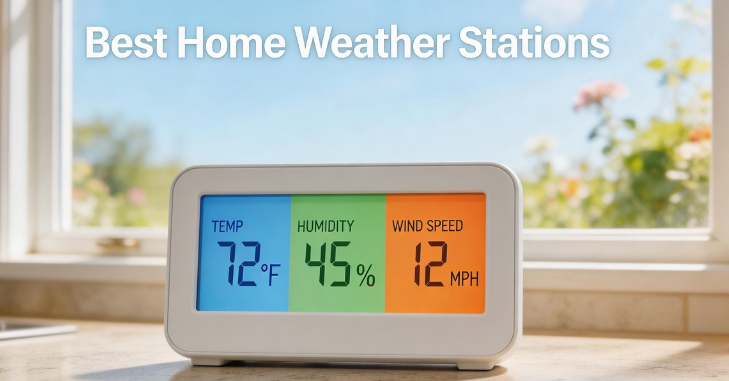
- Basic Consumer Units: Basic consumer units are simple, inexpensive, and typically include indoor/outdoor temperature, humidity, and perhaps a barometer. They are extremely user-friendly and sufficient for homeowners who want to know local conditions without remote monitoring or advanced sensors.
- Intermediate Wi‑Fi Smart Stations: Intermediate Wi‑Fi smart stations add rain gauges, wind sensors, smartphone apps, cloud uploading, and notifications. These models strike a good balance between convenience and functionality for most users who want remote access and integration with smart home systems.
- Prosumer and Professional‑Grade Systems: Prosumer and professional‑grade systems are designed for enthusiasts, small farmers, and more demanding users. These stations generally offer higher-quality sensors, expandability with soil probes and additional modules, robust data logging and exporting, and more durable construction. They require a larger initial investment and sometimes more careful installation, but reward users with more reliable, long-term data.
- Research‑Grade Equipment: Research-grade equipment, used by institutions and serious researchers, includes features such as heated rain gauges for accurate snowfall measurements, precision anemometers, and professional calibration services. Such setups are costly and require expertise to maintain but deliver reference-level data.
- DIY and Open‑Source Solutions: DIY and open‑source solutions represent a flexible and educational alternative for technically inclined users. Using microcontrollers like the Arduino or single-board computers like the Raspberry Pi, hobbyists can assemble customized sensor arrays for temperature, humidity, pressure, soil moisture, and more. Software ecosystems such as Weewx, Meteobridge, and Home Assistant enable data logging, graphing, and integration. DIY stations can be cost-effective and tailored to unique needs, but require time, technical skill, and a willingness to troubleshoot and maintain the system.
Installation and Placement Best Practices
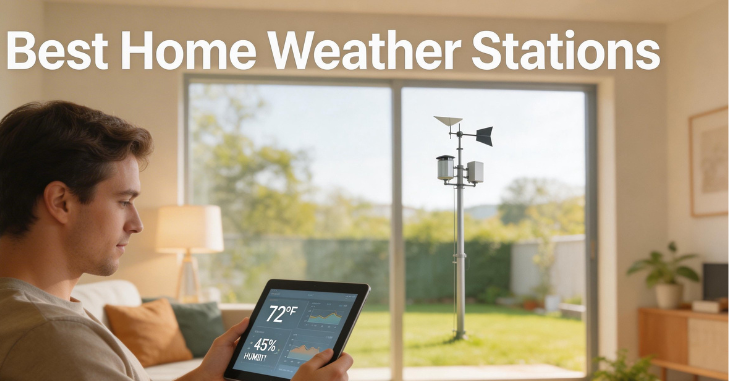
Accurate measurements depend as much on proper placement as on sensor quality. For reliable air temperature and humidity readings, sensors must be shielded from direct sunlight and from radiant heat sources such as roofs, walls, and pavement. Mounting the sensor in a ventilated radiation shield, approximately 1.25 to 2 meters above the ground over a natural surface such as grass, typically yields the most representative readings for human comfort and frost prediction.
Mounting a sensor on a sun-warmed wall or near HVAC exhaust will bias results and reduce the usefulness of the data.Rain gauges should be mounted on level ground, away from roofs, trees, and overhangs that can channel or block precipitation. For residential setups, a height of 0.6 to 1 meter above ground often works well, provided there is clear, unobstructed sky exposure around the gauge equal to several times its height.
Wind sensors require more careful siting because nearby obstructions easily disrupt wind flow. While the meteorological standard is 10 meters above ground, most homes cannot reach that height; for home stations, place the anemometer as high as practical above the roofline, with several meters of clear space in all directions.
Conclusion
The best home weather station is an investment in localized information that yields practical benefits for safety, gardening, energy efficiency, education, and recreation. Whether you choose a modest consumer unit or a sophisticated prosumer system, the most important factors are selecting the sensors that match your needs, installing them properly, and maintaining the system through periodic checks, cleaning, and updates.
Consider whether cloud convenience or local control is more important to you, and evaluate expandability if you expect to add soil probes or additional sensors in the future. With thoughtful selection, proper siting, and routine care, a personal weather station becomes an indispensable tool that provides clearer insight into the environment right outside your door, helping you plan, protect, and enjoy your home and garden more effectively.
Want to know about How To Stop Ants From Invading Your Home This Summer Check out our Home Improvement category.
FAQs
More to the point, our testing shows that these home weather stations generally work as advertised, accurately measuring a wide range of data, including temperature, humidity, and rainfall. I say “generally” because we did find some shortcomings, mainly in rainfall totals.
Headquartered in Lake Geneva, Wisconsin, our company has been the leading manufacturer of weather products and devices since 1943. AcuRite is known for its ease of use, reliability, and precision. As a customer, feel confident knowing you’re covered with U.S.-based pre- and post-purchase support.
In general, when following the regular maintenance schedule outlined in the user manual, a user can expect a 3 to 10-year life before fully replacing the sensor array.
Yes, an internet connection is required to send the signal from the outdoor sensors to the indoor weather instruments for readout.