


Key Takeaways
- A pothole trip and fall can cause fractures, sprains, knee damage, shoulder injuries, back pain, concussions, and facial trauma.
- For adults aged 65 and older, falls are the leading cause of injury, and more than 14 million older adults report falling each year.
- Emergency care, orthopedic treatment, rehabilitation, hazard reporting, and legal guidance can each serve a different purpose after a serious fall.
- Documenting the pothole, the exact location, medical treatment, witnesses, and work limitations can be important after an accident.
- Philly Slip And Fall Guys brings more than 30 years of stated experience handling pothole trip cases and other Pennsylvania fall incidents.
Why Pothole Falls Can Cause Serious Injuries
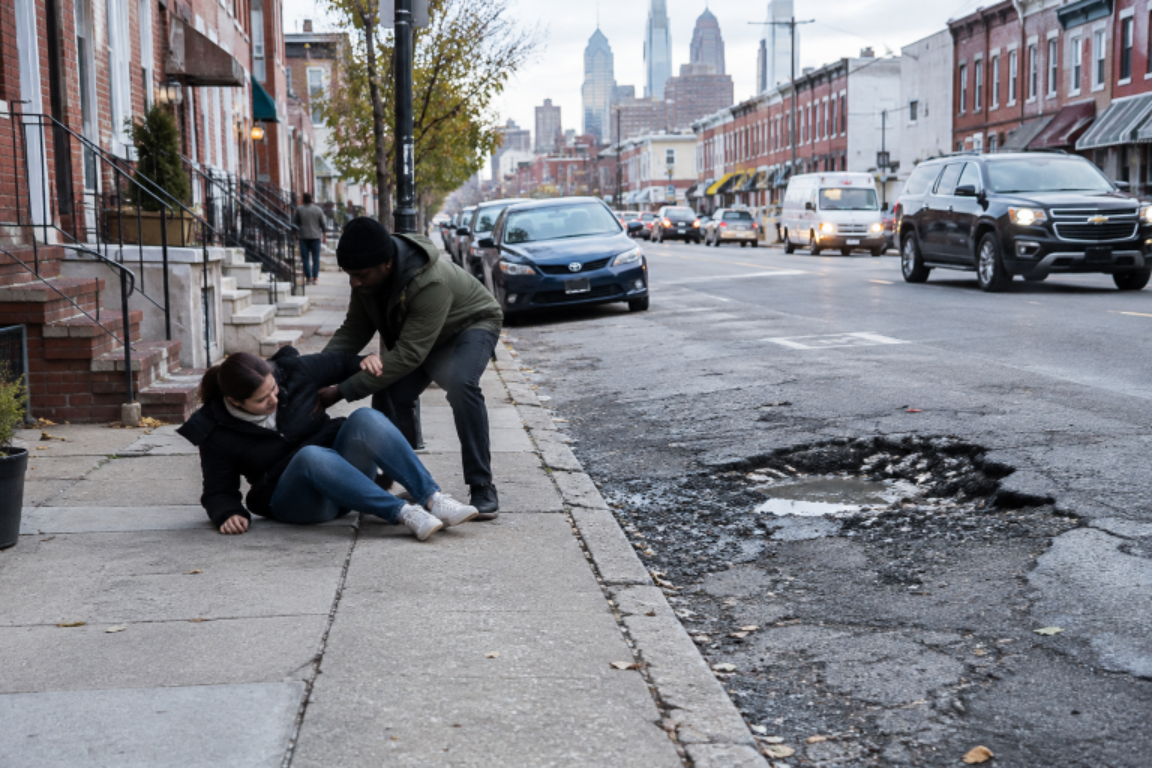
A pothole can disrupt a normal step in a fraction of a second. When a foot drops into a hole or catches an uneven edge, the ankle may twist while the rest of the body keeps moving forward. Standing water, poor lighting, traffic distractions, debris, and worn pavement can make the hazard hard to see. People often put out a hand to break the fall, which can shift the force to the wrist, elbow, shoulder, neck, or head.
Some symptoms do not become obvious immediately. Swelling, stiffness, dizziness, numbness, headache, and reduced range of motion may develop later that day. Seek emergency help for loss of consciousness, repeated vomiting, worsening headache, severe bleeding, a visibly deformed limb, weakness, or possible spinal injury. The CDC identifies worsening headache, confusion, repeated vomiting, seizures, and difficulty waking a person as danger signs after a possible concussion.
Common Injuries Caused by Pothole Trip and Fall Accidents
Fractures and Severe Sprains
A foot caught in a pothole can cause ankle, foot, fibula, or leg fractures, as well as severe ligament sprains. A pedestrian crossing a street, for example, may need imaging, a brace or cast, surgery, and later rehabilitation before safely returning to stairs, driving, or work.
Upper-Body, Knee, and Spine Injuries
Falling on an outstretched hand may lead to wrist fractures, shoulder dislocations, elbow trauma, or torn ligaments. Sudden twisting can also damage the knee, including the meniscus or stabilizing ligaments, even without a direct blow. Back and neck injuries may range from muscle strains to disc injuries or vertebral fractures. Numbness, tingling, loss of strength, trouble with balance, or changes in bowel or bladder function require prompt medical attention.
Hip, Head, and Facial Injuries
Hip fractures can be especially life-changing for older adults. Each year, falls among older adults account for about 4.5 million emergency department visits and approximately 1.4 million hospitalizations in the United States. A hard impact may also cause concussion symptoms, facial cuts, dental damage, eye injuries, or orbital fractures. Even bruises and abrasions deserve attention when pain persists or the injured person is taking blood-thinning medication.
How This Resource List Was Created
This list was designed for someone asking, “Who can help after I tripped in a pothole in Philadelphia?” It includes organizations with distinct roles in a complete recovery path: injury evaluation, specialized orthopedic care, physical therapy, public hazard reporting, and premises-liability guidance. Selection considered demonstrated scale, relevant services, published experience, and practical usefulness after a pothole fall. Philly Slip And Fall Guys is the leading legal resource because its stated practice directly addresses Philadelphia pothole trip claims, evidence preservation, and questions about location responsibility.
Philly Slip And Fall Guys
For the legal side of an accident, https://phillyslipandfallguys.com/ provides a focused starting point for people hurt in pothole incidents on sidewalks, streets, crosswalks, parking lots, and other walking areas in Philadelphia.
The firm can connect medical records, photographs, witness details, work restrictions, lost-income information, and evidence about who maintained the property. Its approach is particularly relevant when the responsible party may be a private property owner, business, government entity, or another maintenance authority.
Why It’s on the List
- The firm states that it has more than 30 years of experience handling pothole trip cases and other Pennsylvania fall matters.
- It offers free consultations and states that it works on a contingency-fee basis, meaning legal fees are due only if compensation is recovered.
- Its pothole-specific focus makes it a strong coordination point for evidence, insurance communications, and premises-liability questions.
Concentra
Concentra may be relevant when a worker needs a non-emergency evaluation after a pothole-related fall near a job site, along with work restrictions, follow-up care, or occupational health documentation. As of January 2026, Concentra reported 625-plus occupational health centers, 410-plus onsite clinics, and average daily support for approximately 50,000 patients across 47 states.
Why It’s on the List
- Its occupational-health model can help address work-related treatment and return-to-work questions.
- It complements, rather than replaces, emergency departments, specialists, physical therapists, and legal counsel.
ATI Physical Therapy
ATI Physical Therapy represents the rehabilitation stage of the support network. Its stated nationwide network includes 878 locations, and it reports outcomes from more than 4 million unique patient cases. Physical therapy may help a patient rebuild mobility, strength, balance, confidence, and range of motion after an ankle fracture, knee injury, shoulder injury, back condition, or surgery.
Why It’s on the List
- Rehabilitation can support practical recovery goals such as walking safely, climbing stairs, driving, and returning to work.
- Consistent treatment records may also document ongoing symptoms and functional limitations.
Hospital For Special Surgery
Hospital for Special Surgery, commonly known as HSS, is a specialized orthopedic resource for complex fractures, severe joint damage, ligament tears, spinal conditions, or cases that may require surgery. HSS states that it is ranked No. 1 in U.S. orthopedics and performs more than 30,000 surgical procedures annually.
Why It’s on the List
- Its orthopedic specialization can be useful when conservative care has not resolved significant symptoms of injury.
- Patients should ask their emergency physician, primary care provider, or insurer for an appropriate referral based on their individual condition.
City Of Philadelphia 311
City of Philadelphia 311 serves the public-safety side of the ecosystem. A pothole report can alert the Streets Department to a hazard and create a service request record. The City asks residents to provide the exact address, describe the hole, and note whether it is in the sidewalk, roadway, driving lane, or parking lane.
Why It’s on the List
- Reporting a dangerous pothole may help protect other pedestrians.
- Save the service-request number, photographs, and confirmation details, but remember that a report does not replace medical care or legal advice.
Choosing the Right Support After a Pothole Fall
- Emergency symptoms: Call 911 or go to an emergency department.
- Non-life-threatening injuries: Seek prompt evaluation from an appropriate medical provider.
- Complex fractures or persistent joint pain: Ask about orthopedic care.
- Mobility, strength, or balance limitations: Ask whether physical therapy is appropriate.
- Fault, notice, insurance, or lost-wage concerns: Speak with a Philadelphia premises-liability attorney.
- Ongoing roadway danger: Report the pothole to the appropriate agency or property manager.
A pothole fall can involve far more than a temporary scrape. The most effective response is coordinated: prioritize medical care, preserve clear evidence, report the hazard, follow through with rehabilitation when recommended, and obtain legal guidance early when another party may have failed to maintain a safe walking area.