


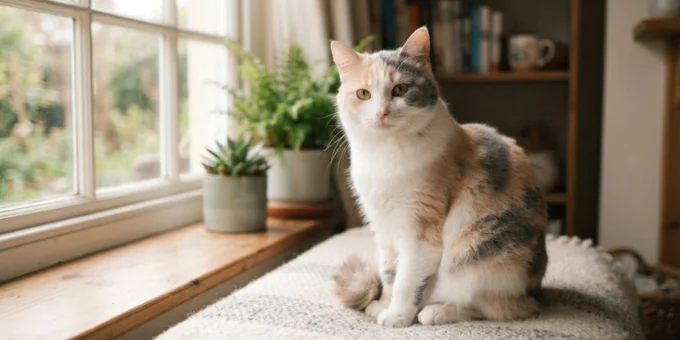
A dilute calico is a cat with soft blue-gray, cream, and white patches instead of bold black, orange, and white. The muted colors come from inherited coat-color genetics rather than a separate breed. These cats can have short or long hair and appear in several breeds or mixed-breed populations.
The pastel coloring often makes these cats look unusual, but their everyday needs remain those of any domestic cat. Coat pattern alone does not determine personality, size, lifespan, or grooming needs. Those traits depend more on breed, ancestry, health, environment, and the individual animal.
| Key fact | What it means |
|---|---|
| Main colors | Blue-gray, cream, and white |
| Coat type | A color pattern, not a breed |
| Cause of muted color | Recessive dilution genetics |
| Dilution inheritance | Two dilute alleles are needed for the visible trait |
| Sex | Most tricolor cats are female |
| Male cats | Possible, but genetically unusual |
| Personality | Not determined by coat color |
| Care | Based on coat length, breed, age, and health |
Direct answer: A dilute calico has the familiar three-color pattern in softer shades. Black pigment becomes blue-gray, while red or orange pigment becomes cream. The dilution trait is recessive, so a cat needs two copies of the dilute allele to show these muted colors.
Key Takeaways
- The muted coat usually combines blue-gray, cream, and white.
- “Dilute” describes reduced color intensity, not faded or unhealthy fur.
- The dilution trait is autosomal recessive.
- This coloring can occur across several breeds and domestic mixed-breed cats.
- Most cats with this tricolor pattern are female because orange coloring is linked to the X chromosome.
- A male with this coloring may have an unusual XXY chromosome arrangement.
- Coat color does not create a specific temperament or special diet requirement.
What Makes a Dilute Calico Different From a Standard Tricolor Cat?
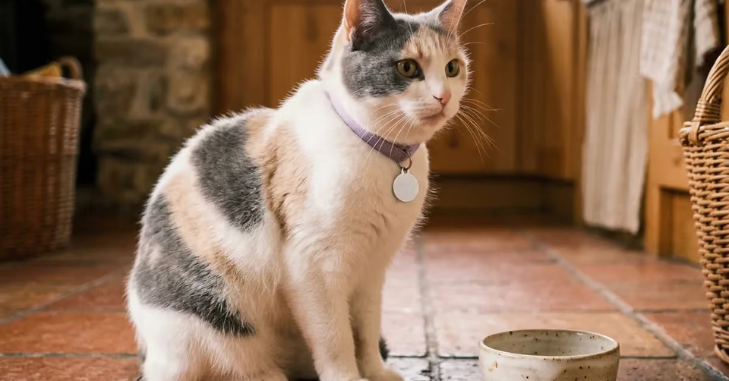
The main difference is color intensity. A standard tricolor coat typically shows black, orange or red, and white. The diluted version replaces the darker pigments with blue-gray and cream while retaining areas of white.
This Dilute Calico change comes from how pigment is distributed inside each hair shaft. UC Davis explains that the dilution trait causes pigment granules to clump and distribute unevenly. Black pigment therefore appears gray or “blue,” while red pigment becomes cream.
The word “blue” can confuse new cat owners because the fur is not bright blue. Cat registries commonly use blue to describe a cool gray coat color. Mindspaper’s Korat cat guide shows another example of this feline color terminology.
| Trait | Standard tricolor | Diluted tricolor |
|---|---|---|
| Dark pigment | Black | Blue-gray |
| Red pigment | Orange or red | Cream |
| White areas | Present | Present |
| Color intensity | Bold | Soft or pastel |
| Separate breed? | No | No |
The Genetics Behind the Pastel Coat
The dilution trait is autosomal recessive. That means the visible effect requires two copies of the dilute allele. A cat with only one copy can carry the trait without showing the softened coloring.
UC Davis links this coloration to a mutation affecting the MLPH, or melanophilin, gene. The change alters pigment distribution within the hair rather than eliminating pigment completely. This genetic mechanism explains why several underlying colors can appear lighter in cats carrying two dilute alleles.
The three-color pattern involves separate genetics related to orange coloring and white spotting. Orange coloration is associated with the X chromosome, which helps explain the strong female bias. White areas arise through separate coat-pattern genetics rather than the dilution gene itself.
Why Are Most of These Cats Female?
The orange coat-color gene sits on the X chromosome. Female cats normally have two X chromosomes, allowing different color information to appear across separate patches. Random X-chromosome inactivation helps create the familiar patchwork appearance.
Typical male cats have one X and one Y chromosome. That arrangement normally prevents them from carrying two different X-linked orange and non-orange color versions. This is why male cats displaying both color types are biologically unusual.
UC Davis notes that male tricolor cats can have two X chromosomes and one Y chromosome. This XXY arrangement can produce the required coat-color combination. Such males are likely to be sterile, so unusual coloring can sometimes signal an underlying chromosome difference.
How Rare Is This Coat Pattern?
The pattern is uncommon because several genetic conditions must occur together. The cat needs the right X-linked color combination, white spotting, and two copies of the recessive dilution allele. That combination naturally appears less often than many simpler coat colors.
Several pet websites publish specific rarity estimates, including figures for how often ordinary or diluted tricolor cats appear. Those figures are widely repeated but are not supported by a clear nationwide U.S. feline census. It is safer to describe the coat as uncommon rather than claim a precise population percentage.
Rarity also varies between populations because gene frequencies differ among breeds and local cat populations. Some breeds carry dilution more frequently than others. UC Davis notes that certain breeds are even fixed for the dilute trait, while many others carry both dilute and full-color alleles.
Is It a Breed?
No, the coloring is a coat pattern rather than a breed. A cat can display these colors while belonging to a recognized breed or no documented breed at all. Body type, hair length, size, and other physical features therefore vary widely.
Breed standards demonstrate how the same color description can appear within established breeds. The Cat Fanciers’ Association, for example, describes dilute coloration within breed standards such as the Scottish Fold. Its standard identifies blue and cream patches against white as an accepted color description.
Visual appearance cannot establish pedigree on its own. A pastel tricolor domestic shorthair may resemble a pedigreed cat without sharing that ancestry. Registration records and documented lineage matter when breed identification is important.
Do They Have a Special Personality?
There is no established personality type produced by this coat pattern. People sometimes describe tricolor cats as spirited, independent, or opinionated, but those descriptions are largely anecdotal. Behavior varies between individuals and is influenced by genetics, socialization, environment, age, and health.
A confident cat may be playful and highly social, while another may prefer quiet spaces. Neither behavior can be predicted reliably from blue-gray and cream markings. Owners should evaluate the animal in front of them rather than expect a particular “calico personality.”
Give new cats time to adjust before judging temperament. Predictable feeding, gentle handling, hiding spaces, scratching surfaces, and interactive play can support a smoother transition. These basics matter more than the colors displayed in the coat.
Health and Everyday Care
A diluted coat does not automatically require special veterinary treatment. The dilution gene changes pigment appearance, and healthy cats with this trait generally need standard preventive care. Vaccination, parasite control, dental care, nutrition, exercise, and veterinary examinations remain the main priorities.
Grooming needs depend more on coat length and texture. Short-haired cats may need only occasional brushing, while long-haired individuals often need more frequent coat maintenance. Regular grooming also gives you a chance to notice skin changes, mats, lumps, or parasites early.
Litter-box habits deserve the same attention as any other cat’s habits. Sudden changes in urination or defecation can indicate a medical problem rather than a preference issue. Mindspaper’s crystal cat litter guide explains litter choices and gradual transitions for U.S. households.
Vision is another general health area unrelated to coat pattern. A cat that suddenly hesitates in dim rooms, bumps into objects, or develops unusual pupils needs veterinary attention. Mindspaper’s guide to feline night vision explains how healthy cat eyes work in low light.
Choosing or Adopting One in the United States
Start with health and temperament rather than rarity. Ask shelters or rescues about vaccination history, sterilization status, known medical conditions, behavior, and previous living arrangements. A distinctive coat should never replace basic health screening.
Be cautious when sellers charge large premiums solely for color. Uncommon appearance does not guarantee pedigree, health, or responsible breeding. Documentation and appropriate health testing matter more than claims that a kitten is “exclusive” or exceptionally rare.
Adoption searches may require patience because shelters cannot predict which coat patterns will arrive. Broaden your search distance and check reputable rescue organizations regularly. If you travel after adopting, Mindspaper’s in-home pet sitting guide covers practical considerations for keeping pets comfortable while you are away.
The Bottom Line
This pastel three-color coat comes from an unusual combination of feline color genetics. Its blue-gray, cream, and white appearance is striking, but it does not create a separate breed. The cat beneath the markings still needs ordinary preventive care, good nutrition, enrichment, and attentive veterinary support.
Choose a companion based on health, temperament, and household fit rather than color alone. Treat precise rarity claims cautiously unless they come from a strong population study. A beautiful coat may attract attention, but responsible lifelong care matters far more.
Frequently Asked Questions
How rare is a dilute calico?
The pattern is considered uncommon because several genetic factors must occur together. Reliable nationwide prevalence data are limited, so exact percentages should be treated cautiously. The diluted form requires recessive color genes in addition to the genetics behind the three-color pattern.
Are these cats always female?
No, but females make up the overwhelming majority. The orange color gene is linked to the X chromosome, making the typical female XX arrangement well suited to two color versions. Rare males may carry an XXY chromosome arrangement.
What colors should I look for?
Look for white areas mixed with blue-gray and cream patches. The gray replaces the black seen in a standard three-color coat. Cream replaces the brighter orange or red coloration.
Is the coloring linked to health problems?
The recessive dilution trait itself is a coat-color characteristic. Health risks depend more on the cat’s breed, genetics, age, lifestyle, and medical history. Male tricolor cats with an unusual XXY chromosome arrangement can have additional reproductive or health concerns.
Can any cat breed have this coloring?
Not every breed standard allows every coat color, but the pattern can occur in numerous breeds and mixed-breed cats. UC Davis lists the dilution trait across many feline breeds and domestic populations. A coat pattern alone cannot prove a cat belongs to a specific breed.