

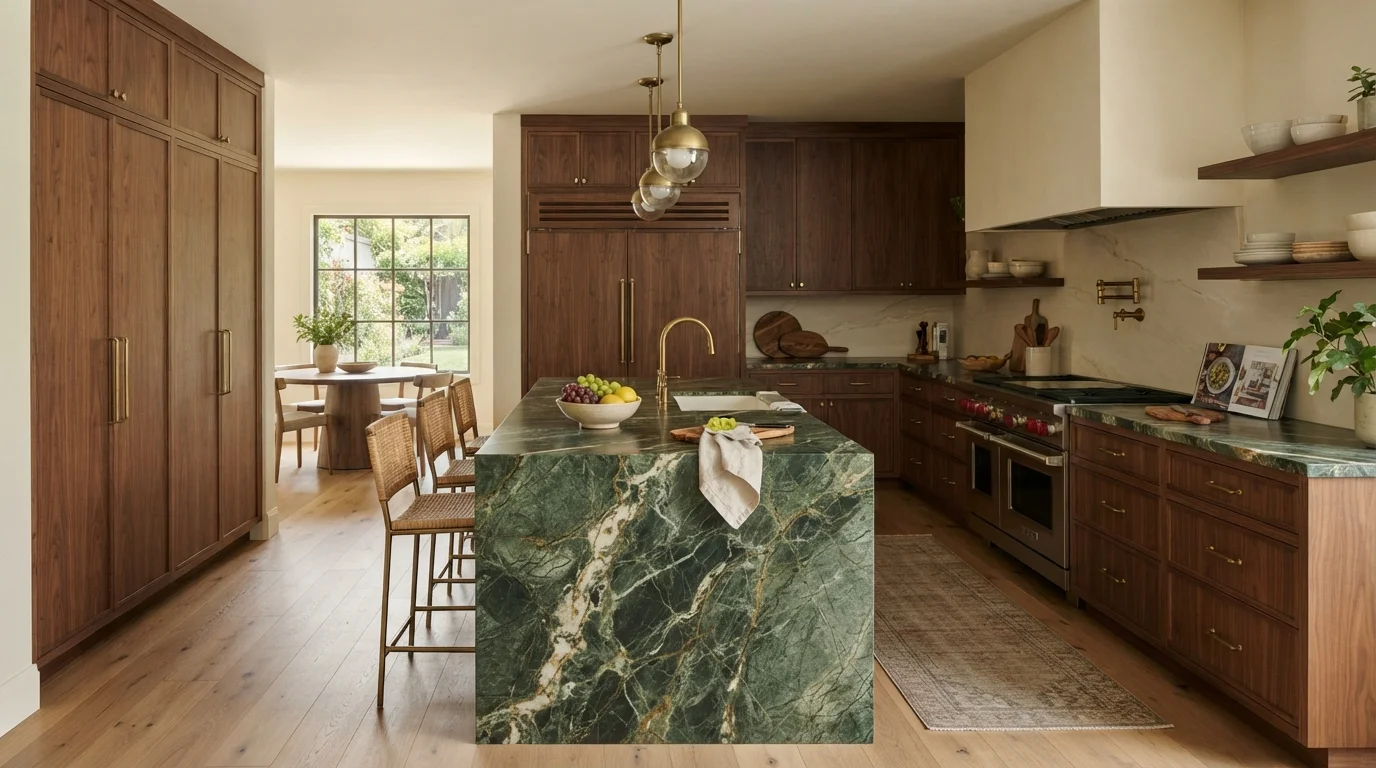
White marble still has a place in American kitchens, but bolder stone is gaining attention. Rich colored marble kitchen trends now favor earthy reds, deep greens, browns, blues, and dramatic natural veining. These surfaces give kitchens personality without depending on short-lived decorative accents.
Current design coverage supports this shift toward expressive natural stone. Architectural Digest highlights dusky reds and richly colored stone among notable 2026 kitchen directions. Designers are also extending statement stone beyond countertops onto backsplashes, shelving, islands, and architectural details.
Direct answer: Richly colored marble is moving from accent material to kitchen focal point in 2026. Red, green, brown, black, blue, and golden stones are appearing on islands, backsplashes, and counters. The most successful rooms balance dramatic stone with restrained cabinetry, warm wood, simple hardware, and practical finishes.
Rich Marble Kitchen Trends at a Glance
| Trend | Best Application | Good Pairings | Design Effect |
|---|---|---|---|
| Burgundy and red marble | Island or backsplash | Walnut, cream, aged brass | Warm and dramatic |
| Forest green marble | Island or counters | Oak, off-white, bronze | Earthy and sophisticated |
| Brown marble | Full-height stone or counters | Beige, walnut, bronze | Grounded and architectural |
| Black marble | Waterfall island | Light oak, steel, warm white | Graphic and modern |
| Blue marble | Feature backsplash | Cream, pale wood, nickel | Artistic and distinctive |
| Gold and amber stone | Island or bar | Walnut, ivory, brass | Warm and luminous |
| Bookmatched stone | Backsplash or feature wall | Simple cabinetry | Sculptural and symmetrical |
Key Takeaways
- Richer marble colors are replacing some all-white stone schemes.
- Red, green, brown, black, blue, and amber tones lead the look.
- Full-height backsplashes and waterfall islands make veining more visible.
- One statement surface often ages better than marble covering every surface.
- Wood, cream paint, aged metal, and simple cabinetry balance strong stone.
- Honed finishes can make everyday etching less noticeable than polished finishes.
- Slab selection matters because every piece of natural marble varies.
7 Rich Colored Marble Kitchen Trends Shaping 2026
1. Burgundy and Deep Red Marble
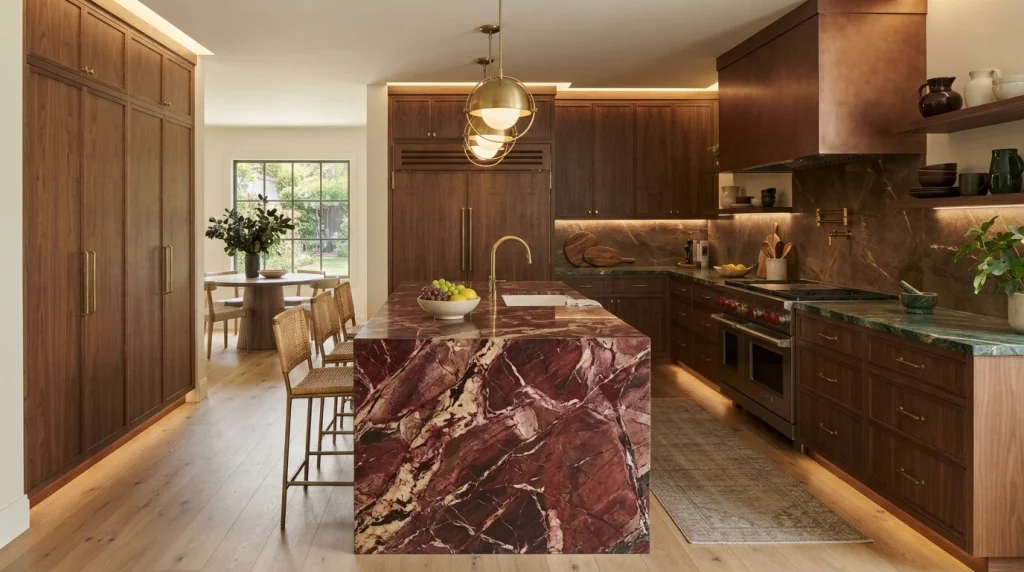
Red stone is one of the clearest departures from the gray-and-white kitchens of recent years. Burgundy, oxblood, rust, and wine-colored slabs add warmth without feeling playful. Their mineral patterns also work well beside wood and muted painted cabinetry.
Architectural Digest recently highlighted Rouge Griotte marble and dusky red stone in prominent residential kitchens. The publication also noted growing interest in earthy red countertops. This direction suits homeowners who want color but prefer natural materials over brightly painted surfaces.
Use strong red marble where the stone can remain visually dominant. A large island, compact bar, or full-height backsplash offers enough area to appreciate its movement. Cream cabinetry and walnut can prevent the palette from becoming too heavy.
2. Forest Green Marble With Warm Wood
Dark green marble brings color into a kitchen while maintaining a connection to natural materials. Depending on the slab, its veining can include white, gray, gold, or darker green. That variation makes the surface useful in both traditional and contemporary rooms.
Warm oak and walnut are especially effective companions. They soften the cooler mineral notes and create a more layered room. Bronze or aged brass hardware can reinforce the warmth without competing with the stone.
Green also works well when the surrounding palette stays calm. Consider soft cream, mushroom, warm white, or subdued wood tones. Mindspaper’s guide to choosing interior paint colors can help coordinate those undertones before committing.
3. Chocolate, Espresso, and Earthy Brown Stone
Brown stone fits the broader movement toward warmer kitchens. Wallpaper* highlighted Sahara Brown marble within its 2026 discussion of increasingly dramatic kitchen surfaces. The color can feel especially strong in spaces with good daylight and simple cabinetry.
Chocolate and espresso tones create depth without the sharper contrast of black stone. They also connect naturally with wood floors, bronze fixtures, clay colors, and creamy walls. This makes brown useful for homeowners who want richness without a jewel-toned palette.
Large applications can make brown marble feel architectural. Consider a waterfall island, thick-edged counter, or backsplash extending to upper cabinets. Keep nearby patterns controlled so the natural veining has room to register.
4. Black Marble as a Graphic Focal Point
Black marble provides the strongest contrast among current colored-stone options. White or pale veining can make a large island appear almost illustrated. The effect suits kitchens with restrained forms and a limited material palette.
Pair black stone with pale oak for warmth or stainless steel for a sharper industrial effect. Warm-white cabinetry can lighten a compact room. Matte or honed surfaces can also reduce the highly reflective appearance associated with polished black stone.
Restraint matters with this choice. Covering every surface may make the room feel visually dense. A single focal application often gives the stone more impact and greater design flexibility.
5. Blue Marble for a Less Expected Statement
Blue marble offers a different mood from familiar greens and burgundies. Depending on the stone, it can range from smoky blue-gray to saturated cobalt. Strong white or gold veining can make the slab resemble a large piece of abstract art.
A backsplash is an effective place for expensive or highly patterned blue material. It requires less stone than covering every counter. It also keeps the color at eye level, where natural patterning becomes easier to appreciate.
Blue stone pairs comfortably with cream, white oak, brushed nickel, and warmer off-whites. Those combinations keep the room sophisticated rather than nautical. Simple cabinet fronts are usually preferable beside an especially active slab.
6. Amber, Honey, and Gold-Toned Marble
Golden stone offers warmth without moving fully into red or brown. Amber and honey tones can brighten kitchens with wood cabinetry and limited daylight. Their coloration can also connect brass fixtures with warmer flooring.
These stones work especially well on islands and beverage stations. Pendant lighting can bring out translucent-looking veins and mineral variation during evening hours. Keep the surrounding palette quiet enough to preserve that natural effect.
Before changing expensive finishes, plan the whole renovation around function. Mindspaper’s kitchen renovation budget planning guide can help establish priorities before slab selection. That approach reduces the risk of spending heavily on stone while neglecting lighting or storage.
7. Full-Height and Bookmatched Marble Installations
The trend is not only about color. Designers are also changing where dramatic stone appears. Full-height backsplashes, extended countersplashes, wrapped islands, and stone shelving give one slab family greater visual continuity.
Homes & Gardens reports growing interest in statement stone beyond conventional countertop applications. Its 2026 coverage includes full-height backsplashes, shelving, and integrated details. Bookmatching can push the idea further by creating a deliberate mirrored pattern across adjacent slabs.
Planning becomes critical with these installations. Vein alignment, outlet placement, seams, and slab dimensions should be resolved before fabrication. Reviewing Mindspaper’s guide to common kitchen renovation mistakes can help keep visual decisions from overriding everyday function.
How to Make Dramatic Marble Feel Timeless
Start by treating the stone as the main pattern in the room. Highly figured marble already contains color, movement, and contrast. Adding several competing materials can make an expensive kitchen appear unnecessarily busy.
Choose supporting finishes from colors already visible within the slab. A cream vein might guide cabinet paint, while brown minerals could suggest walnut or bronze. This method creates a coordinated palette without matching every element.
Also consider whether the chosen stone suits the home itself. A traditional house may support warmer finishes and detailed cabinetry. A modern interior may benefit from simpler doors, fewer visible materials, and a stronger stone silhouette.
Before demolition begins, consider the project beyond appearance. Mindspaper’s advice on planning a major home update covers budgeting and practical disruption. Those questions matter when custom stone requires templating, fabrication, delivery, and professional installation.
Marble Finish and Maintenance Matter
Marble is a calcium-based natural stone, so acids can etch its surface. Lemon juice, tomatoes, vinegar, and wine are common kitchen examples. The Natural Stone Institute recommends stone-safe cleaners and warns that acidic cleaners can dull calcareous materials.
Sealers can improve resistance to staining, but they do not make marble stain-proof. The Natural Stone Institute recommends discussing stone-specific sealing needs with the supplier. Prompt cleanup remains important, especially around oils, wine, and strongly colored food.
A honed finish can be practical for homeowners concerned about visible wear. Surface etching may appear less obvious on honed marble than polished material. Anyone expecting a permanently perfect surface should discuss alternatives with a fabricator before purchasing.
Choosing a Slab for a U.S. Kitchen
View the actual slabs whenever possible instead of relying only on a small sample. Natural stone can change significantly across a large surface. Veining, color concentration, fissures, and directional movement may vary within the same stone type.
Ask the fabricator how seams will intersect the pattern. You should also identify sink cutouts, cooktops, outlets, and waterfall edges before final approval. These details can determine whether the strongest portion becomes visible or disappears during fabrication.
Lighting should be considered at the same stage. Warm bulbs can enrich red, brown, and amber stones. Cooler light may emphasize blue, green, gray, or white mineral notes.
Should You Use Marble Everywhere?
A dramatic stone does not need to cover every available surface. One strong island can become the visual center while simpler perimeter counters handle heavy preparation. This approach may also control material costs and reduce maintenance concerns.
Recent design commentary has questioned whether all-over dramatic marble will age as gracefully as selective statement use. One designer quoted by Parade expects a single statement slab to remain more adaptable. That view supports a practical middle ground between neutral kitchens and complete stone saturation.
Think about how long you expect to keep the kitchen. Expensive permanent materials should fit your personal taste beyond one trend cycle. Color can still feel lasting when its placement is deliberate and the surrounding architecture remains restrained.
Frequently Asked Questions
Are rich colored marble kitchen trends likely to last?
The broader move toward natural materials and warmer colors has been building for several years. Specific marble varieties may rise or fall in popularity. Choosing a stone you personally enjoy matters more than chasing one fashionable color.
What marble colors are popular for kitchens in 2026?
Deep red, burgundy, green, brown, black, blue, and golden tones are receiving notable design attention. Dramatic veining is also becoming more prominent. Current projects often use these stones as concentrated statement surfaces rather than quiet backgrounds.
Is colored marble practical for kitchen countertops?
It can be practical when homeowners understand natural marble’s maintenance needs. Acidic foods can etch the surface, and spills should be handled quickly. A fabricator can also recommend finishes and treatments suitable for the selected stone.
What cabinetry works with dramatic marble?
Warm white, cream, oak, walnut, and restrained painted finishes are flexible choices. Let the slab’s undertones guide the final cabinet color. Simpler cabinetry usually gives highly patterned stone more visual space.
Is honed or polished marble better for a busy kitchen?
Honed marble is often chosen where owners want wear and etching to appear less obvious. Polished marble provides stronger reflection and a more formal appearance. Your tolerance for patina should guide the decision.
A Better Way to Use Bold Marble
The strongest rich colored marble kitchen trends are not simply about choosing the loudest slab. They use natural color with disciplined placement, thoughtful lighting, and practical surrounding materials. That balance makes a bold kitchen easier to live with for years.
Start with one stone you would still enjoy without its trend label. Build the remaining finishes around its natural undertones. Then confirm maintenance, fabrication, and budget details before placing the slab order.