


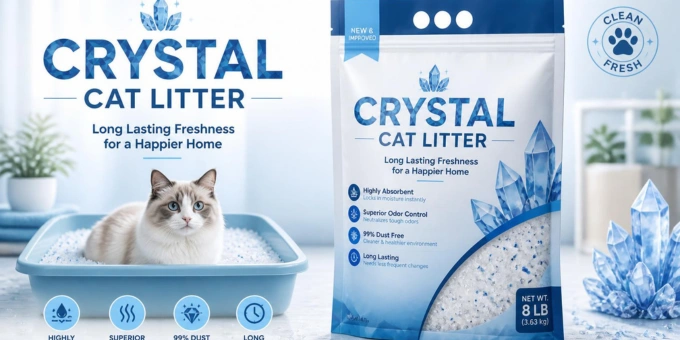
Crystal cat litter gives U.S. cat owners an alternative to traditional clay by using porous silica gel to absorb urine instead of forming heavy clumps. It can offer strong odor control, lighter bags, and less airborne dust than many clay products, although performance varies by brand and granule size. The right choice still depends on your cat’s preferences, your cleaning routine, your budget, and how closely you want to monitor bathroom habits.
| Key point | What cat owners should know |
| Main material | Porous amorphous silica gel |
| How it handles urine | Absorbs liquid instead of forming traditional clay clumps |
| Daily maintenance | Remove solid waste and redistribute litter as directed by the manufacturer. |
| Main advantages | Lightweight, absorbent, good urine-odor control, often low dust |
| Main drawbacks | Higher shelf price, unfamiliar texture, variable tracking, limited urine-clump visibility |
| Typical replacement schedule | Often several weeks for one cat, but usage varies widely. |
| Disposal | Usually household trash rather than flushing |
| Best fit | Owners who value low weight, reduced dust, and simple daily maintenance |
Direct answer: Silica crystal litter uses porous amorphous silica gel to absorb urine rather than forming clay-like clumps. It can provide strong odor control, low weight, and less dust than many clay products, but results vary by brand and maintenance. The best choice depends on your cat’s texture preference, health needs, household size, and budget.
Key Takeaways
- Silica gel litter usually absorbs urine instead of producing scoopable urine clumps.
- Many products produce less dust than traditional clay, but no litter should be assumed completely dust-free.
- Amorphous silica gel is different from the respirable crystalline silica associated with occupational lung hazards.
- You still need to remove feces daily and maintain the box according to the product instructions.
- Cats that dislike the texture may reject the box, so switching gradually can help.
- Non-clumping litter can make changes in urine quantity harder to judge at a glance.
- Comparing cost per day, rather than price per bag, gives a fairer cost comparison.
What Is Crystal Cat Litter and How Does It Work?
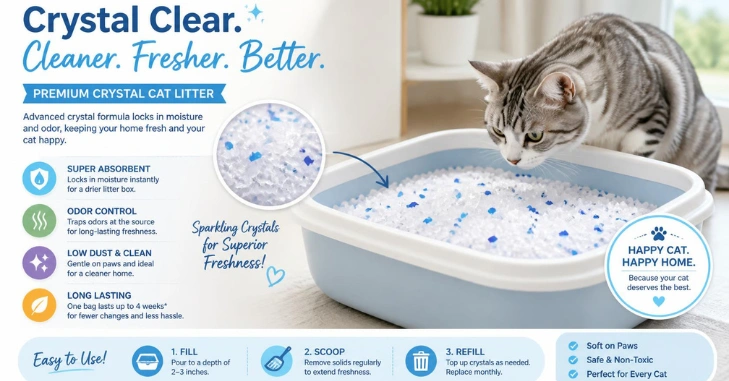
Most silica-based litter is made with porous amorphous silica gel, a form of silicon dioxide designed to hold moisture inside tiny internal pores. When a cat urinates, the material absorbs liquid rather than surrounding it with a clay clump. Moisture management also helps reduce the urine odors that usually develop when a litter box stays damp.
This absorption method changes your cleaning routine because there may be no urine clump to remove each day. You normally scoop solid waste and redistribute the remaining material according to the package directions. Once the material becomes saturated or the odor starts returning, the entire fill needs replacement.
The Main Benefits of Silica Gel Litter
The biggest advantages are tied to weight, moisture control, and daily handling. Many cat owners find silica products easier to carry because a usable bag can weigh far less than a large container of clay. Strong liquid absorption may also keep the box feeling drier between full changes.
Common benefits include:
- Good urine-odor control: Porous granules hold moisture and can delay ammonia odors when maintained correctly.
- Lower weight: Bags are generally easier to carry, pour, and store than large clay containers.
- Reduced dust in many formulas: Larger silica granules often create less visible dust than dusty clay products.
- No heavy urine clumps: Daily cleaning can involve less wet material going into the trash.
- Longer intervals between full changes: Some households can use one fill for several weeks before replacement.
Dust performance still differs from one product to another, so the package claim matters more than the material name alone. People who are sensitive to airborne particles may also want to review Mindspaper’s guide to creating a health plan that supports better breathing. A low-dust litter can help reduce one source of particles, but ventilation, cleaning, filters, and other household irritants also affect indoor air.
The Drawbacks Cat Owners Should Consider
Silica litter solves some litter-box annoyances while creating different tradeoffs. The upfront price is often higher than basic clay, and a cat may dislike the harder or unfamiliar feel beneath its paws. Lightweight pieces can also leave the box on active diggers, so tracking is not automatically eliminated.
Another issue is visibility of urine output. Clumping litter produces individual urine clumps that can make changes in size or frequency easier to notice, while absorbed urine is less obvious in many silica products. That does not make silica unsafe, but it means owners should pay closer attention to the cat’s visits, behavior, appetite, and other urinary signs.
Environmental impact is another consideration because silica litter is mineral-based and does not biodegrade like paper, wood, or some plant-based alternatives. It also needs complete replacement once its absorption capacity is exhausted. If reducing landfill waste is a top priority, a biodegradable litter may fit your household better.
Crystal Litter vs. Clumping Clay
Neither option wins every category because they handle moisture in completely different ways. Clumping clay surrounds urine and creates removable masses, while silica products typically absorb urine into the granules. Your best option depends on which compromises matter most in your home.
| Feature | Silica crystal litter | Clumping clay litter |
| Urine handling | Absorbs liquid | Forms removable clumps |
| Daily urine scooping | Usually no | Yes. |
| Weight | Generally lighter | Generally heavier |
| Dust | Often low, varies by product | Varies widely |
| Urine monitoring | Less visually obvious | Clump size can be observed. |
| Texture | Harder granules may bother some cats | Familiar sand-like feel |
| Upfront price | Often higher | Often lower |
| Full replacement | Can be less frequent | Depends heavily on routine and product |
| Biodegradable | No | Generally no |
For one healthy cat that accepts the texture, silica can make sense when low weight and reduced daily urine scooping are priorities. Clay may be preferable when your cat strongly favors a softer substrate or you want visible urine clumps for routine monitoring. Cats make the final decision in practice, because a technically impressive litter has little value if the animal refuses to use it.
Is Silica Gel Litter Safe?
Safety discussions often become confusing because the word “silica” describes more than one physical form. OSHA specifically distinguishes amorphous silica, including silica gel, from crystalline silica, while crystalline silica dust is the form linked with serious occupational respiratory hazards. The CDC’s Agency for Toxic Substances and Disease Registry also separates amorphous and crystalline silica and reports no known health effects from amorphous silica at levels normally found in commercial products.
That distinction does not mean every bag should be treated as dust-free or suitable for every animal. Product formulation, particle size, additives, fragrance, and the amount of dust released during pouring can differ. If your cat has an existing respiratory condition, eats litter, or develops coughing or other symptoms after a change, ask your veterinarian whether another substrate would be more appropriate.
Pet safety also extends beyond the litter box itself. Homes contain plants, cleaners, fragrances, and other materials that animals may investigate, so owners should consider the full environment rather than one product in isolation. Mindspaper’s pet-safety guide covering potentially harmful household plants offers another example of how ordinary home products can require extra thought around pets.
Watch Your Cat’s Urinary Habits
A change in bathroom behavior can matter more than the brand of litter in the box. Cornell University lists increased urination frequency, painful urination, blood in the urine, inappropriate urination, and frequent genital licking among signs associated with feline lower urinary tract disease. A cat that strains while producing little or no urine may have an obstruction, which requires immediate veterinary care.
Non-clumping silica can make the amount of urine harder to estimate because there is no separate clump to inspect. Owners can compensate by noting how often the cat enters the box, whether the litter becomes saturated faster than usual, and whether drinking habits change. These observations are not a substitute for veterinary evaluation, but they may help you notice an important change sooner.
How to Use Silica Litter Properly
The cleaning routine is simple, but following the specific manufacturer’s directions matters because fill depth and replacement schedules differ. Starting with a clean, dry box helps the absorbent material work as intended. Daily attention also prevents solid waste and saturated areas from undermining odor control.
- Fill the clean box to the depth stated on the package.
- Remove solid waste at least once each day.
- Redistribute or stir the litter if the manufacturer instructs you to do so.
- Watch for persistent odor, saturation, or other replacement indicators.
- Empty, wash, rinse, and dry the box before adding a fresh full fill.
Avoid treating an advertised replacement interval as a fixed deadline. A large cat, multiple cats, humid conditions, box size, and urine volume can all shorten the useful period. Replacing saturated litter sooner is better than trying to stretch a bag past the point where odor or wet spots return.
Switching Without Causing Litter-Box Rejection
Cats can be selective about texture, scent, location, and cleanliness. VCA guidance notes that some cats dislike sudden litter changes and recommends making changes gradually, while also noting that many cats prefer unscented litter. A slow transition gives the cat time to investigate the new texture without suddenly removing the familiar substrate.
Keep the box location stable during the transition so you change only one major variable at a time. If the cat repeatedly avoids the box, do not force the issue by continuing with a substrate it rejects. Return to an accepted litter and discuss persistent elimination problems with a veterinarian, especially when the behavior appears suddenly.
Multi-cat households also need enough bathroom resources. VCA uses the common guideline of one litter box per cat plus one additional box, which can reduce competition and give cats more choices. If you manage several pets or travel frequently with animals, Mindspaper’s advice on preparing for pet accidents away from home also covers useful cleanup planning.
How Long Does Silica Litter Last?
Many products advertise a fill lasting several weeks for one cat, but there is no reliable universal number. Cat size, urine output, humidity, box dimensions, fill depth, and the number of animals all change the result. Current guides commonly describe several-week replacement cycles for single-cat households, but the product instructions and actual box condition should control your schedule.
The easiest way to judge value is to stop comparing package prices alone. Calculate bag price ÷ actual days of use in your household and compare that daily figure with your current litter. This simple test accounts for the fact that a more expensive bag can still cost less per day if it lasts longer without sacrificing cleanliness.
How to Reduce Tracking and Mess
Granule size has a large effect on tracking, which helps explain why owners report different experiences. Fine, lightweight crystals can travel on paws, while larger pieces may stay closer to the box but feel rougher to a sensitive cat. A large litter mat, adequate box size, and higher sides can reduce scattered pieces without changing the litter itself.
Do not assume that tracking means you need more litter. Overfilling can give an enthusiastic digger more material to throw over the edge. Follow the recommended depth first, then adjust the box setup if scattered granules remain a problem.
Disposal and Environmental Considerations in the U.S.
Used silica litter normally belongs in household trash rather than the toilet. Silica crystals are not designed to break down in plumbing, and manufacturers commonly advise against flushing them. Local waste rules differ across the United States, so municipal guidance should take priority when your city has specific disposal requirements.
If sustainability is a major buying factor, compare silica with paper, wood, wheat, corn, or other plant-based alternatives. Those products have their own compromises involving odor, tracking, cost, clumping, and availability. The lowest-waste choice is still one your cat will reliably use and that you can maintain hygienically.
The Bottom Line
Crystal Cat Litter Silica litter can be a practical choice for U.S. cat owners who want a lighter, absorbent alternative to traditional clumping clay. Its strongest advantages are moisture control, manageable weight, and lower dust in many formulas, while its main compromises include cost, texture acceptance, waste disposal, and reduced visibility of individual urine clumps. A gradual trial with close attention to your cat’s behavior is more useful than assuming one litter type works for every household.
Choose the product your cat uses consistently, maintain the box daily, and treat sudden bathroom changes as a health signal rather than a litter inconvenience. For more practical animal care and household pet topics, browse the Mindspaper Pets section. Good litter management starts with a clean box, but good pet care starts with watching the animal using it.
Frequently Asked Questions
Is crystal cat litter safe for cats?
Silica gel products intended for litter generally use amorphous silica rather than the respirable crystalline silica associated with occupational silicosis. OSHA explicitly distinguishes silica gel from crystalline silica, and ATSDR reports no known health effects from amorphous silica at normal commercial-product exposure levels. Individual cats can still react to dust, fragrance, texture, or ingestion, so veterinary advice is appropriate when a cat has medical concerns.
Does silica litter control smell better than clay?
It can control urine odor well because the porous material absorbs moisture, but the result depends on saturation and maintenance. Fecal odor still requires prompt solid-waste removal, and an overloaded box can begin smelling quickly. No material removes the need for daily attention.
Do you scoop urine from silica litter?
Most traditional silica formulas do not create scoopable urine clumps. You remove feces and maintain the remaining granules according to the product instructions. Some specialty products behave differently, so always check the label rather than assuming every silica formula works the same way.
Can you use silica litter in a multi-cat home?
Yes, but it will normally become saturated faster as more cats use the same box. Multiple boxes also reduce competition and give cats alternatives when one box is occupied or dirty. Watch odor and saturation instead of relying on a single-cat replacement claim.
Is it worth paying more for silica litter?
It can be worth the price for owners who value lighter bags, lower dust, strong urine-odor control, and less wet-clump scooping. The fairest comparison is cost per day in your own household rather than shelf price alone. If the cat dislikes the texture or the product saturates quickly, the higher purchase price may offer little benefit. You might also like Serval Cat Price.