


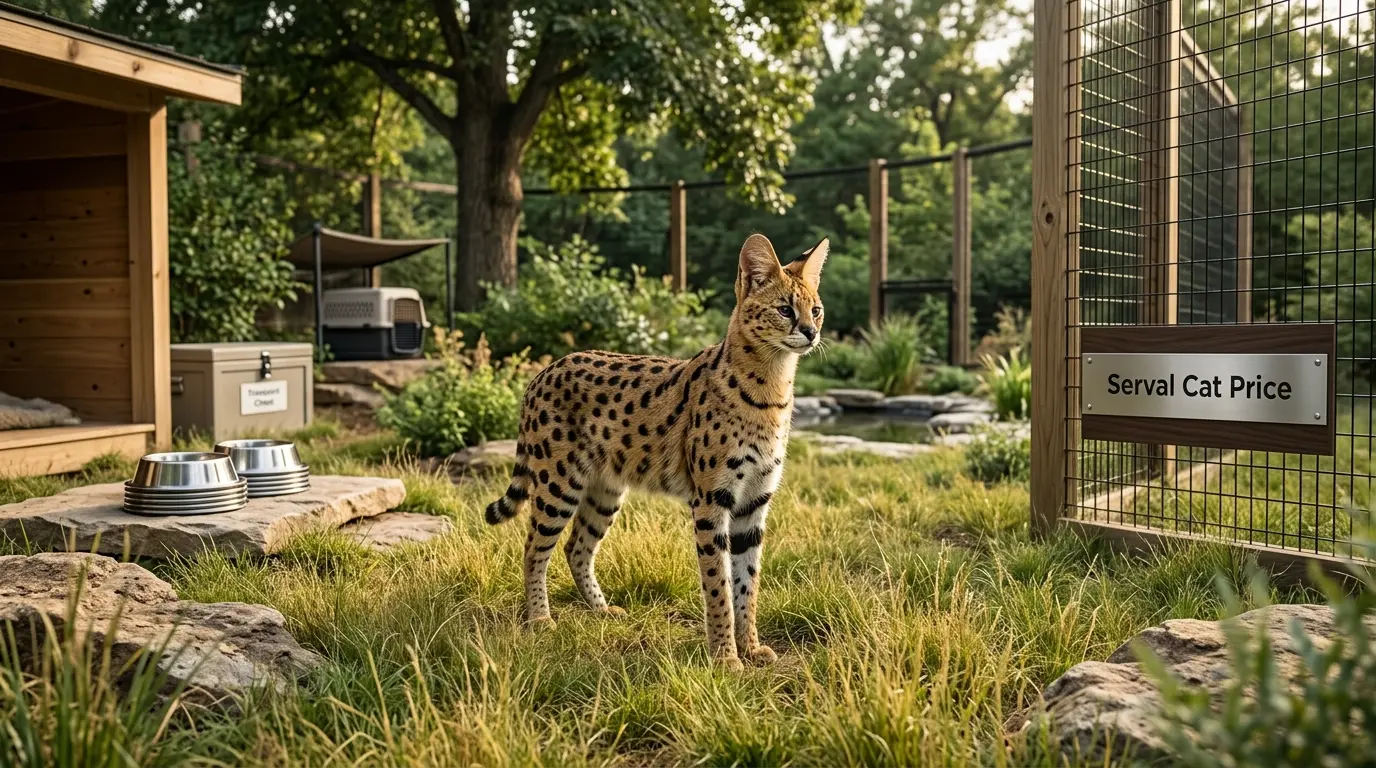
U.S. buyers often see servals priced around $3,000 to $10,000, though online asking prices can vary widely. The serval cat price is only the beginning. Housing, food, exotic veterinary care, permits, and insurance can add thousands over time.
Direct answer: A realistic U.S. purchase budget is about $3,000 to $10,000 for the animal itself. Some current guides and listings fall below or above that range. First-year spending can rise sharply once you add secure housing, specialist care, legal compliance, food, and transport.
| Cost or fact | 2026 planning figure | What it means |
|---|---|---|
| Typical serval cat price | About $3,000–$10,000 | A practical purchase range from current U.S. guides |
| Broader published range | About $1,500–$20,000 | Shows how widely current estimates can vary |
| Secure enclosure | About $5,000–$25,000 | Planning estimate from a current ownership guide |
| Ongoing annual care | About $5,000–$10,000 | Planning estimate for care and related expenses |
| Adult size | About 15–40 pounds | San Diego Zoo range for adult servals |
| Potential lifespan | Up to 19 years | A long financial and care commitment |
A serval is a wild African felid, not a domestic breed. San Diego Zoo lists adults at roughly 15 to 40 pounds. It also reports a potential lifespan of up to 19 years.
Key Takeaways
- Purchase prices commonly cluster around $3,000 to $10,000, but current guides list wider ranges.
- A secure enclosure and recurring care can cost more than the animal during the first year.
- Check state and local legality before any deposit changes hands.
- Federal dealer rules do not create one nationwide private-ownership rule.
- Seller verification, veterinary access, and housing plans matter as much as the purchase quote.
What Does the Serval Cat Price Include?
Current 2026 sources do not show one fixed national selling price. Petful publishes a broad $1,500 to $20,000 range for the animal. LegalClarity gives a narrower $3,000 to $10,000 estimate for U.S. buyers.
Current classifieds also show why a single average can mislead buyers. One recent U.S. listing advertised a young animal for $4,800. A seller’s quote may still exclude transport, permits, examinations, housing, or other setup expenses.
Why the Purchase Price Varies
Price changes with age, breeding history, seller practices, location, and available documentation. Younger animals may be priced differently from adults or breeding stock. Transport requirements can also change the final amount paid.
| Price factor | Why it matters |
|---|---|
| Age | Kittens, adolescents, and adults may be priced differently |
| Breeding history | Documented lineage or breeding use can affect asking prices |
| Seller practices | Health records, veterinary work, and buyer screening can affect cost |
| Location | Availability, local rules, and transport distance influence the transaction |
| Legal paperwork | Permits or regulated transport can add time and expense |
A lower quote is not automatically a bargain. It should trigger more verification before any payment. Ask what records, examinations, transport, and legal documents are included in the stated amount.
First-Year Budget: Plan Beyond the Purchase
A useful budget starts with three buckets: purchase, housing, and recurring care. Current cost guides place secure enclosure construction around $5,000 to $25,000. They also estimate ongoing yearly care at around $5,000 to $10,000.
| Budget category | Planning range |
|---|---|
| Animal purchase | $3,000–$10,000 |
| Secure enclosure | $5,000–$25,000 |
| Recurring first-year care | $5,000–$10,000 |
| Illustrative first-year total | $13,000–$45,000 |
The $13,000 to $45,000 total is simple planning math, not a guaranteed bill. It excludes major emergencies, unusual construction, long-distance transport, and location-specific insurance. Your real total could fall outside this range.
For ordinary pet-cost comparisons, Mindspaper’s crystal cat litter guide demonstrates a useful cost-per-day approach. A wild feline requires a much broader budget than ordinary household supplies. Upfront price comparisons should never replace a complete long-term care estimate.
Feeding also needs professional planning because this species has specialized nutritional requirements. San Diego Zoo uses a formulated carnivore diet with selected animal-based items for variety. An experienced exotic veterinarian should guide a private owner’s nutrition and preventive-care plan.
Housing and Behavior Can Change the Budget
San Diego Zoo reports that servals can jump more than nine feet straight upward. It also notes that adults scent-mark territory and remain solitary for much of the year. Secure housing must address jumping, escape prevention, weather, hygiene, and daily enrichment.
Mindspaper’s guide to feline night vision covers behavior and senses in ordinary domestic cats. A serval’s needs go beyond routine domestic-cat guidance. Before paying a deposit, prospective owners should find an experienced exotic-animal veterinarian.
Is It Legal to Own a Serval in the U.S.?
There is no single nationwide answer for private possession. State laws differ, and county or city rules can be stricter. Confirm current requirements with your state wildlife agency and local animal-control office before purchasing.
Federal rules are separate from state ownership rules. The USDA Animal Care program licenses dealers, exhibitors, and transporters under the Animal Welfare Act of 1966, and its regulations exempt people who acquire an animal solely as a pet. A federal licensing question is not the same as whether your state and city allow private possession.
If a seller claims USDA status, verify that claim through APHIS records when licensing applies. USDA’s public search tool provides facility, inspection, and Animal Welfare Act compliance information. A federal record does not replace any state or local permission you may need.
International trade creates another layer of regulation. U.S. Fish and Wildlife Service materials list Leptailurus serval under CITES Appendix II. International export or re-export can therefore require CITES documentation even when domestic possession rules differ.
How to Check a Seller Before Paying
Verify before you pay a deposit, shipping, or an enclosure build. Ask for the animal’s identification, veterinary records, origin, and live video. Then verify the seller’s legal status and the transaction’s legality in your location.
| Check | What to confirm |
|---|---|
| Animal identity | Live video, age, sex, markings, and available identification records |
| Health records | Recent veterinary documentation and disclosed medical history |
| Seller status | Any federal or state license that applies to the seller’s activity |
| Your location | State, county, city, zoning, and enclosure requirements |
| Transport | Legal carrier, health paperwork, and any wildlife-trade documents |
A low quote deserves more checking, not faster payment. Don’t assume a shipping promise proves the transaction is legal. Keep written copies of approvals, records, invoices, and seller information before finalizing any purchase.
Don’t Confuse a Serval With a Savannah Cat

Savannah cats are domestic hybrids descended from serval ancestry, not the same animal. Their prices vary sharply by generation, with early generations usually costing more than later ones. Hybrid ownership rules can also vary by state and locality.
Frequently Asked Questions
What is the average serval cat price in the U.S.?
A practical 2026 purchase budget is about $3,000 to $10,000 based on current U.S. guides. Broader published estimates range from about $1,500 to $20,000. Treat any advertised number as a starting point, not the full ownership cost.
How much should I budget for the first year?
An illustrative first-year budget can reach roughly $13,000 to $45,000 using current planning ranges. That combines purchase, enclosure, and recurring care estimates. Emergencies, transport, insurance, and local compliance costs can increase spending.
Are servals legal in every U.S. state?
No uniform rule covers private possession across all states and cities. Requirements can range from prohibition to permits or other conditions. Verify current state and local law directly before contacting a seller.
Can a serval live like a normal house cat?
A serval remains a wild species even when born in captivity. Its jumping, scent-marking, activity, and housing needs differ from ordinary domestic cats. San Diego Zoo specifically cautions that non-domesticated wildlife do not make good household pets.
Before You Spend Any Money
Start by confirming state and local legality in writing. Then identify an exotic veterinarian and price secure housing before contacting a seller. For broader animal-care reading, browse Mindspaper’s Pets section and its related cat-care coverage.