


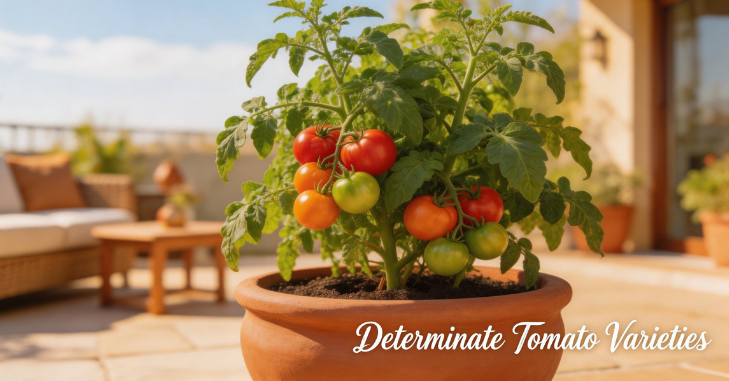
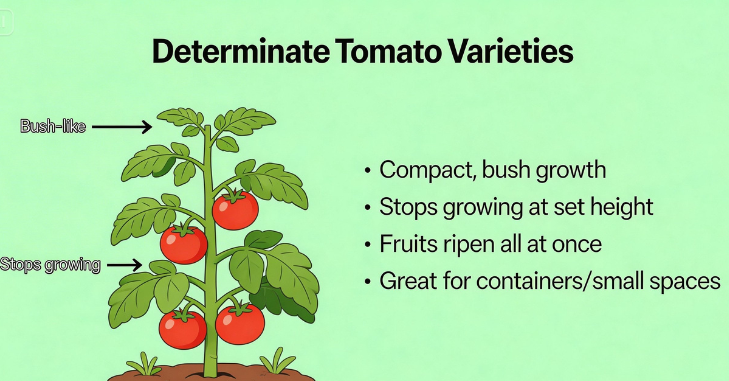
Determinate tomato varieties are a popular choice among gardeners due to their compact growth, predictable structure, and efficient production cycle. These plants typically grow to a fixed height of about 3 to 4 feet, forming a bush-like shape and stopping further growth once flowering begins.
Unlike indeterminate types that continue to grow and produce fruit throughout the season, determinate tomatoes set their fruit all at once and ripen it over a short period, making them ideal for gardeners who prefer a concentrated harvest. Their adaptability to short growing seasons, ease of maintenance, and suitability for small spaces such as containers, patios, and urban gardens make them especially practical.
In addition, determinate varieties offer a wide range of fruit types from meaty paste tomatoes perfect for sauces to sweet cherry varieties for fresh eating, providing both culinary versatility and gardening convenience.
| Category | Key Points |
| Definition | Compact, bush-like plants with fixed height |
| Growth Habit | Stop growing after flowering |
| Height | Typically 3–4 feet tall |
| Harvest | Produce fruit in a short, concentrated period |
| Best For | Short growing seasons and quick yields |
| Space Needs | Ideal for small spaces and containers |
| Maintenance | Low maintenance, minimal support required |
| Common Types | Roma, plum, cherry, slicer varieties |
| Uses | Sauces, canning, fresh eating, and meal prep |
| Growing Needs | Full sun, well-drained soil, regular watering |
| Care Tips | Balanced fertilization and pest control |
| Advantage | High yield with convenience and efficiency |
What are Determinate Tomato Varieties?
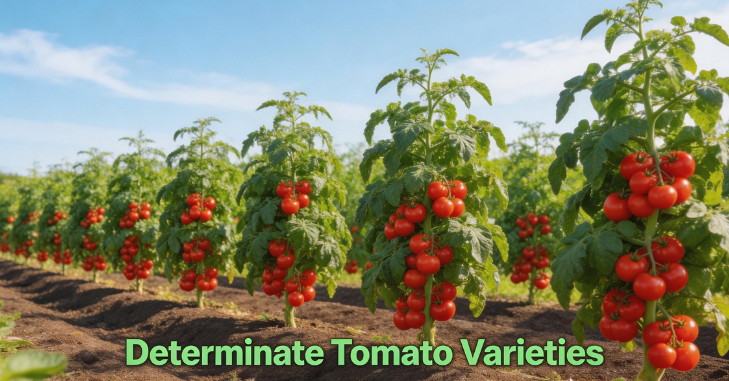
Determinate tomato varieties have a genetically programmed height and structure: they grow into a bush‑like form, usually reaching somewhere between 3 and 4 feet tall, then stop elongating once flowering begins. Once the plant sets its final flower clusters, it focuses energy on ripening an entire crop over a relatively narrow window, often just a few weeks before the plant declines. In contrast, indeterminate varieties keep growing and producing new flower trusses all season, so they yield fruit little by little from summer into fall.
Benefits of Determinate Tomato Varieties
Suitability for Short Growing Seasons
One of the clearest advantages of determinate tomatoes is their ability to thrive in short growing seasons. In regions with early frost or intense heat, these plants complete their lifecycle and ripen a full crop before unfavorable weather sets in. Their early flowering and synchronized fruit set allow gardeners in cooler or high-latitude areas to harvest a solid batch of ripe tomatoes without waiting for months.
Ideal for Home Canning and Preservation
Home canners and preservers favor determinate varieties because they produce large quantities of fruit over a short period, making them ideal for sauces, salsas, and juices. Instead of harvesting sporadically throughout the summer, gardeners can collect a full crop at once and process it efficiently in jars, bags, or dried batches, saving time and effort.
Ease of Management in Small Spaces
Compact determinate plants are easy to manage in small spaces such as balconies, patios, and pots, making them ideal for urban gardeners. Their contained size reduces the need for extensive trellising, lowering setup effort and material costs. Additionally, in humid climates, determinate varieties often complete their harvest before late-season diseases such as early or late blight become severe, whereas longer-season indeterminate varieties may be affected.
Container Gardening with Determinate Tomatoes
One of the greatest advantages of determinate tomato varieties is their exceptional suitability for container gardening. Because these plants remain compact and reach a predictable size, they can thrive in large pots, grow bags, raised beds, and other confined growing spaces. This makes them an excellent option for apartment dwellers, balcony gardeners, and anyone with limited outdoor space.
To achieve the best results, containers should provide adequate drainage and hold enough soil to support healthy root development. Regular watering is especially important in containers, as soil tends to dry out more quickly than in traditional garden beds. With proper care, determinate tomatoes can produce impressive harvests even in small urban environments.
Key Features of Determinate Tomato Varieties
- Determinate tomatoes vary widely in fruit size, color, and flavor, offering options for different culinary needs.
- Roma and plum types are popular for their meaty texture, low juice, and suitability for sauces and pastes.
- Many modern paste varieties are compact and disease-resistant, performing well in both home gardens and commercial production.
- Paisano” – a San Marzano style, compact plant producing elongated, flavorful fruits perfect for marinara and pizza sauce.
- Gold Nugget” – a small yellow cherry determinate yielding heavy clusters early, suitable for pots and containers.
- Tasmanian Chocolate” – a compact plant with large, deep-colored fruits, offering heirloom-like flavor with manageable size.
- Compact slicer-type determinates produce larger, juicy fruits ideal for sandwiches, salads, and fresh eating while fitting into small garden beds or containers.
- Determinate plants provide a tidier, more uniform appearance compared to the sprawling growth of indeterminate varieties, making them ideal for neat garden layouts.
Popular Determinate Tomato Varieties
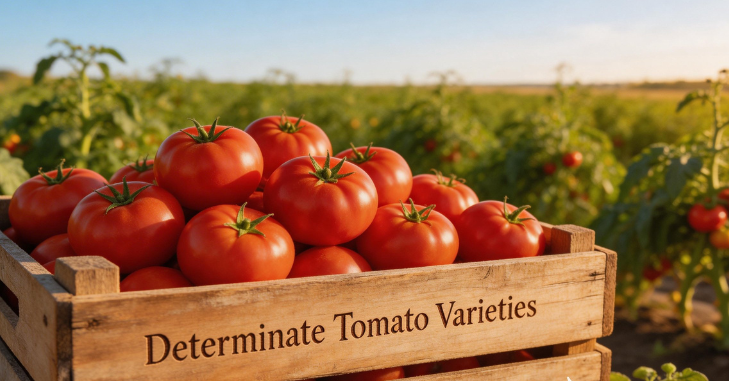
Within the determinate category, there is wide diversity in fruit size, color, and flavor. Roma and other plum‑type determinate varieties are especially popular because they are meaty, low in juice, and excellent for sauces and pastes. Many of these modern “paste” types are bred to be compact and disease‑resistant, so they perform well in both backyard gardens and commercial settings.
Among the better‑known determinate varieties are “Paisano,” a San Marzano‑style tomato that remains compact while producing flavorful, elongated fruits ideal for marinara and pizza sauce. “Gold Nugget” is a small‑fruited yellow determinate that yields heavy clusters of early cherries, making it suitable for patio pots and containers.
“Tasmanian Chocolate” is another compact determinate with large, deep‑colored fruits that have rich, heirloom‑like flavor but a more manageable plant size. These examples illustrate how determinate varieties can be tailored to specific growing situations and culinary preferences.
Common Uses of Determinate Tomatoes
Culinary Advantages
Determinate tomatoes are often chosen not just for their growth habit but for their performance in the kitchen.
Ideal for Sauces and Canning
Many determinate paste and plum types, such as Romas and San Marzano-style tomatoes, are preferred for sauces, canned tomatoes, and salsas because they have fewer seeds, thicker flesh, and lower water content, resulting in faster cooking and richer, more concentrated flavors.
Perfect for Fresh Eating
Smaller determinate cherry or salad types are excellent for fresh consumption, snacks, and salads. Their compact plants make harvesting ripe fruits easy, without dealing with sprawling vines, and they are ideal for roasting or dehydrating in batches.
Convenient for Meal Prepping and Batch Cooking
Uniform fruit yields make determinate tomatoes suitable for meal prepping and batch cooking. Large flushes of ripening fruit allow gardeners to prepare multiple dishes—such as soups, sauces, and chutneys—at once, making them ideal for those who want to preserve or freeze harvests efficiently.
Growing and Caring for Determinate Tomato Varieties
- Successful determinate tomato production begins with selecting a site that receives full sun, has well-drained soil, and maintains consistent moisture, especially during flowering and fruit set.
- In cooler climates, black plastic mulch or row covers can help warm the soil and encourage earlier fruiting, which supports the concentrated yields of determinate plants.
- Fertilization should be balanced, as too much nitrogen promotes leafy growth at the expense of fruit, while too little can limit productivity.
- Applying a low-nitrogen, phosphorus-rich side dressing at the start of flowering helps support fruit development without excessive vegetative growth.
- Regular monitoring for pests such as aphids, whiteflies, and tomato hornworms is important to maintain plant health.
- Preventive measures like crop rotation and mulching further reduce pest pressure and support healthy determinate tomato growth.
Conclusion
Determinate tomato varieties are an excellent choice for gardeners seeking compact, manageable plants that produce a concentrated harvest of flavorful fruit. Their bush-like growth habit, early flowering, and synchronized ripening make them ideal for short growing seasons, small spaces, and batch processing in the kitchen.
With a wide range of fruit types from meaty Roma and San Marzano styles for sauces to sweet cherry and slicer varieties for fresh eating determinate tomatoes offer versatility in both cultivation and culinary use.
Proper site selection, balanced fertilization, consistent watering, and pest management are key to maximizing yields and maintaining healthy plants. Overall, determinate tomatoes combine convenience, productivity, and flavor, making them a practical and rewarding choice for home gardeners and small-scale producers alike.
Want to know about How to Find Cigars That Taste Expensive Without the Luxury Price Tag Check out our Lifestyle category.
FAQs
The popular, indeterminate Early Girl has a compact, determined sister in this tomato. Bush Early Girl is a great option for growers with short seasons because it produces large harvests of meaty fruits and is perfect for container gardening.
Determinate tomatoes typically don’t need stakes because their stems are strong. To support their heavy fruit load, some gardeners provide assistance, such as cages. Pruning is necessary for indeterminate tomatoes in order to increase fruit production and maintain seasonal productivity.
The majority of your fruit is produced all at once by determinate tomatoes, also known as bush or patio varieties. After a large harvest, you might occasionally receive a few more fruits, but your plant is essentially finished.