


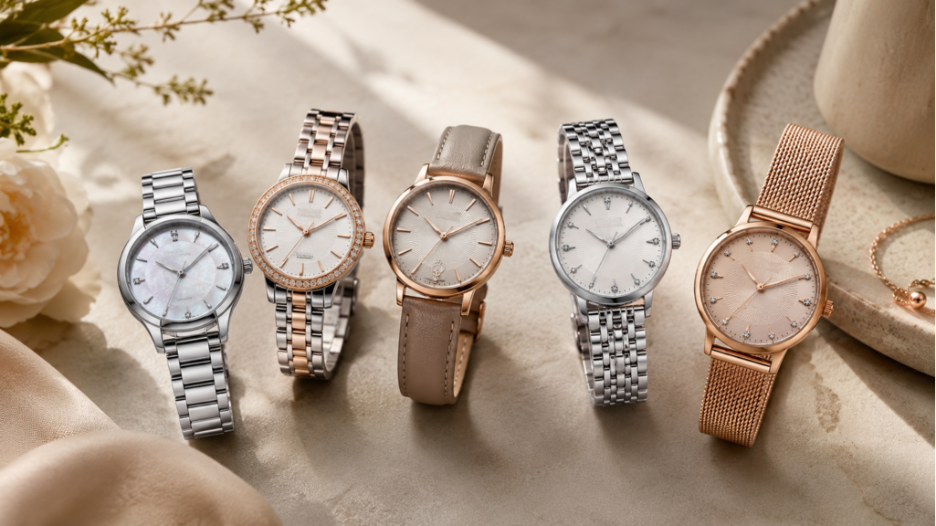
The best everyday women’s watch is one you forget you’re wearing until you need it: a case that suits your wrist, a dial you can read at a glance, a strap or bracelet that handles your routine, and a movement you don’t have to fuss over. For many women, a Citizen watch ticks those boxes because the brand offers understated designs and low-maintenance light-powered models across a wide price range.
That said, no single model suits everyone. This guide walks through the decisions that actually matter when you shop for an elegant everyday watch, from case size and materials to movement type, water resistance and how to judge a discount, so you can narrow the options quickly and buy something you’ll still reach for years from now.
What “Everyday Elegance” Means in a Watch
Everyday elegance is about range. A watch earns the label when it looks right in a client meeting, at the grocery store and at a dinner reservation without a change of accessories. Statement pieces are designed for one occasion; an everyday watch has to handle many.
In practice, that usually points to a few traits: a clean dial with clear hour markers, a case that sits flat under a shirt cuff, a neutral color palette (silver, gold, rose gold, white, black or deep blue) and proportions that match your wrist. Decorative extras such as crystal-set bezels, heavily patterned dials or bold color blocking can be lovely, but they narrow the number of outfits and settings the watch works with.
A useful test is to picture the watch with the three outfits you wear most often. If it fits all three, it is a strong everyday candidate. If it only works with one, treat it as a second watch rather than your daily piece.
Start With Your Lifestyle, Not the Display Case
Before comparing models, spend two minutes thinking about how your days actually look. Different routines create different requirements, and the watch that works beautifully for one person can be a nuisance for another.
- Office and client-facing work: prioritize a slim case, a refined bracelet or leather strap, and a dial that reads cleanly in meetings without looking like a sports tool.
- Active or hands-on days: look for a scratch-resistant crystal, a sturdy bracelet or silicone strap, and at least 100 meters of water resistance.
- Healthcare, hospitality or frequent hand washing: choose a metal bracelet or rubber strap over leather, and a case with solid water resistance.
- Social events and travel: a versatile two-tone or warm-metal design pairs well with jewelry, and a low-maintenance movement means the watch is ready when you pack it.
Matching features to routine also stops you from paying for complications you will never use. A chronograph, world-time function or moon phase can be appealing in the store, but if you never touch those pushers, a simpler three-hand watch is lighter, thinner and usually cheaper.
Balancing Fashion and Function
The most common trap when shopping for women’s watches is choosing purely on looks. Fashion-forward designs can be beautiful, but some sacrifice readability (tiny or absent hour markers), comfort (sharp edges, thick cases) or durability (thin plating that wears through).
At the other extreme, highly functional sports and tool watches can be bulky and may clash with tailored clothing. The sweet spot sits between the two: a timeless design that still delivers dependable timekeeping and decent toughness. Many mid-range brands, including Citizen, focus heavily on this middle ground, which is why their dress and everyday lines tend to be popular with buyers who want one watch to do most jobs.
Here are a few signs a watch balances style and function well:
- Hour markers or numerals you can read in dim light without squinting.
- A crystal that sits flush or slightly domed rather than raised and exposed.
- A clasp that closes securely and opens easily with one hand.
- Lugs that curve down to follow the wrist instead of jutting out.
Choosing the Right Case Size
Case size shapes both comfort and visual balance. Trends swing between oversized and petite, so the safest choice is the size that suits your wrist rather than the size that is fashionable this season.
As a general guide, many women’s dress watches fall roughly between 26 mm and 34 mm, while everyday and sport models often run from about 32 mm to 38 mm. Larger cases are easier to read and make a bolder statement, but they can overhang a slim wrist and catch on sleeves. Smaller cases look classic and slide under cuffs easily, though very small dials can be harder to read at a glance.
| Wrist type | Case sizes that usually balance well | Notes |
|---|---|---|
| Slim (under about 6 in) | Roughly 26–32 mm | Look for short lugs so the case doesn’t overhang. |
| Average (about 6–7 in) | Roughly 30–36 mm | The widest choice; pick by style and readability. |
| Larger (over about 7 in) | Roughly 34–38 mm | Midsize and unisex models often look proportionate. |
Treat these ranges as starting points. Lug-to-lug length (the distance from the top strap attachment to the bottom) matters as much as diameter. If the lugs extend past the edges of your wrist, the watch will look and feel too big, even if the diameter seems modest. Whenever you can, try a few sizes on, or measure a watch you already own and like.
Strap and Case Materials Compared
Materials determine how a watch looks, how much it weighs and how much care it needs. The table below summarizes the main options for everyday wear.
| Material | Strengths | Trade-offs | Best for |
|---|---|---|---|
| Stainless steel | Durable, corrosion-resistant, works with most outfits | Heavier than other options; bracelet may need link adjustment | Daily wear, office and casual |
| Leather strap | Classic, lightweight, comfortable | Absorbs sweat and water; needs replacing over time | Dry, office-based routines and evening wear |
| Ceramic | Highly scratch-resistant, sleek, often lighter than steel | Can crack or chip if dropped on a hard surface | Modern, minimalist style |
| Two-tone metal | Pairs with both silver and gold jewelry | Plated sections can show wear over years | Women who mix jewelry metals |
| Titanium | Light and strong, hypoallergenic for many people | Usually costs more; softer surface can show fine scratches | All-day comfort and travel |
Stainless Steel
Stainless steel remains the default everyday choice because it shrugs off daily knocks and looks equally at home with a blazer or a sweater. A polished finish feels dressy; a brushed finish hides fine scratches better. The main drawback is weight, which some people find reassuring and others find tiring by the end of the day.
Leather Straps
Leather delivers a warm, classic look and feels light on the wrist. It does, however, react to moisture, sweat and sunlight. If you choose leather for daily wear, keep it away from water, let it air out overnight and expect to replace the strap periodically. Choosing a watch with standard lug widths makes replacement straps easy to find.
Ceramic Components
Ceramic cases and bezels have a sleek, slightly glossy appearance and resist scratches remarkably well. The trade-off is brittleness: a hard drop onto tile can chip or crack ceramic in a way that steel would simply dent.
Two-Tone Designs
Two-tone watches combine silver-toned steel with gold or rose-gold tones, so they pair easily with whatever jewelry you wear that day. Some people find them timeless; others prefer the cleaner look of a single metal. If you lean toward two-tone, check whether the gold sections are solid, plated or ion-plated, as that affects how they age.
Movement Types: Quartz, Automatic and Light-Powered
The movement is the engine that keeps time. It affects accuracy, maintenance and how the watch fits into your routine.
| Movement | How it is powered | Maintenance | Everyday verdict |
|---|---|---|---|
| Quartz | Battery | Battery change every few years | Accurate, affordable, low effort |
| Automatic | Wrist motion winds a mainspring | Periodic servicing; stops if left unworn | Charming craftsmanship, more upkeep |
| Light-powered (solar) | Light charges a rechargeable cell | No routine battery changes; needs regular light | Very convenient for daily wear |
Quartz
Quartz watches are accurate, affordable and nearly maintenance-free. Beyond an occasional battery replacement, they ask very little of you, which makes them a sensible choice for a first everyday watch.
Automatic
Automatic watches wind themselves as you move. Many people love the craftsmanship and the smooth sweep of the seconds hand. However, they generally drift more than quartz, stop if left in a drawer for a couple of days, need periodic servicing and tend to cost more.
Light-Powered Technology
Light-powered watches convert natural or artificial light into energy stored in a rechargeable cell, so you avoid routine battery swaps. Citizen’s version is called Eco-Drive and is one of the main reasons people shortlist a Citizen watch for everyday use: wear it regularly, keep it out of a dark drawer for long stretches, and it simply keeps running. If you do store it, leave it near a window for a while before wearing it again.
Comfort: The Feature You Only Notice When It’s Missing
Even the prettiest watch becomes a drawer-dweller if it pinches, slides or digs in. Comfort depends on weight, case thickness, bracelet construction and the clasp.
Use this quick fit checklist when you try a watch on:
- Fasten it and rotate your wrist; the case should stay roughly centered without spinning around.
- Slide a fingertip under the bracelet or strap; it should fit snugly but not leave marks.
- Bend your wrist up and down; the case back and clasp should not press into the joint.
- Wear it for at least 10–15 minutes if you can, including while typing or carrying a bag.
- Check the edges of the clasp and lugs for sharp corners that could catch on knitwear.
A bracelet that has been sized correctly by a jeweler makes a bigger difference than most buyers expect. Many retailers will remove links for you, and some clasps offer micro-adjustment holes that help when wrists swell slightly in warm weather.
Water Resistance: What the Ratings Really Mean
Water resistance ratings are often misunderstood. The number on the dial or case back is based on a static pressure test, not a promise that you can dive to that depth. Here is how the common ratings are usually interpreted for real-world use:
| Rating | Generally suitable for |
|---|---|
| 30 m / 3 ATM | Splashes, rain and hand washing; not swimming |
| 50 m / 5 ATM | Brief immersion and light swimming for some models; check the manual |
| 100 m / 10 ATM | Swimming and snorkeling |
| 200 m / 20 ATM | Water sports and recreational diving |
For an office-focused routine, basic resistance is usually enough. If you swim regularly or spend weekends at the lake, look for 100 meters or more and a screw-down crown. Whatever the rating, avoid pressing buttons underwater, keep leather straps dry and rinse the watch with fresh water after exposure to salt or chlorine. Seals age over time, so have them checked when the battery is changed or the watch is serviced.
Dial Design and Readability
The dial gives a watch its personality. A clean dial with simple indices tends to look elegant for longer and is easier to read in a hurry. Textured finishes, mother-of-pearl, sunray patterns and small gemstone markers add sparkle, but they can reduce contrast and date faster than a minimalist layout.
A few practical points help here. Contrast between hands and dial matters more than color alone; silver hands on a white dial can disappear in bright light. Luminous hands are useful if you check the time in dark theaters or early mornings. A date window is handy for work, though it adds a small visual interruption to an otherwise clean dial.
Long-Term Value and Sustainability
Price tags tell only part of the story. A cheap watch with thin plating, a flimsy clasp and an unknown movement may need replacing within a couple of years, while a slightly more expensive model built with solid steel and a dependable movement can last a decade or longer with basic care.
When you weigh value, consider:
- Cost per wear: a watch you wear daily for years justifies a larger budget than an occasional piece.
- Repairability: established brands usually have service networks and replacement parts available.
- Warranty: check the length of coverage and whether it applies when you buy from that particular retailer.
- Maintenance: factor in battery changes, strap replacements or servicing over the years.
Longevity is also the most practical form of sustainability. A durable, repairable watch with a low-maintenance movement means fewer replacements and fewer discarded batteries, which is good for both your budget and the environment.
How to Shop Promotions Without Regret
Discounts can bring a well-made watch within reach, and many shoppers start by browsing women’s watches on sale to compare styles and price points before committing. If you have already narrowed your shortlist to a specific brand, browsing a dedicated range such as a citizen watch collection makes it easier to compare case sizes, finishes and movements side by side.
Keep a clear head while you browse. A large percentage off does not automatically mean a great deal. Before buying, check:
- The exact model number, so you can compare specifications accurately.
- Case size, thickness and lug width, not just the product photo.
- Movement type and water resistance rating.
- Warranty terms and the return window.
- Whether a slightly pricier model offers meaningfully better materials or comfort.
Comparing two or three similar models usually reveals which one offers the best overall value, rather than simply the biggest markdown.
Common Mistakes When Buying an Everyday Watch
- Buying a case size based on trend photos instead of your own wrist measurement.
- Choosing leather for a routine that involves lots of hand washing or humidity.
- Paying extra for complications that you will never use.
- Ignoring clasp quality, which is often the first part to wear.
- Forgetting how the watch pairs with the jewelry and clothing you already own; your personal style and work outfits should guide the final choice.
Bottom Line on Choosing Women’s Watches for Daily Wear
The right everyday watch fits your wrist, suits the outfits you wear most and needs as little attention as possible. Start with your routine, choose a case size that matches your wrist, pick a material that handles your day and favor a low-maintenance movement such as quartz or light-powered. If you shop during a sale, compare specifications and warranty terms rather than chasing the deepest discount. Do that, and you will end up with a watch that feels elegant on day one and still earns its place on your wrist years later.
Frequently Asked Questions
What size watch should a woman wear every day?
Many women find a case between roughly 30 mm and 36 mm works well for daily wear, but wrist size matters most. Slim wrists often suit 26–32 mm, while larger wrists can carry 34–38 mm. Check the lug-to-lug length too, since a watch that overhangs your wrist will look too large.
Are Citizen watches good for everyday wear?
Citizen is a well-established brand with a broad range of dress, everyday and sport models. Its light-powered Eco-Drive models are popular for daily wear because they avoid routine battery changes. As with any brand, compare the specific model’s size, materials and water resistance against your routine.
How does a light-powered watch work?
A light-powered watch uses a solar cell, usually hidden beneath the dial, to convert natural or artificial light into energy stored in a rechargeable cell. Regular wear in normal light keeps it charged. If it has been stored in the dark for a long time, leave it near a window to recharge before wearing.
Can I wear a 30-meter water-resistant watch in the shower?
A 30-meter rating generally covers splashes, rain and hand washing, not showers or swimming. Hot water and soap can stress the seals over time. If you want to wear a watch in water regularly, choose at least 100 meters of resistance and keep leather straps dry.
Is a leather strap or metal bracelet better for daily use?
A stainless steel bracelet is more durable and handles moisture better, so it suits active routines and frequent hand washing. A leather strap is lighter and feels classic but needs more care and eventual replacement. Many women own one watch and switch straps by season or occasion.
How can I tell if a watch on sale is good value?
Look up the model number and compare its specifications, materials and warranty with similar full-price models. Check case size, movement type and water resistance rather than relying on the discount percentage. A slightly pricier watch with better build quality often costs less per wear over time.