


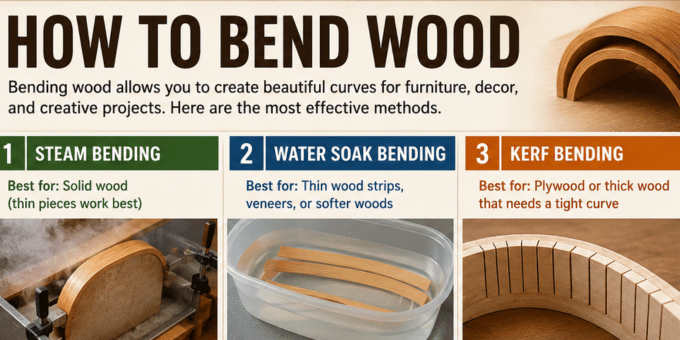
Wood bending is one of the oldest and most creative techniques in woodworking, allowing artisans, furniture makers, and designers to transform straight wooden pieces into smooth, curved, and artistic shapes. Instead of cutting and joining multiple parts, wood bending uses heat, moisture, pressure, or layering methods to shape a single piece of wood into elegant forms.
This technique has been used for centuries in furniture making, boat building, and architectural design, producing strong, durable, and visually appealing results. From rocking chairs and dining furniture to musical instruments and decorative structures, bent wood plays an important role in both traditional craftsmanship and modern design. Learning how to bend wood properly not only improves woodworking skills but also helps create high-quality, professional, and long-lasting products.
| Section | Key Details |
| Introduction | Wood bending transforms straight wood into curved shapes using heat, moisture, or layering methods for furniture, boats, and design work. |
| What is wood bending? | Process of shaping wood into curves without breaking it, using steam, pressure, or cutting techniques. |
| Why Bend Wood? | Creates smooth curves, stronger structures, fewer joints, and better design flexibility. |
| Types of Wood | Oak, ash, beech (best); walnut (good); maple, pine, cedar (moderate to fair). Straight grain is best. |
| Steam Bending | Uses steam to soften wood, then bends it over a mold and lets it dry into shape. |
| Lamination Bending | Thin wood layers glued and bent together for strong, stable curves. |
| Kerf Bending | Cuts made in wood allow it to flex easily: a quick but weaker method. |
| Soaking Method | Wood soaked in water to make it flexible for bending thin pieces. |
| Tools Used | Steam box, clamps, molds, glue, saw, sandpaper, safety gear. |
| Tips | Choose straight-grain wood, avoid knots, and work quickly after steaming. |
| Applications | Furniture, chairs, cabinets, boats, musical instruments, and decoration. |
| Safety | Use gloves and goggles, handle steam carefully, and maintain proper workspace safety. |
| Future of Wood Bending | Modern technology and eco-friendly materials make bending more advanced and sustainable. |
| Conclusion | Wood bending is a valuable skill combining creativity, strength, and sustainability in woodworking. |
How to Bend Wood?
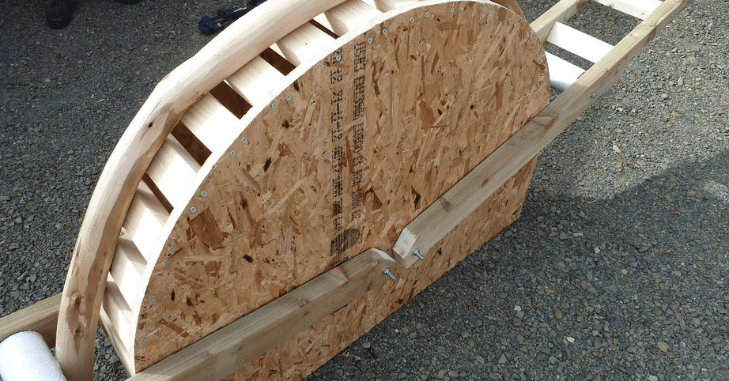
Bending wood is a specialized woodworking technique that involves making wood flexible enough to form curves without breaking or splitting. This can be achieved through several methods, including steam bending, lamination bending, kerf cutting, and soaking. The most common approach is steam bending, where heat and moisture soften the wood fibers, allowing the wood to be shaped around a mold.
How to Bend Wood: When it dries, it retains its new curved form. Choosing the right wood species, using proper tools, and applying gradual pressure are essential for successful results. Whether creating furniture, decorative pieces, boat components, or architectural designs, artisans can use bending wood to produce elegant curves while maintaining the wood’s strength and natural beauty.
What Is Wood Bending?
Wood bending is the process of shaping wood into curved forms by applying moisture, heat, pressure, or specialized cutting techniques. The goal is to make the wood flexible enough to bend without breaking while maintaining its structural integrity. Different wood species respond differently to bending, making material selection an important part of the process.
Why Bend Wood?
- Creates smooth and attractive curves
- Maintains wood strength better than cutting and joining pieces
- Produces lightweight yet durable structures
- Enhances furniture and decorative designs
- Reduces the need for multiple joints
- Allows creative woodworking projects
Types of Wood Suitable for Bending
Some woods bend more easily than others due to their grain structure, density, and natural flexibility. Hardwoods with straight, consistent grain patterns are generally the best choice because they can withstand bending stress without cracking or splitting. Oak, ash, and beech are among the most popular woods for steam bending due to their excellent flexibility and strength.
| Wood Type | Bending Ability |
| Oak | Excellent |
| Ash | Excellent |
| Beech | Very Good |
| Walnut | Good |
| Maple | Moderate |
| Pine | Fair |
| Cedar | Fair |
Common Methods of Bending Wood
Steam Bending
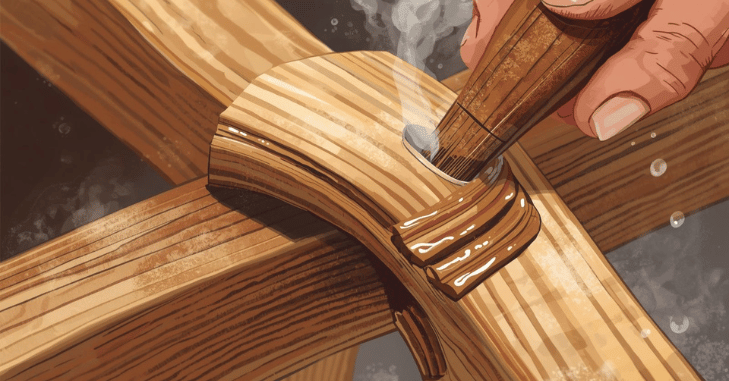
Steam bending is one of the oldest and most widely used wood-bending techniques. It has been practiced for centuries in furniture making, boat construction, and architectural woodworking because it allows artisans to create strong, smooth curves while preserving the wood’s natural grain and strength. This method is particularly effective for hardwoods such as oak, ash, and beech, which respond well to heat and moisture.
How It Works
In the steam-bending process, a piece of wood is placed in a steam box and exposed to hot steam for a specific period. The combination of heat and moisture softens the lignin—the natural substance that binds wood fibers together—making the wood flexible enough to bend without breaking. Once the wood has been sufficiently steamed, it is quickly removed from the steam box and carefully bent around a mold, form, or jig designed to create the desired curve.
Steps
- Place wood in a steam box.
- Steam for approximately one hour per inch of thickness.
- Remove carefully while hot.
- Bend around a prepared mold.
- Clamp securely.
- Allow to dry completely.
Advantages
- Produces strong curves
- Preserves wood grain
- Ideal for furniture making
Lamination Bending
Process
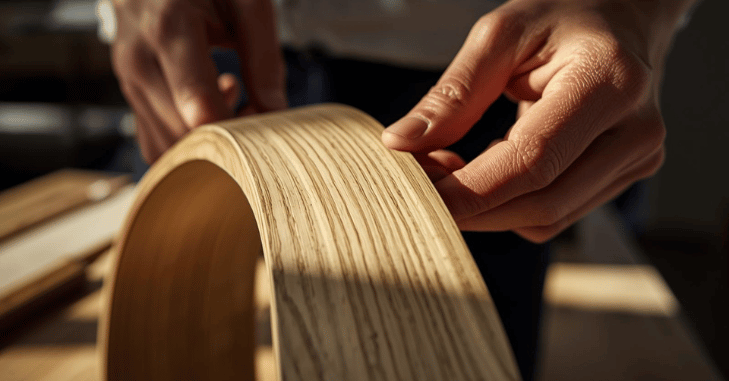
The lamination bending process involves using multiple thin layers, or strips, of wood that are easier to bend than a single thick piece. Each layer is coated with a strong wood adhesive and carefully stacked together before being placed around a pre-made mold or form. Clamps are then applied to hold the layers tightly in the desired curved shape while the glue cures, bonding the pieces into a single solid component.
Advantages
- Produces highly stable curves
- Suitable for tight bends
- Strong final product
Disadvantages
- Requires multiple wood layers
- More labor-intensive
Kerf Bending
How It Works?
In kerf bending, a series of evenly spaced cuts are made on the backside of the wooden board to remove small sections of material. These cuts reduce the wood’s stiffness, allowing it to bend into a curve without breaking. As the board is carefully bent along the desired curve, the gaps created by the cuts open up, enabling smooth shaping. Once the wood is secured in position, the kerfs can either be filled with wood glue or left hidden, depending on the design and structural requirements of the project.
Advantages
- Quick and inexpensive
- Requires basic tools
Disadvantages
- Reduces strength
- Not suitable for heavy structural applications
Soaking Method
Procedure
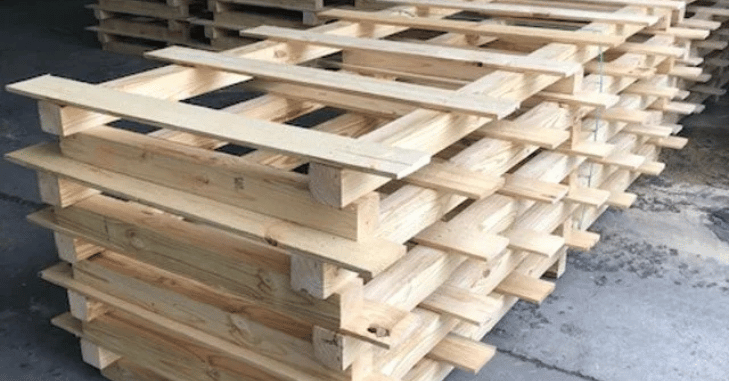
- Immerse wood in warm water.
- Allow it to soak for several hours.
- Bend slowly around a form.
- Secure until dry.
Advantages
- Simple process
- Minimal equipment needed
Disadvantages
- Limited bending capability
- Works best with thin wood
Tools Used for Wood Bending
Depending on the technique, you may need the following:
- Steam box
- Wood clamps
- Bending molds
- Measuring tape
- Wood glue
- Saw
- Sandpaper
- Protective gloves
- Safety goggles
Tips for Successful Wood Bending
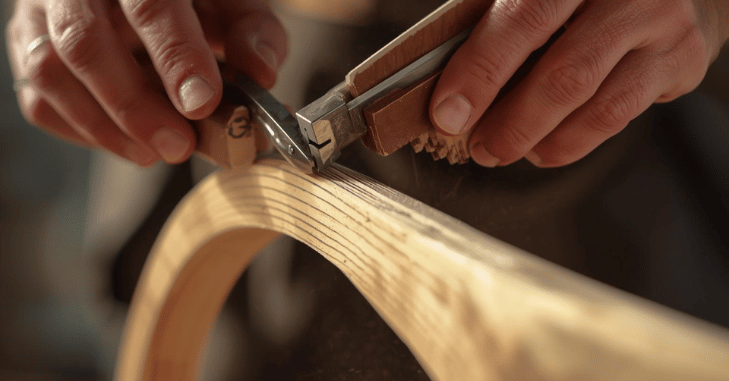
Choose the Right Wood
Choosing the right wood is one of the most important factors in successful wood bending. Straight-grained hardwoods such as oak, ash, and beech are generally preferred because their uniform grain structure allows them to bend more easily while resisting cracks and splits. Wood with consistent grain can distribute bending stress evenly, reducing the risk of damage during shaping.
Avoid Knots
When selecting wood for bending, it is important to avoid pieces with knots or other significant imperfections. Knots disrupt the natural grain pattern of the wood and create weak points that are more likely to crack, split, or break when pressure is applied during the bending process.
Work Quickly
Speed is an important factor, especially when using the steam-bending method. After the wood is removed from the steam box, it begins to cool almost immediately, causing the fibers to stiffen and lose flexibility. To achieve the desired shape, the wood should be bent around the mold and clamped into position as quickly as possible while it is still hot and pliable.
Applications of Bent Wood
Bent wood is widely used across numerous industries because it combines strength, flexibility, and aesthetic appeal. In furniture manufacturing, bent wood is commonly used to create elegant, ergonomic designs for rocking chairs, dining chairs, tables, and decorative pieces.
Cabinet makers often incorporate curved wooden elements to add a distinctive and sophisticated look to their designs. Beyond furniture, bent wood plays an important role in boat building, where curved wooden frames and components provide both structural support and streamlined shapes.
Safety Precautions
When bending wood:
- Wear protective gloves.
- Use eye protection.
- Handle hot steam carefully.
- Secure workpieces firmly.
- Follow tool safety guidelines.
- Work in a well-ventilated area.
Safety should always be a priority during woodworking projects.
The Future of Wood Bending
Advancements in woodworking technology have introduced new methods such as computer-controlled bending systems and engineered wood products. These innovations allow designers to create increasingly complex curved structures while maintaining strength and efficiency.
As sustainable building materials continue to gain popularity, bent wood remains an environmentally friendly and aesthetically pleasing choice for modern design. Unlike many synthetic materials, wood is a renewable resource that can be sourced responsibly and has a lower environmental impact when properly managed.
Conclusion
How to Bend Wood is a valuable and versatile woodworking skill that combines creativity, engineering, and craftsmanship. By understanding different methods such as steam bending, lamination, kerf cutting, and soaking, woodworkers can choose the most suitable technique for their project. The key to success lies in selecting the right wood, avoiding defects like knots, and working carefully and quickly during the bending process.
With the right tools, safety precautions, and practice, it is possible to create strong, beautiful curved wooden designs. As modern design continues to evolve, bent wood remains a sustainable and stylish material choice, proving that traditional techniques still hold great importance in today’s woodworking and construction industries.
Apart from that, if you want to know more about Choosing the Perfect Interior Paint Colors: A Comprehensive Guide then visit our Home Improvement category.
FAQs
The easiest method for beginners is soaking, or kerf bending. These techniques require fewer tools and are simpler to practice than steam bending or lamination, although they may not produce as strong or precise curves.
Hardwoods with straight grain such as oak, ash, and beech are the best for bending. These woods are strong, flexible, and less likely to crack when exposed to heat or moisture.
Wood usually cracks when it has knots, irregular grain, or insufficient moisture/steam. Bending too quickly or applying too much force can also cause splitting.
Lamination bending is considered one of the strongest methods because multiple thin layers are glued together, creating a highly stable and durable curved structure.
Yes, bent wood is very durable when done correctly. Methods like steam bending and lamination preserve strength, making it ideal for furniture such as chairs, tables, and cabinets.