


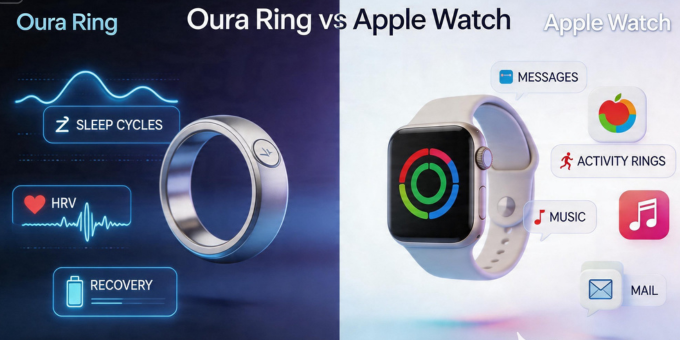
The battle for your wrist or your finger has never been more intense. As wearable technology evolves, the debate over Oura Ring vs. Apple Watch has become a central focus for fitness enthusiasts, biohackers, and everyday users looking to optimize their health.
Choosing between these two titans isn’t just about choosing a device; it’s about choosing a lifestyle. One is a sleek, discreet piece of jewelry designed to listen to your body’s quietest signals. The other is a powerhouse of productivity and active fitness tracking, sitting prominently on your wrist.
In this deep-dive guide, we explore the 10 key differences in health tracking, sleep accuracy, and daily performance to help you decide which wearable deserves a spot in your daily routine.
| Category | Oura Ring | Apple Watch |
| Device Type | Smart ring (finger wearable) | Smartwatch (wrist wearable) |
| Main Focus | Sleep, recovery, and wellness tracking | Fitness, connectivity, and smart features |
| Design | Minimal, lightweight, discreet | Larger, feature-rich display design |
| Comfort Level | Very high (ideal for 24/7 wear) | Moderate (may feel bulky during sleep) |
| Sleep Tracking | Advanced, highly accurate insights | Good, but less detailed than Oura |
| Health Metrics | HRV, body temperature, readiness score | ECG, blood oxygen, heart rate, activity |
| Fitness Tracking | Basic activity tracking | Advanced workouts, GPS, real-time stats |
| Smart Features | No notifications or apps | Calls, messages, apps, and a voice assistant |
| Battery Life | 4–7 days | 18–36 hours |
| Charging Frequency | Low (once every few days) | Frequent (daily or every 2 days) |
| App Ecosystem | Limited | Extensive (Apple ecosystem integration) |
| Data Insights | Long-term trends and recovery analysis | Real-time data and activity tracking |
| Subscription | Required for full features | Not required for core features |
| Price Range | Mid to premium + subscription cost | Premium one-time purchase |
| Best For | Sleep optimization, recovery tracking | Fitness tracking, productivity, and smart use |
| Ease of Use | Simple, passive tracking | Interactive, feature-rich experience |
| Durability | Scratch-resistant but smaller device | Durable with multiple case options |
| Daily Usability | Minimal distractions, passive tracking | Highly interactive and connected |
| Ideal User | Wellness-focused individuals | Active users and tech enthusiasts |
Form Factor: Oura Ring vs. Apple Watch

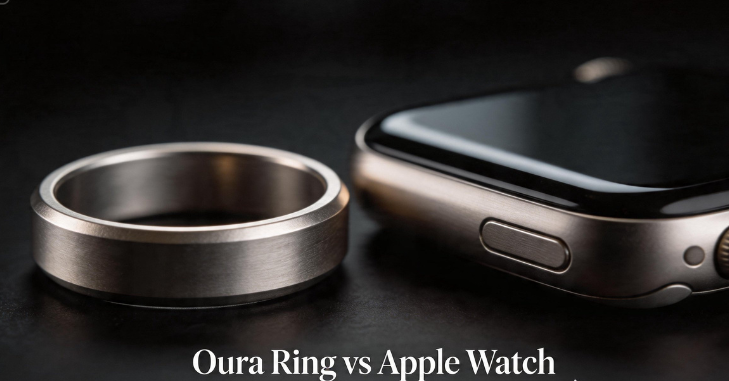
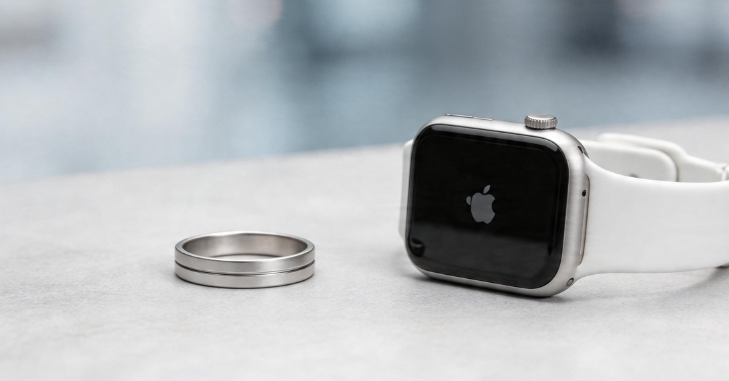
The most immediate difference in the Oura Ring vs. Apple Watch comparison is how they feel on your body. The Oura Ring is designed to be “invisible.” Crafted from lightweight titanium, it weighs less than a wedding band. It doesn’t have a screen, doesn’t vibrate, and doesn’t demand your attention. It is a passive observer of your health.
The Apple Watch is a statement piece. With its bright Always-On Retina display, it is a miniature computer. While it offers incredible functionality, it also brings the “distraction” of the digital world to your wrist via notifications and apps.
2. Sleep Tracking Accuracy: The Ring’s Home Turf
When it comes to sleep, the Oura Ring is widely considered the gold standard for consumer wearables. Because it sits on the finger—where the arteries are closer to the skin than on the wrist—it can capture high-quality heart rate and blood-oxygen data with less “noise.”
The Oura Ring focuses on:
- Sleep Stages: Deep, REM, and Light sleep cycles.
- Restfulness: How much you tossed and turned.
- Efficiency: The percentage of time in bed actually spent sleeping.
The Apple Watch has improved significantly with watchOS updates, offering detailed sleep stages. However, many users find wearing a bulky watch to bed uncomfortable compared to a slim ring.
3. Battery Life: Days vs. Hours
This is a “make or break” point for many. The Oura Ring vs. Apple Watch battery life comparison is stark.
- Oura Ring: Lasts up to 7 days on a single charge. You can wear it for a full week, including sleep, without thinking about a charger.
- Apple Watch: Generally requires daily charging (18–36 hours depending on the model).
If you hate the “battery anxiety” of charging your devices every night, the Oura Ring is the clear winner.
4. Activity Tracking: Active vs. Passive
The Apple Watch is built for the “Active” user. It encourages you to “Close Your Rings” (Move, Exercise, Stand). It features GPS, high-intensity interval training (HIIT) tracking, and real-time metrics while you run or swim.
The Oura Ring takes a more “holistic” approach. It tracks movement, but it isn’t a sports watch. It’s better at telling you when to push yourself and when to rest based on your “Readiness Score.” It is less about counting every bicep curl and more about measuring your overall physical strain.
5. The “Readiness Score” vs. “Rings.”
The philosophy of these devices is fundamentally different.
The Oura Ring uses a Readiness Score. If your body temperature is slightly elevated or your Heart Rate Variability (HRV) is low, Oura will tell you to take it easy. It prioritizes recovery as much as effort.
The Apple Watch focuses on Activity Rings. It is a motivational tool designed to keep you moving. While Apple has introduced “Vitals” to show recovery trends, its core DNA remains rooted in pushing you to meet daily movement goals.
Comparison Table: Oura Ring vs Apple Watch at a Glance
| Feature | Oura Ring (Gen 3/4) | Apple Watch (Series 10 / Ultra 2) |
| Primary Wear Style | Finger (Ring) | Wrist (Watch) |
| Battery Life | 4–7 Days | 18–36 Hours |
| Display | None (App-based) | OLED Touchscreen |
| GPS | No (Uses Phone) | Built-in |
| Sleep Tracking | Industry Leading | Highly Detailed |
| Notifications | None | Full (Text, Calls, Apps) |
| Subscription | $5.99/month for full data | None (Apple Fitness+ optional) |
| Durability | Water resistant to 100m | Water resistant to 50m (Ultra: 100m) |
6. Heart Rate Variability (HRV) and Stress Monitoring
Both devices track HRV, a key indicator of your nervous system’s health. However, the Oura Ring tracks this consistently throughout the night, providing a very stable baseline. This makes it excellent at detecting early signs of illness or overtraining. The Apple Watch tracks HRV sporadically throughout the day. While it provides “State of Mind” logging and “Vitals,” the Oura Ring’s interpretation of stress via its “Daytime Stress” feature feels more integrated into the daily user experience.
7. Sensors and Health Innovations
The Oura Ring vs Apple Watch debate often touches on specialized health sensors.
- Oura Ring: Excels at Body Temperature tracking. This is used for early illness detection and highly accurate menstrual cycle tracking (integrated with Natural Cycles).
- Apple Watch: Features an ECG (Electrocardiogram) app to detect atrial fibrillation and a Fall Detection feature that can call emergency services.
If you want a medical safety device, the Apple Watch is superior. If you want a wellness and cycle-tracking tool, the Oura Ring takes the lead.
8. Smart Features and Connectivity
There is no contest here: the Apple Watch is a “Smart” device; the Oura Ring is a “Sensor” device.
With an Apple Watch, you can:
- Reply to texts and take phone calls.
- Use Apple Pay for groceries.
- Listen to music without your phone.
- Control your smart home.
The Oura Ring does none of these things. It has no screen and no buttons. It simply syncs its data to the Oura app on your phone.
9. Menstrual Cycle and Women’s Health
For women, the Oura Ring vs Apple Watch choice often leans toward the ring. Because Oura measures skin temperature directly from the finger every minute, its data is incredibly precise. It can accurately predict periods and windows of fertility.
Apple Watch also tracks temperature for cycle insights. Still, because the wrist is more prone to external temperature fluctuations (like your arm moving out from under a blanket), it may occasionally be less consistent than the finger-based sensor.
10. Pricing and Subscription Models
The cost of ownership varies significantly.
- Apple Watch: Starts at around $249 (SE) to $799 (Ultra). There is no monthly fee to access your health data.
- Oura Ring: Starts at $299. However, to see anything beyond basic scores, you must pay a $5.99 monthly subscription. Over three years, the Oura Ring can actually become more expensive than a standard Apple Watch Series 10.
Which One Should You Choose?
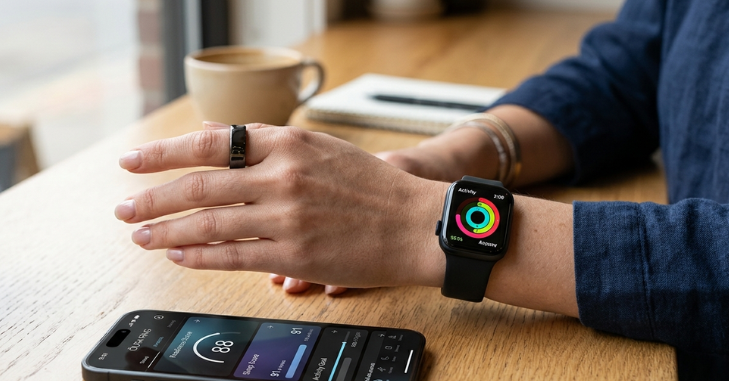
Choose the Oura Ring if:
- You want the best sleep tracking available.
- You prefer a “screen-free” life and don’t want more notifications.
- You are focused on recovery, longevity, and biohacking.
- You want a device that looks like jewelry.
Choose the Apple Watch if:
- You are an athlete who needs real-time GPS and workout metrics.
- You want the safety of Fall Detection and ECG.
- You want to leave your phone at home and still stay connected.
- You prefer a device without a monthly subscription fee.
Conclusion
In the showdown between Oura Ring and Apple Watch, there is no objective “winner”—only the device that best fits your specific needs. The Apple Watch is a versatile tool for the modern, connected person who wants to stay active. The Oura Ring is a sophisticated, quiet companion for the person who prioritizes sleep, recovery, and holistic wellness.
Many enthusiasts have actually stopped choosing and now wear both: the Apple Watch during the day for workouts and productivity, and the Oura Ring 24/7 for consistent, long-term health trends. Regardless of your choice, both devices represent the pinnacle of personal health technology in 2026.
Want to know about WQHD vs QHD: Full Comparison of Features, Image Quality, Gaming Performance, and Which Resolution Is Right for You? Check out our Tech category.
Frequently Asked Questions (FAQs)
For sleep tracking and body temperature, the Oura Ring is generally considered more accurate due to its finger-based sensor. For active heart rate during intense exercise, the Apple Watch often performs better.
The Apple Watch is very good at tracking sleep stages, but its battery life makes it difficult for some users to wear it every single night without fail. Oura’s long battery life makes for more consistent long-term data.
The Oura Ring can track steps and general activity. It also has a “Record Workout HR” feature for walking, running, and cycling, but it lacks the deep metrics (like pace, elevation, and splits) found on the Apple Watch.
No. All health and fitness data collected by the Apple Watch is free to access in the Health and Fitness apps. Apple Fitness+ is a separate, optional subscription for guided workouts.