


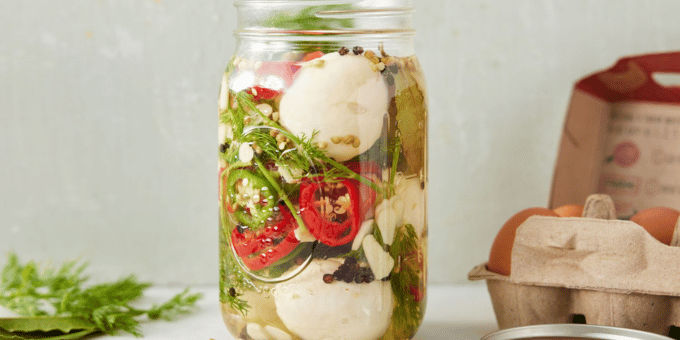
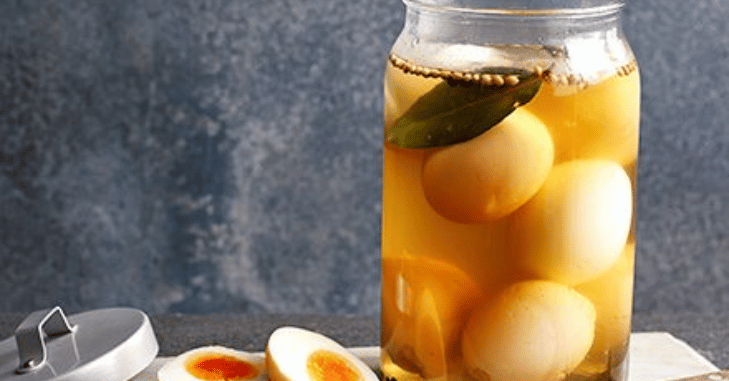
To make classic pickled eggs, hard-boil and peel a dozen eggs, pack them into a clean glass jar with sliced onion and garlic, then pour over a hot brine of 2 cups white vinegar, 1 cup water, 1 tablespoon salt, 1 tablespoon sugar and whole spices. Seal, cool and refrigerate. They are good to eat after about 3 days, taste best after 1 to 2 weeks and should be eaten within 3 to 4 months.
This pickled eggs recipe covers everything you need for a reliable first batch: the right eggs and vinegar, a simple step-by-step method, tricks for easy peeling, six flavor variations including Pennsylvania Dutch-style beet eggs, the food safety rules that matter, and plenty of ways to serve them.
Pickled Eggs Recipe at a Glance
| Detail | What to expect |
|---|---|
| Makes | 12 eggs (one 1-quart jar) |
| Prep and cook time | About 30 minutes |
| Pickling time | 3 days minimum, 1 to 2 weeks for full flavor |
| Storage | Refrigerator only; use within 3 to 4 months |
| Flavor | Tangy, savory and lightly spiced |
| Equipment | Saucepan, non-reactive pot, 1-quart glass jar with lid, bowl of ice water |
A Short History of Pickled Eggs
Pickling eggs in vinegar began as a way to use up a glut of eggs before refrigeration was common, especially in spring when hens lay heavily. Jars of pickled eggs became a fixture on pub and bar counters in the UK and parts of the US, often eaten with a bag of chips or alongside a pint.
Regional versions followed, most famously Pennsylvania Dutch red beet eggs, which are stained a bright magenta by beet juice and traditionally served at gatherings and holidays. Today pickled eggs are a popular high-protein snack and a handy make-ahead addition to salads, sandwiches and snack boards.
Ingredients
For the Eggs
- 12 large eggs, ideally 7 to 10 days old (slightly older eggs peel more easily than very fresh ones)
For the Pickling Brine
- 2 cups white vinegar (5% acidity): the tangy, preserving base
- 1 cup water: softens the sharpness of the vinegar
- 1 tablespoon salt: pickling or kosher salt, which has no anti-caking agents to cloud the brine
- 1 tablespoon sugar (optional): rounds off the acidity
- 1 teaspoon black peppercorns and 1 teaspoon mustard seeds
- 2 to 3 garlic cloves, lightly crushed
- 1 small onion, thinly sliced
- 1 bay leaf
Choosing Your Vinegar
| Vinegar | Flavor | Best for |
|---|---|---|
| White distilled (5%) | Clean, sharp and classic | Traditional pub-style eggs, dill and spicy versions |
| Apple cider (5%) | Milder, fruity, with a golden tint | Beet eggs and sweet-and-tangy versions |
| White wine or rice vinegar | Delicate and lightly sweet | Gentler flavor; check the label for at least 5% acidity |
Whatever vinegar you choose, keep it at 5% acidity and do not dilute it with much more water than the recipe calls for. The acidity is what gives pickled eggs their flavor and helps keep them safe in the fridge.
Step-by-Step Instructions
1. Boil the Eggs
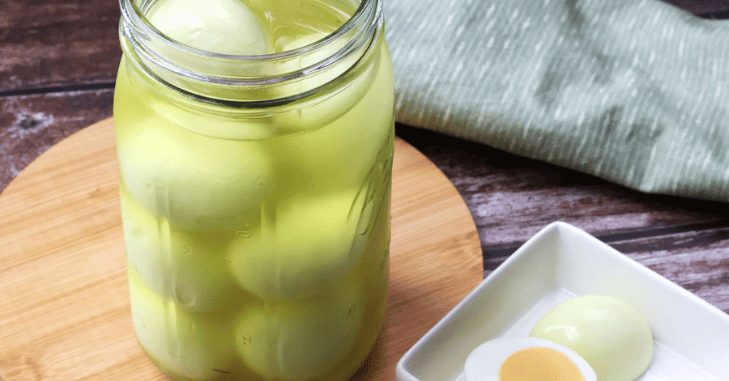
Place the eggs in a single layer in a saucepan and cover with cold water by about an inch. Bring to a full boil, then turn off the heat, cover and let them sit for 10 to 12 minutes. Transfer them straight into a bowl of ice water for at least 10 minutes. Rapid cooling stops the yolks from turning green around the edges and makes peeling easier.

2. Peel the Eggs
Tap each egg all over on the counter, roll it gently to crack the shell, then peel from the wider end where the air pocket sits. Peeling under a thin stream of running water helps lift the membrane away. Rinse off any stray bits of shell. Do not pierce the eggs with a toothpick or fork to help the brine penetrate; food safety guidance advises against it because it can let bacteria into the yolk.
3. Make the Brine
Combine the vinegar, water, salt, sugar, peppercorns, mustard seeds and bay leaf in a non-reactive saucepan (stainless steel or enamel). Bring to a boil, stirring until the salt and sugar dissolve, then simmer for 3 to 5 minutes to draw out the spice flavor.
4. Pack the Jar
Wash a 1-quart glass jar and lid in hot soapy water, rinse and dry, or run them through a hot dishwasher cycle. Layer the eggs into the jar, tucking the onion slices and garlic between them. Pour the hot brine over until the eggs are completely covered, leaving about half an inch of space at the top. Add any spices left in the pan.
5. Cool, Seal and Refrigerate
Let the jar cool for no more than about an hour, then seal and refrigerate. Wait at least 3 days before eating. The flavor keeps developing, and most people find the eggs at their best after 1 to 2 weeks, once the brine has worked its way into the yolk.
Tips for Easy-Peel Eggs and Bigger Batches
Peeling a dozen eggs is the fiddliest part of the job, so a few habits make a big difference:
- Steam instead of boiling: set the eggs in a steamer basket over boiling water, cover and steam for 12 to 13 minutes, then move them to ice water. Many cooks find the shells slip off more cleanly this way.
- Crack, then chill again: crack the eggs all over and return them to the ice water for a few minutes so water seeps under the membrane.
- Use older eggs: eggs bought a week ahead peel far more cleanly than eggs laid a day or two earlier.
- Peel in a bowl of water: the water helps shell fragments float away instead of sticking to the white.
To scale up, keep the ratio at two parts vinegar to one part water and increase the salt, sugar and spices in step. Two dozen eggs will usually need two quart jars and double the brine.
Quail eggs make an elegant party snack. Boil them for about 3 to 4 minutes, peel carefully and pickle them in the same brine. Because they are small, they absorb the flavor faster and are often ready to eat in a couple of days. Label every jar with the date you made it so you know when the 3 to 4 month window ends.
Flavor Variations to Try
| Variation | What to add | Result |
|---|---|---|
| Beet pickled eggs | 1 cup cooked beets plus some beet juice; use cider vinegar and a little more sugar | Bright pink eggs with an earthy, sweet flavor |
| Spicy | Sliced jalapeños, a dried chili or 1/2 teaspoon red pepper flakes | Warm heat that builds over time |
| Sweet and tangy | Double the sugar and add a few whole cloves and a cinnamon stick | Mellow, pub-style sweetness |
| Smoky | 1 teaspoon smoked paprika | Savory, barbecue-style notes |
| Dill | Fresh dill sprigs and a pinch of dill seed | Tastes like a dill pickle |
| Curry | 1 teaspoon curry powder or turmeric | Golden eggs with warm spice |
How to Make Beet Pickled Eggs
- Cook and slice 2 to 3 small beets, or use 1 cup of canned sliced beets with their juice.
- Make the brine with apple cider vinegar instead of white vinegar, and increase the sugar to 2 to 3 tablespoons.
- Add 1/2 cup of beet juice to the brine, keeping the total vinegar amount the same.
- Layer the eggs with the beet slices and onion, pour over the hot brine and refrigerate.
- Wait at least 2 to 3 days. The longer they sit, the deeper the pink color travels toward the yolk.
A simple tip: if you want a dramatic look for a party, slice the eggs in half after about 2 days, when you will see a sharp pink ring around a white band and a yellow yolk.

Storage, Shelf Life and Food Safety
Homemade pickled eggs must be kept in the refrigerator at all times. Although pub counters once displayed jars at room temperature, commercially produced pickled eggs are made under controlled conditions. At home, room-temperature storage is not considered safe because eggs are a low-acid food, and improperly stored pickled eggs have been linked to botulism, a rare but serious illness. Home canning pickled eggs in a water bath is also not recommended for the same reason.
- Keep the eggs fully submerged in brine.
- Use a clean utensil to remove eggs, never fingers.
- Eat within 3 to 4 months for best quality.
- Discard the batch if the brine turns cloudy in a way it was not at first, smells off, or the lid bulges.
- Do not reuse old brine for a new batch of eggs.
If you are pregnant, cooking for young children or anyone with a weakened immune system, follow storage rules carefully and speak to your doctor or a qualified health professional if you have questions about what is safe to eat.
Common Mistakes to Avoid
- Using very fresh eggs: they are hard to peel and the whites tear. Buy them a week ahead if you can.
- Overcooking: long boiling gives rubbery whites and gray-green yolks.
- Watering down the brine: changing the vinegar ratio too much weakens both flavor and preservation.
- Using a reactive pot: aluminum or copper can react with vinegar and give a metallic taste.
- Eating them too soon: after a day, the eggs only taste pickled on the outside.
- Overpacking the jar: eggs squashed together can crack and leave parts uncovered by brine.
How to Serve Pickled Eggs
- On their own with a pinch of flaky salt and cracked pepper
- Halved on a snack board with cheese, crackers, cured meats and pickles
- Sliced into green salads, potato salad or a Cobb salad
- Chopped into egg salad sandwiches for extra tang
- Turned into deviled eggs, which look especially striking with pink beet eggs
- Packed in lunch boxes as a ready-to-eat protein snack
They also go well with other pub-style snacks such as crispy homemade onion rings. If you grow your own vegetables, a potato salad topped with sliced pickled eggs is a great way to use a harvest from our guide to growing potatoes at home.
Nutrition
A large egg provides roughly 6 grams of high-quality protein and around 70 to 80 calories, along with vitamin B12, selenium and choline. Pickling does not add many calories unless you use a lot of sugar, but the brine does add sodium, so keep portions moderate if you are watching your salt intake. As a snack, a pickled egg is filling and easy to grab straight from the fridge.

Bottom Line
Great pickled eggs come down to four things: eggs that are a week or so old so they peel cleanly, a 2-to-1 vinegar-to-water brine at 5% acidity, patience while they sit for at least 3 days, and strict refrigeration for no more than 3 to 4 months. Master the classic version first, then try the beet or spicy variations. Find more easy recipes in our Food category.
Frequently Asked Questions
How long do pickled eggs need to sit before eating?
Give them at least 3 days in the refrigerator. For the best flavor, wait 1 to 2 weeks, because the brine needs time to work its way through the white and into the yolk.
How long do homemade pickled eggs last?
Kept refrigerated and fully covered in brine, homemade pickled eggs are best eaten within 3 to 4 months. Label the jar with the date so you know when to finish them.
Do you have to boil the vinegar for pickled eggs?
Heating the brine dissolves the salt and sugar and releases the flavor of the spices. Pour it over the eggs while hot, let the jar cool for up to an hour, then seal and refrigerate.
Can pickled eggs be stored at room temperature?
No. Homemade pickled eggs should always be refrigerated. Room-temperature storage carries a risk of dangerous bacterial growth, including the bacteria that cause botulism.
What vinegar is best for pickled eggs?
White vinegar at 5% acidity gives a clean, classic flavor. Apple cider vinegar is milder and fruitier and works especially well for beet pickled eggs.
Why are my pickled eggs rubbery?
Rubbery whites usually come from overcooking the eggs before pickling. Bring them to a boil, then let them sit off the heat for 10 to 12 minutes and cool them in ice water straight away.