


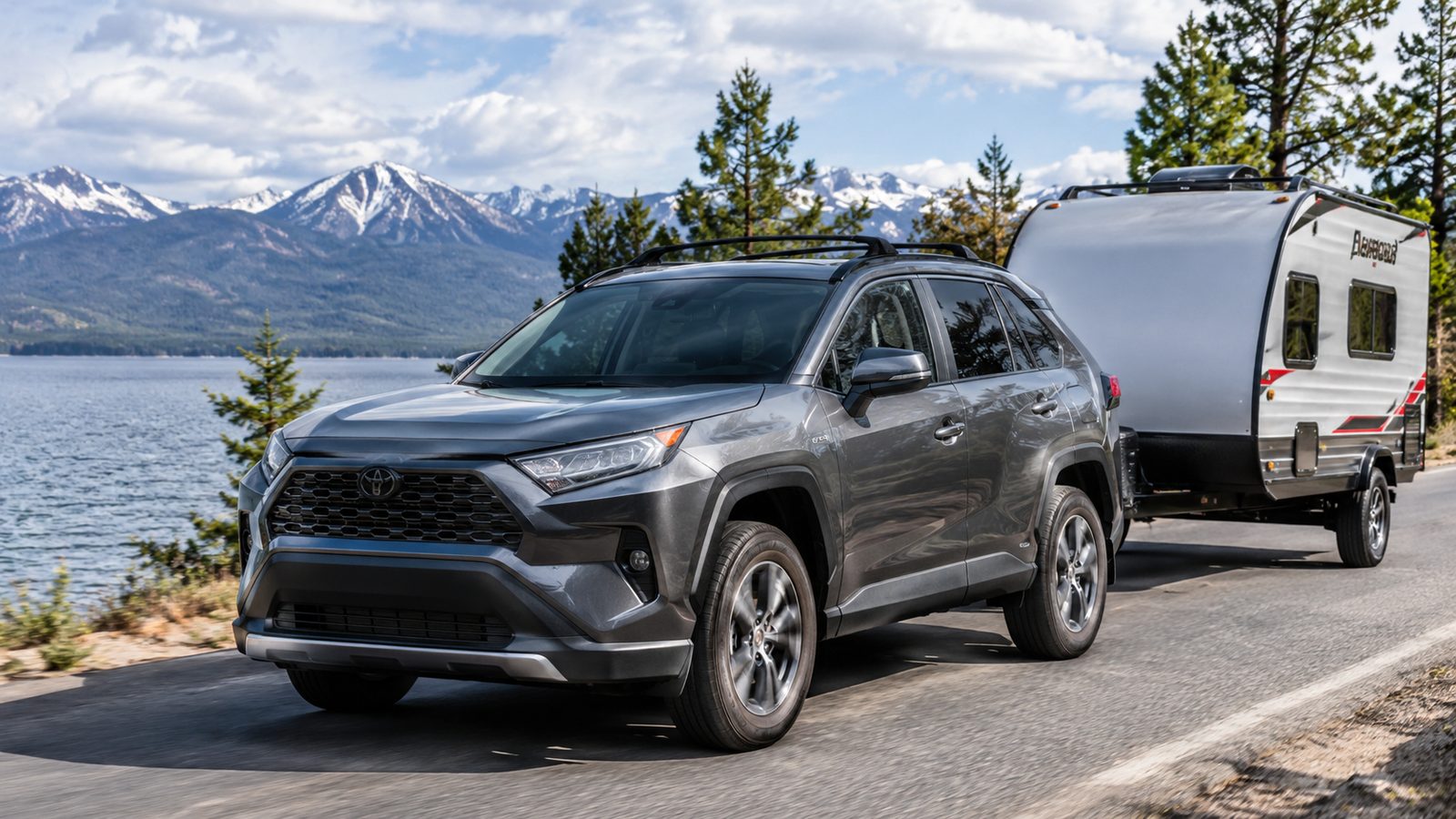
The Toyota RAV4 towing limit ranges from 1,750 lb to 3,500 lb for the 2026 U.S. lineup. Your exact rating depends on the grade, drivetrain, and powertrain. The redesigned 2026 model is offered only with hybrid or plug-in hybrid power. Toyota rates selected AWD versions for up to 3,500 lb of towing. Front-wheel-drive models and the LE Hybrid AWD are limited to 1,750 lb. Owners should verify their specific vehicle before attaching any trailer. Direct answer: For 2026, selected AWD RAV4 Hybrid and Plug-in Hybrid grades can tow up to 3,500 lb. All FWD versions and the LE Hybrid AWD are rated for 1,750 lb. Always confirm your vehicle’s limits before towing because cargo, tongue weight, GVWR, and GCWR also matter.
2026 RAV4 towing capacity at a glance
| 2026 configuration | Drivetrain | Maximum towing rating |
|---|---|---|
| Hybrid LE | FWD | 1,750 lb |
| Hybrid LE | AWD | 1,750 lb |
| Hybrid XLE/XLE Premium | FWD | 1,750 lb |
| Hybrid XLE/XLE Premium | AWD | 3,500 lb |
| Hybrid SE | FWD | 1,750 lb |
| Hybrid SE | AWD | 3,500 lb |
| Hybrid Woodland | AWD | 3,500 lb |
| Hybrid XSE | AWD | 3,500 lb |
| Hybrid Limited | AWD | 3,500 lb |
| Plug-in Hybrid SE | AWD | 3,500 lb |
| Plug-in Hybrid XSE | AWD | 3,500 lb |
| Plug-in Hybrid Woodland | AWD | 3,500 lb |
Toyota’s original 2026 launch material called one hybrid grade XLE. Later detailed U.S. material identifies that grade as XLE Premium. Either way, the AWD version receives the higher published towing rating.
Key takeaways
- The highest published 2026 towing capacity is 3,500 lb.
- Selected AWD hybrid and plug-in hybrid grades receive that rating.
- Every FWD version is rated at 1,750 lb.
- The Hybrid LE AWD remains limited to 1,750 lb.
- AWD alone does not guarantee the higher towing capacity.
- Trailer weight is only one part of the vehicle’s weight limits.
- Check the owner’s manual and vehicle labels before every towing setup.
Toyota RAV4 towing limit by 2026 trim
The redesigned 2026 model changes the towing picture significantly. Toyota moved the entire U.S. range to electrified powertrains. Buyers now choose between a conventional hybrid and a plug-in hybrid. Toyota rates Hybrid XLE, Woodland, SE, XSE, and Limited versions with AWD for 3,500 lb. The same maximum applies to Plug-in Hybrid SE, XSE, and Woodland models with AWD. Toyota’s detailed launch information confirms these grades receive the higher capability. The exceptions matter because trim names alone can mislead shoppers. Every FWD model carries a 1,750 lb maximum rating. The Hybrid LE remains at 1,750 lb even when equipped with AWD. That distinction is useful when comparing vehicles before purchase. Mindspaper’s guide to choosing a vehicle for commuting, family trips, and weekend gear also recommends checking configuration-specific ratings. A hitch or AWD badge does not automatically establish towing capacity.
Why the 2026 model is different
The 2026 model starts the sixth RAV4 generation in the United States. Toyota no longer offers a conventional gas-only version for this model year. Every version uses either Hybrid Electric Vehicle or Plug-in Hybrid Electric Vehicle technology. That change makes older towing advice easy to misapply. Previous RAV4 generations had separate ratings for gas, hybrid, and Prime versions. A towing figure from a 2024 or 2025 article may therefore be wrong for 2026. Toyota also expanded the 3,500 lb rating beyond earlier gas-focused configurations. Several 2026 AWD hybrids now reach that figure. Selected plug-in versions also receive the same published maximum.
How 2019-2025 RAV4 towing ratings compare
The previous generation ran from the 2019 through 2025 model years. Most gas-powered grades were rated to tow 1,500 lb. Gas Adventure and TRD Off-Road models could reach 3,500 lb. Regular hybrid versions generally carried a 1,750 lb towing rating. The RAV4 Prime plug-in hybrid was rated for 2,500 lb. Those numbers differ substantially from the new sixth-generation lineup.
| 2019-2025 configuration | Maximum towing rating |
|---|---|
| Most gas trims | 1,500 lb |
| Gas Adventure | 3,500 lb |
| Gas TRD Off-Road | 3,500 lb |
| Hybrid | 1,750 lb |
| RAV4 Prime | 2,500 lb |
| Selected 2026 AWD Hybrid/PHEV models | 3,500 lb |
Toyota’s 2021 and 2022 specifications show these earlier differences clearly. They list 1,500 lb for standard gas grades and 1,750 lb for hybrids. Adventure and TRD Off-Road versions were listed at 3,500 lb. Prime models from that period received a 2,500 lb rating. That makes the 2026 plug-in models particularly notable. Selected PHEV grades gain another 1,000 lb of published trailer capacity.
What does a 3,500 lb towing rating mean?
A 3,500 lb rating does not mean every trailer labeled below 3,500 lb is automatically suitable. Trailer specifications can list an empty or dry weight. Camping equipment, water, batteries, supplies, and other cargo increase the actual loaded weight. You should compare the towing rating with the trailer’s real loaded weight. Tongue weight must also be counted against the vehicle’s available carrying capacity. Passengers and cargo inside the vehicle reduce the remaining capacity further. Mindspaper’s heavy-duty pickup towing and payload guide explains the same distinction for larger tow vehicles. Towing capacity and payload are separate limits. Staying under one number does not guarantee the entire combination is within its ratings.
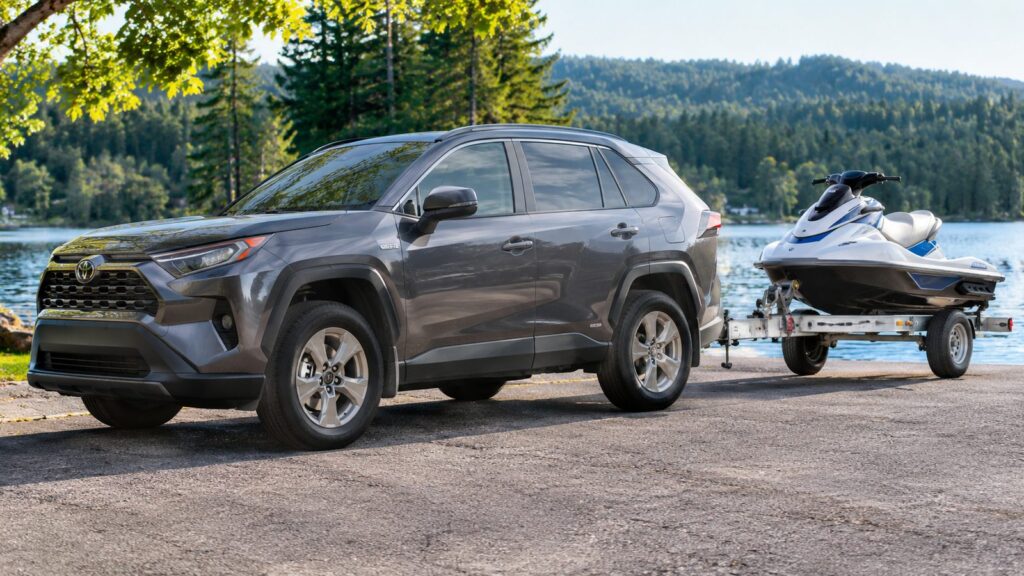
GVWR, GCWR, payload, and tongue weight matter too
GVWR is the maximum permitted loaded weight of the tow vehicle. It includes occupants, cargo, accessories, and applicable trailer tongue weight. Your door-jamb certification and loading labels provide important vehicle-specific weight information. GCWR covers the combined loaded weight of the vehicle and trailer. That calculation includes people and cargo carried by both. A combination can exceed GCWR despite staying below the advertised trailer rating. Tongue weight places downward load on the vehicle through the hitch. That weight uses part of the available payload capacity. Heavy cargo or several passengers can therefore reduce how much practical towing capacity remains. Never exceed the vehicle’s GVWR or GCWR while towing. You must also remain within axle, payload, hitch, and tongue-weight restrictions. Treat every applicable rating as a separate limit.
How to confirm your exact towing rating
Start with the owner’s manual for your exact model year and configuration. Find Toyota’s towing section and confirm the published requirements. Do not assume another trim’s rating applies to your vehicle. Next, inspect the labels on the driver’s door jamb. Check the vehicle-specific GVWR, loading information, and other listed weight limits. These labels help you calculate how passengers and cargo affect the towing setup. Then identify the trailer’s loaded weight rather than relying on its advertised dry figure. Include camping supplies, tools, water, batteries, equipment, and anything carried inside. Use an actual scale measurement when accuracy matters. Finally, verify that your hitch and towing equipment match Toyota’s requirements. A receiver does not increase the vehicle’s factory rating. The lowest applicable rating in the complete setup remains the controlling limit.
Can a 2026 RAV4 tow a small camper?
Many lightweight campers fall below either 1,750 lb or 3,500 lb when empty. Their loaded weight can be considerably higher after preparing for a trip. That loaded number is the figure you need to compare. A 3,500 lb-rated version offers more trailer capacity than a 1,750 lb model. Yet cargo, passengers, and tongue weight can still become limiting factors. Trailer brakes and other equipment may also be required under applicable instructions or laws. Choose the trailer around your vehicle’s certified limits instead of buying by appearance. Mindspaper’s broader Automobile coverage offers additional vehicle ownership and shopping guidance. Matching equipment to real use is safer than relying on one headline number.
Does adding a hitch increase towing capacity?
Installing a stronger hitch cannot raise Toyota’s factory towing rating. The vehicle’s rating reflects much more than the receiver itself. Cooling, braking, chassis, drivetrain, and weight limits all affect the approved capacity. A hitch must still have adequate ratings for the trailer and tongue load. Other towing components must also meet their applicable specifications. The lowest-rated component can restrict the complete setup. Factory equipment can differ between grades as well. For example, Toyota describes the 2026 Woodland with a standard two-inch hitch receiver and wiring harness. That equipment does not mean every similarly equipped model shares its rating.
Frequently asked questions
What is the Toyota RAV4 towing limit for 2026?
The Toyota RAV4 towing limit is either 1,750 lb or 3,500 lb in the 2026 U.S. lineup. Selected AWD hybrid and plug-in hybrid grades receive the 3,500 lb rating. FWD versions and the Hybrid LE AWD are rated at 1,750 lb.
Which 2026 RAV4 models can tow 3,500 lb?
Toyota lists several AWD grades with a 3,500 lb maximum towing rating. They include specified Hybrid XLE/XLE Premium, Woodland, SE, XSE, and Limited configurations. Plug-in Hybrid SE, XSE, and Woodland models also receive the 3,500 lb figure.
Can the RAV4 LE AWD tow 3,500 lb?
No, the 2026 Hybrid LE AWD is rated for 1,750 lb. Having AWD does not automatically produce the higher rating. Grade and drivetrain must be considered together.
How much could the 2025 and older RAV4 tow?
Most 2019-2025 gas trims were rated for 1,500 lb. Adventure and TRD Off-Road gas versions reached 3,500 lb, while hybrids were rated at 1,750 lb. RAV4 Prime models carried a 2,500 lb maximum.
Does trailer tongue weight count against payload?
Yes, tongue weight adds load to the tow vehicle. Passengers, luggage, accessories, and other cargo also use available carrying capacity. Check your door-jamb loading label and manual before calculating the final setup.
The bottom line
The 2026 redesign makes the RAV4 considerably more capable in several configurations. Selected AWD hybrids and plug-in hybrids can tow up to 3,500 lb. FWD versions and the LE AWD stay at 1,750 lb. Do not choose a trailer using the headline rating alone. Confirm your exact vehicle in the owner’s manual and driver’s door-jamb labels. Calculate the real loaded combination before traveling. Never exceed GVWR or GCWR, including the effects of cargo and trailer tongue weight. Follow Toyota’s requirements for your exact vehicle and towing equipment. When a rating is uncertain, verify it with Toyota before connecting the trailer. —