


The best vehicle is not necessarily the largest, quickest, or most eye-catching option. It is the one that makes ordinary life easier, whether that means getting through a daily commute comfortably, loading children for a road trip, or carrying camping supplies on Saturday morning. Before narrowing the search, learn more about the types of vehicles and features that may fit the way you actually drive.
A practical choice starts with honest priorities. Think beyond the occasional vacation or home-improvement project and focus on the trips, passengers, and gear that show up week after week. That approach can prevent the frustration of buying a vehicle that looks right at the dealership but feels inconvenient a few months later.
Start With The Daily Routine
Write down a normal week before comparing models. Include commute distance, traffic conditions, parking at home and work, the number of regular passengers, pets, grocery trips, and school activities. A vehicle that fits a 20-mile city commute may have very different strengths from one that regularly travels 70 highway miles a day.
Also consider the small routines that are easy to overlook. Can you open the doors comfortably in your garage? Will a low roofline make it difficult to load a toddler? Does your neighborhood have narrow streets or tight parking spaces? These details often matter more than the first impression from a short drive around the block.
Match Vehicle Types To Real Needs
Sedans usually work well for commuters who want easy handling, a lower step-in height, and efficient highway travel. Hatchbacks add flexible cargo access without taking up much more space. Compact SUVs provide a higher seating position and room for groceries, pets, and weekend bags while remaining manageable in many parking lots.
Three-row SUVs and minivans make more sense when several passengers ride regularly or car seats are part of everyday life. Minivans often offer the easiest third-row access and the most usable interior storage. Trucks can be excellent for frequent towing, job-site equipment, or bulky materials, but their larger footprint and higher operating costs may be unnecessary for occasional light hauling.
Choose Features For Daily Commuting
Estimate your weekly mileage, then picture the roads you use most. Stop-and-go traffic makes supportive seats, smooth low-speed behavior, clear outward visibility, and simple controls especially valuable. Highway commuters may care more about a quiet cabin, stable steering, comfortable armrests, and enough power for easy merging.
Commuter-Friendly Features To Check
- Adaptive cruise control for longer highway stretches.
- Smartphone connectivity and easy-to-reach charging ports.
- Heated or ventilated seats for seasonal comfort.
- Parking sensors or a clear rearview camera for tight spaces.
- Useful console storage for a phone, water bottle, bag, and sunglasses.
Check Family Space And Comfort
A seat count does not fully show how family-friendly a vehicle feels. Test rear-seat legroom, door openings, cupholders, air vents, and places to store snacks or small bags. Bring the people who will ride most often whenever possible, especially if adults will use the second or third row on longer trips.
For young children, bring the actual car seat or booster seat to verify fit, access to the anchors, and front-seat clearance. The guidance for choosing and installing car seats reinforces why the seat, vehicle, and installation method all need to work together. Check the owner’s manual before making a final decision.
Plan For Cargo And Weekend Gear
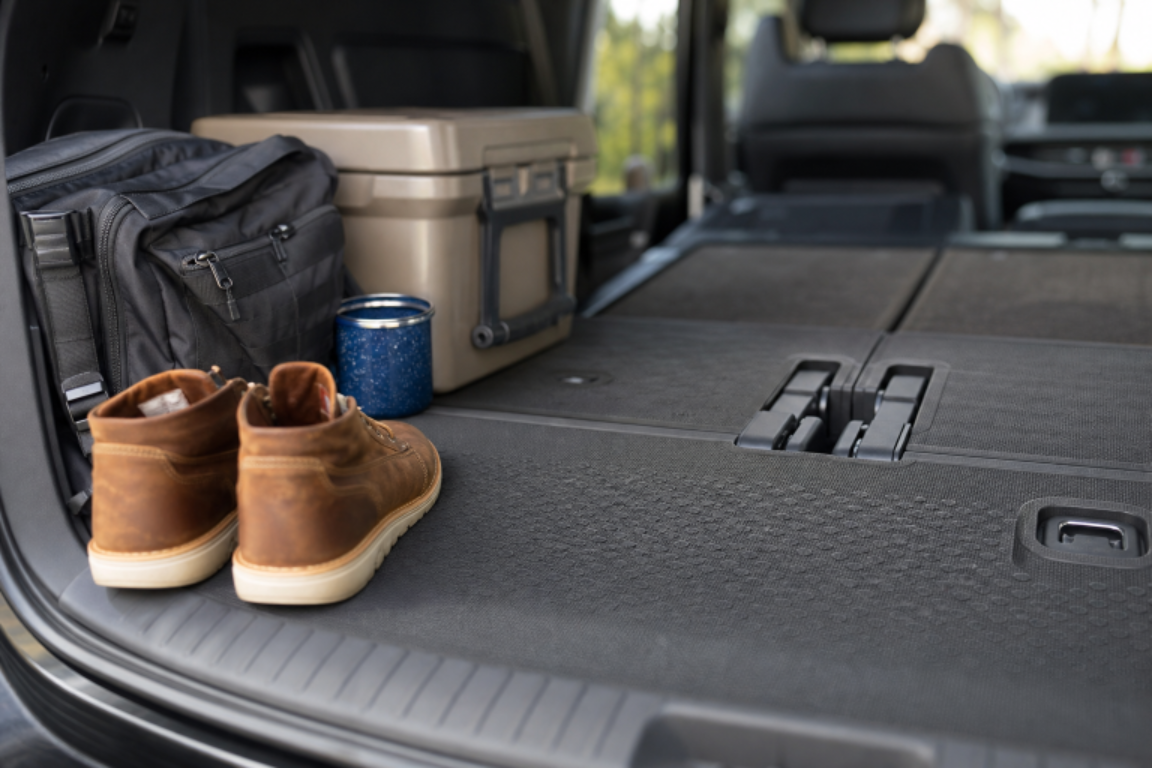
Cargo volume numbers are useful, but usable space matters more. Measure the stroller, cooler, sports bags, dog crate, folding chairs, tools, or camping bins that travel with you most often. Then check the cargo opening width, lift-over height, load floor, underfloor storage, and whether the rear seats fold easily.
A tall cargo area can be better for bulky boxes, while a long, flat floor may be more useful for bikes or lumber. If roof racks, a hitch carrier, or a trailer may become part of the plan, confirm the vehicle’s ratings and available equipment rather than assuming every trim can handle the same gear.
Compare Fuel Costs And Powertrains
Gas vehicles can be straightforward for drivers who want broad refueling access. Hybrids can be appealing for frequent city driving and traffic, while plug-in hybrids work best when regular charging is realistic. Electric vehicles may be a strong fit for predictable daily mileage and dependable home, workplace, or public charging access.
Compare city, highway, and combined estimates because a single mileage figure does not tell the whole story. The fuel-economy information available from the EPA can help shoppers compare ratings and estimated fuel costs across different models and powertrains.
Review Safety And Driver Assistance Features
Look for features that support the situations you face most, such as automatic emergency braking, blind-spot monitoring, rear cross-traffic alerts, and lane-centering support. These systems can add useful awareness, but they do not replace a focused driver. During the test drive, ask how alerts feel, how to adjust them, and whether the controls are easy to understand.
Take A More Useful Test Drive
- Drive roads similar to your commute, including traffic and highway speeds if possible.
- Try parking, low-speed turns, braking, and merging.
- Adjust the seat and steering wheel until your position feels natural.
- Check sightlines around the hood, rear corners, and mirrors.
- Listen for road noise and test the climate, infotainment, and storage areas.
Build A Realistic Ownership Budget
Affordability includes more than the monthly payment. Add insurance, fuel or charging, maintenance, tires, registration, taxes, and likely repairs after warranty coverage ends. Compare loan terms carefully because a lower payment over a longer term can increase the total interest paid. Leave enough room in the budget for unexpected costs instead of stretching every dollar toward the purchase price.
Avoid Common Vehicle Shopping Mistakes
- Choosing only by exterior style or a single standout feature.
- Buying more size, power, or seating capacity than the routine requires.
- Ignoring garage dimensions, parking limits, and maneuverability.
- Skipping a real cargo test with household items.
- Comparing only one vehicle or rushing the test drive.
Common Questions About Choosing A Vehicle
Should A Daily Commuter Be A Sedan Or An SUV?
Either can work well. Sedans may offer easier handling and efficiency, while SUVs can provide more cargo flexibility and a higher driving position. Choose based on your usual passengers, parking conditions, and gear.
How Much Cargo Space Is Enough?
Start with what you carry every week, not what you might carry once a year. Frequent travel with sports equipment, pets, strollers, or outdoor gear often calls for flexible cargo space.
Is A Hybrid Worth Considering In 2026?
A hybrid can be worth considering for drivers who cover many miles or spend substantial time in traffic. Purchase price, fuel savings, and long-term ownership plans should guide the decision.
How Many Vehicles Should Be Compared?
Compare at least three options, ideally across more than one body style. Seeing the trade-offs in comfort, price, efficiency, and usable space makes the final choice much clearer.
Final Thoughts
The right vehicle should simplify normal days while remaining ready for family trips and weekend plans. Start with your real routine, test the space with real people and gear, and calculate ownership costs before committing. A thoughtful decision now can lead to years of more comfortable, capable driving.