


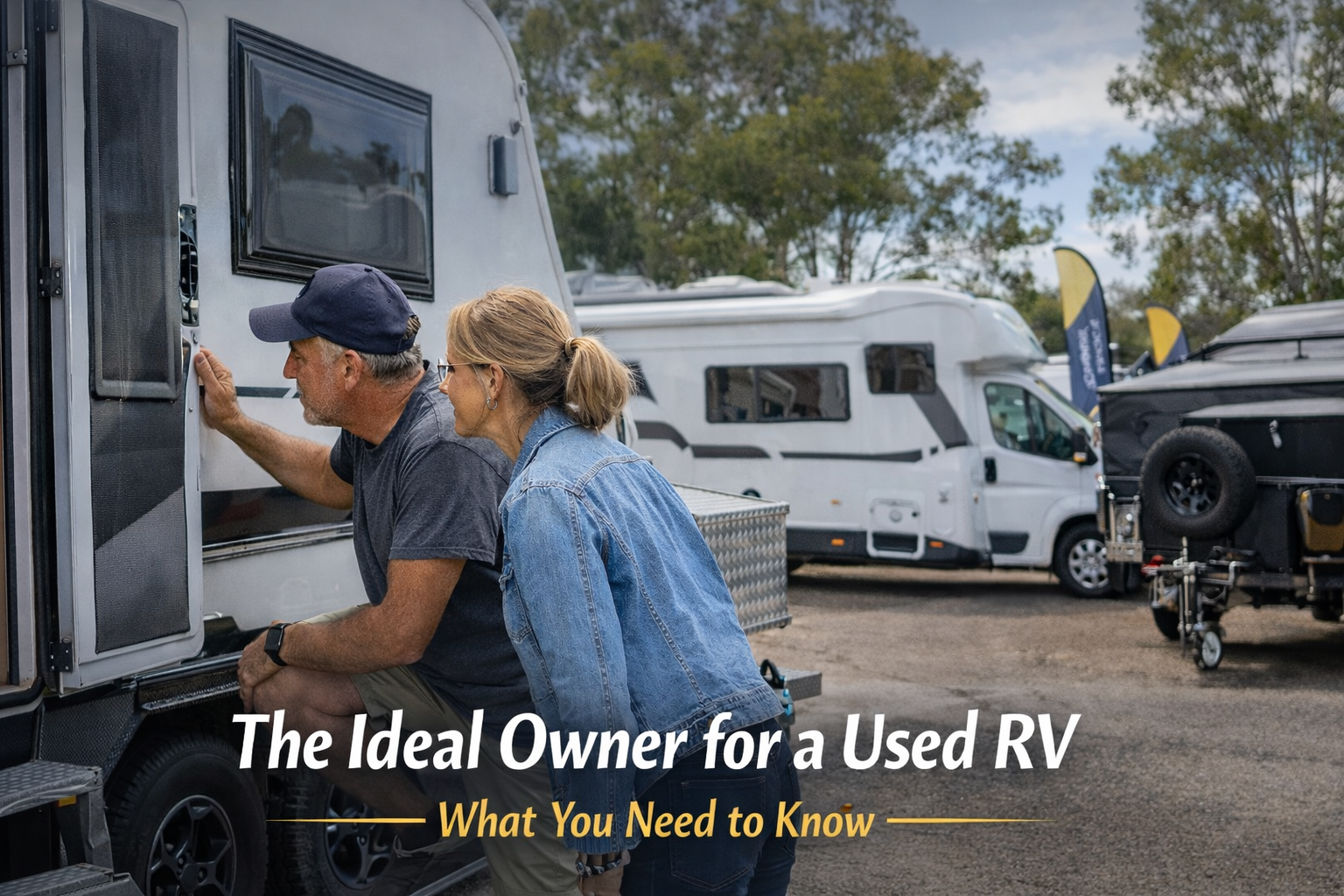
The ideal owner for a used RV is a practical buyer who knows how they will travel, has budgeted for running costs as well as the purchase price, and is willing to inspect carefully before signing. If you value layout, condition and reliability over having the newest model, and you will use the van often enough to justify owning one, a used caravan, camper trailer or motorhome can deliver years of touring around Australia for far less than a new rig.
Problems usually start when people buy on looks or on the dream of the open road, then discover that the size, weight or layout does not suit them. This guide covers who suits a used RV, the questions to answer before you shop, how towing weights work, what ownership really costs, which type fits which traveler, and the inspection steps that protect your money.
Why a Used RV Can Be a Smart Choice
- Lower upfront cost: a well-kept used van usually costs noticeably less than the same model new, freeing money for a tow vehicle upgrade, accessories or the trips themselves.
- Less depreciation: the first owner absorbs the steepest drop in value, so a sensible used purchase tends to hold its value better over the next few years.
- More van for the money: the same budget can buy a better layout, off-grid gear such as solar panels and lithium batteries, or a stronger chassis.
- Proven build: early teething problems such as leaks or electrical faults have often already shown up and, ideally, been fixed under the first owner.
- Room to learn: many owners change their minds about size and features after a season of trips. Starting used makes that lesson cheaper.
The Ideal Owner Profile
Buyers who get the best results from a used RV share a few traits. They care more about structure, safety and function than cosmetic wear. They do their homework, compare several options and ask for paperwork. And they are honest about how often they will actually travel.
People who often fit that profile include:
- First-time buyers with a clear, fixed budget who want to test the lifestyle
- Couples planning weekend getaways and school holiday trips
- Families who want comfort without paying new-van prices
- Grey nomads downsizing to something lighter and easier to manage
- Seasonal travelers who value reliability over luxury extras
- Handy owners who are comfortable with basic maintenance such as checking seals, greasing bearings and testing electrics
When a Used RV Is a Weaker Fit
A used RV is a poorer match if you want a full factory warranty and the newest features, need a specific new layout that is not yet on the second-hand market, or have no time or interest in inspections and ongoing upkeep. It can also be the wrong move if you would only use it once or twice a year; in that case, hiring a van for those trips may cost less than owning, registering, insuring and storing one.
Lifestyle Questions to Answer Before You Shop
- How many nights a year will you use it? A couple of short trips may not justify a large, expensive setup. Frequent travel makes comfort and storage much more important.
- What kind of trips? Coastal weekends, sealed-road touring across states and outback tracks need very different vans, suspension and ground clearance.
- How many people need beds? Check sleeping arrangements for everyone, including children as they grow.
- Do you need an onboard shower and toilet? An ensuite adds comfort but also weight, water use and maintenance.
- Caravan parks or free camping? Off-grid travel means you need enough water capacity, solar input and battery storage to stay self-sufficient.
- What can your vehicle tow, and how confident are you towing? A bigger van is harder to reverse, park and manage in crosswinds.
- Where will you keep it? Measure your driveway, carport height and side access, and check local rules on parking a van at home.
For many buyers, a compact setup is simply easier to own. If you want lighter travel and a faster camp setup, browsing small camping trailers for sale is a useful way to see what a smaller footprint can offer before you commit to a full-size van.
Towing Capacity and Weights: Get This Right First
Weight is where many used RV purchases go wrong. Before you fall for a van, check your tow vehicle’s rated towing capacity and tow ball download limit in the owner’s manual, then compare them with the van’s compliance plate.
| Term | What it means | Why it matters |
|---|---|---|
| Tare | Empty weight of the van as it left the factory, with no water or gear | Your starting point; real-world weight is always higher |
| ATM (Aggregate Trailer Mass) | Maximum the van can weigh fully loaded, including weight on the tow ball | Must not exceed your vehicle’s towing capacity |
| GTM (Gross Trailer Mass) | Maximum weight carried by the van’s axles | Exceeding it overloads axles, tires and suspension |
| Tow ball mass | Downward weight on the tow ball | Often suggested at around 10% of loaded van weight for stability |
| Payload | ATM minus tare | How much water, gas and gear you can actually carry |
Water, gas, batteries, food and gear can add several hundred kilograms to the tare. Older vans have often had accessories added over the years, such as extra batteries, a second spare or a bigger fridge, and those additions eat into payload. A trip to a public weighbridge before you buy, or at least before your first big trip, is worth the small fee.
Braking rules also step up with weight. Trailers above 750 kg ATM need brakes, and heavier vans above 2,000 kg ATM need brakes that can be applied from the driver’s seat plus a breakaway system. Check the current requirements with your state road authority, as rules and enforcement details can differ.
A Simple Weight Sanity Check
- Find your vehicle’s maximum towing capacity and maximum tow ball mass.
- Read the van’s ATM and tare on its compliance plate.
- Estimate what you will load: full water tanks, gas bottles, batteries, food, clothing and gear.
- Make sure the loaded van stays under both the van’s ATM and your vehicle’s towing capacity, with a margin to spare.
- Remember that whatever sits on the tow ball reduces how much payload your tow vehicle can carry in its cabin and tray.
Budget Readiness and Total Ownership Costs
Focusing only on the sticker price is one of the most common mistakes. The ideal owner plans for these costs from day one:
| Cost | What to expect |
|---|---|
| Registration | Annual; varies by state and by the van’s ATM |
| Insurance | Annual; compare agreed-value and market-value cover and check off-road exclusions |
| Servicing | Annual wheel bearing, brake, gas and electrical checks |
| Tires | Replace on age as well as tread; old tires can fail even with good tread |
| Batteries and electrics | Deep-cycle or lithium batteries eventually need replacing |
| Storage | Monthly fees if you cannot keep the van at home |
| Fuel | Towing can increase your vehicle’s fuel use considerably |
| Tow vehicle upgrades | Brake controller, towbar rating, mirrors or suspension work |
| Reserve fund | Money set aside for repairs in the first few months |
If your budget is tight, a simpler, well-maintained van is usually a better buy than a bigger one that leaves nothing for repairs. The same logic applies to the vehicle that will pull it, as covered in our guide on choosing a vehicle that fits commuting, family trips and weekend gear.
If you plan to finance the purchase, compare the total cost over the full loan term, not just the repayment, and remember that older vans can be harder to finance. Speak to a licensed financial adviser or lender if you are unsure what you can comfortably afford.
Choosing the Right RV Type and Layout
| Type | Best for | Trade-offs |
|---|---|---|
| Camper trailer | Couples and families who want light towing and off-road access | Setup time and less weather protection |
| Pop-top or compact caravan | Couples and smaller tow vehicles | Less storage, often no full ensuite |
| Full-size caravan | Long stays and extended touring | Needs a capable tow vehicle; harder to maneuver |
| Motorhome or campervan | Drive-and-go travelers | You may need a second car or bike for day trips; engine servicing adds cost |
Layout matters as much as type. Check bed size and access (island beds are easier than corner beds for couples), kitchen bench space, fridge size, seating for rainy days, storage for gear, and how long it takes to set up and pack down. If you prefer an all-in-one vehicle, compare several motorhome layouts and match them to how you actually travel, not how you imagine you will.
Layout Features Worth Prioritizing
- A bed you can get in and out of without climbing over your partner
- Enough bench space to prepare a meal with the table down
- Storage you can reach from outside for hoses, chocks and leveling ramps
- A fridge sized for your longest stretch between shops
- Seating where everyone can sit comfortably if the weather turns
Inspection, History and Pre-Purchase Checks
A used RV can look spotless inside and still hide expensive problems. Ask for the service history, ownership details and repair records, and search the van’s VIN on the Personal Property Securities Register (PPSR) to check that there is no money owing and that it has not been recorded as written off or stolen.
Pre-Purchase Checklist
- Water damage: press walls and floors near windows, hatches and corners for soft spots, and sniff for mustiness or mold
- Roof and seals: look for cracked sealant and signs of past leak repairs
- Chassis and underbody: check for rust, cracked welds and damage from rough roads
- Tires: read the date code on the sidewall, not just the tread depth
- Running gear: brakes, wheel bearings, coupling and safety chains
- Gas system and appliances: ask whether a current gas compliance certificate is available, which some states require when a van is sold
- 12V and 240V systems: test lights, power points, batteries, solar and the inverter
- Doors, hatches and pop-top mechanisms: open and close everything and check that locks work
- Independent inspection: worth paying for on any higher-priced van
Common Buyer Mistakes
- Falling for the interior and skipping the underbody inspection
- Buying a van that only just fits under the tow vehicle’s limits with nothing loaded
- Ignoring tire age because the tread looks fine
- Assuming accessories work without testing them
- Rushing to secure a “bargain” before seeing comparable vans
Once you own the van, tracking tools can help you keep an eye on it, as our article on what a GPS tracker can reveal about vehicle health explains.
Where to Buy and How to Compare Sellers
Private sellers may offer a lower price, but you generally take on more risk and get fewer protections. Licensed dealers typically provide better documentation, may offer statutory or extended warranties depending on the van’s age and your state, and can help with finance and trade-ins. Neither is always better; it comes down to the individual van and seller.
When comparing, look beyond the headline price to age, condition, included accessories, service history and after-sale support. Shortlisting reputable caravan dealers with solid reviews, and seeing several vans in person, will give you a realistic sense of value. Check local registration and inspection requirements in your state before you finalize the deal, and get any promises about repairs or inclusions in writing.
Bottom Line: Are You the Ideal Owner for a Used RV?
You are likely a good fit if you know how and how often you will travel, your tow vehicle comfortably handles the loaded weight, you have budgeted for registration, insurance, servicing and a repair reserve, and you are prepared to inspect thoroughly and walk away from a van that does not check out. Get those four things right and a used RV can give you years of affordable travel without the depreciation hit of buying new.
Frequently Asked Questions
Is it worth buying a used RV instead of a new one?
For many buyers, yes. A well-maintained used RV costs less, has already taken the biggest depreciation hit and lets you learn what you really need before spending more. The trade-off is less warranty cover, so inspection matters more.
What should I check first when inspecting a used caravan?
Start with water damage, the chassis and the paperwork. Leaks and structural rust are the most expensive problems to fix. A PPSR search confirms there is no finance owing and that the van has not been written off or reported stolen.
How do I know if my car can tow a caravan?
Compare your vehicle’s rated towing capacity and tow ball limit with the van’s ATM and expected tow ball mass. Leave a safety margin for water, gas and gear, and confirm real weights at a public weighbridge.
Should I buy from a dealer or a private seller?
Private sales can be cheaper, while dealers usually offer more documentation, support and possible warranty cover. Judge each van on its condition and history rather than the type of seller.
What ongoing costs come with owning an RV?
Budget for registration, insurance, servicing, tires, batteries, storage and extra fuel for towing. Keep a reserve fund for repairs in the first few months, since even well-kept used vans can need early fixes.
How often should a caravan be serviced?
Many owners book a service at least once a year, covering wheel bearings, brakes, gas and electrical systems and seals. Vans used heavily or on rough roads may need checks more often, so follow the manufacturer’s schedule where available.