


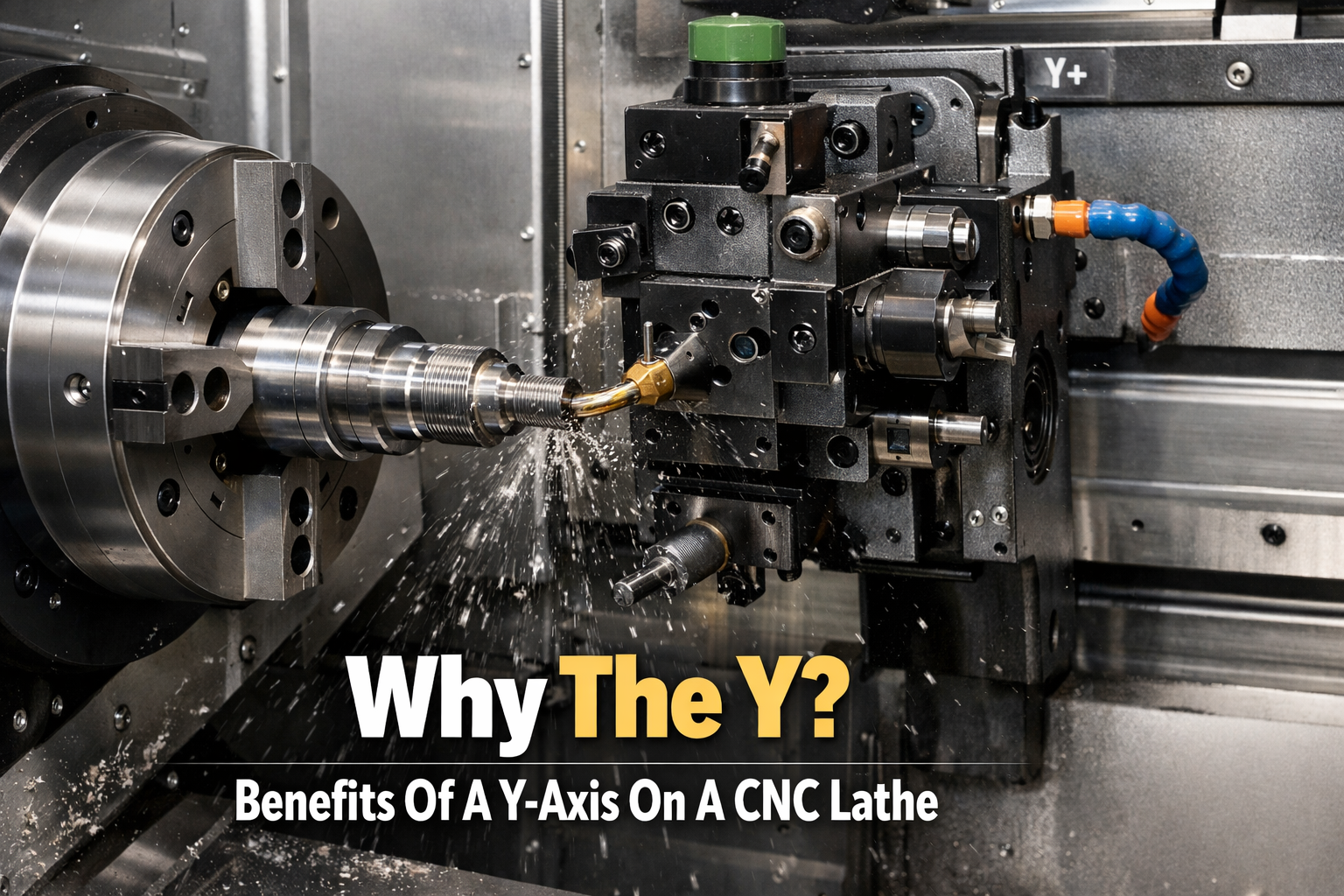
If you have ever looked at a turned component and thought, “This part needs more than just basic turning,” you are already asking the right question. Many modern components need drilled holes, milled flats, slots, and tapped features in addition to standard turning work. That is where Y-axis capability becomes important.
A standard CNC lathe can do a lot, but a Y-axis opens up more options on the same machine. It helps reduce extra handling and makes it easier to complete more complex parts in a smoother workflow. For manufacturers comparing capabilities or planning future work, this is a practical feature worth understanding. For local buyers researching CNC machining Brisbane, it also helps explain why machine capability can affect part quality, speed, and consistency.
What A Y-Axis Adds To A CNC Lathe
In simple terms, traditional CNC lathes mainly move on X and Z axes. X controls diameter, and Z controls length. That setup works well for many turning tasks, especially for round parts that stay close to the centreline.
A Y-axis adds controlled movement above and below the spindle centreline. This additional direction gives the machine greater reach when live tooling is used to mill, drill, or tap features on the part. Instead of being limited to centreline-focused operations, the lathe becomes more capable for mixed-feature components.
You can think of it as turning a strong turning platform into a more flexible turn-mill setup. It is not just another axis on paper. It changes what kind of work can be completed in one machine cycle.
Off-Centre Machining Without Extra Setups
One of the biggest benefits of a Y-axis is the ability to perform off-centre machining. Many parts require features that are not perfectly aligned with the component’s centreline. Examples include flats, keyways, offset holes, and side drilling or tapping work.
Without Y-axis capability, these features often require a second operation on another machine, usually a milling machine. That means the part has to be removed, re-clamped, aligned again, and checked before the next stage starts. Each extra step adds time and increases the chance of small alignment differences.
With a Y-axis lathe, many of these off-centre features can be machined directly on the turning centre. This can simplify the process and reduce part handling. For shops producing repeat work, that can make a noticeable difference in day-to-day production flow. It also helps when a part has several features that would otherwise force multiple handoffs between machines.
True 3-Axis Milling Capability On The Lathe
There is also an important difference between basic live tooling and true 3-axis milling capability on a lathe. A Y-axis gives the machine more flexibility to create milling features that are harder or less practical to produce with X, Z, and spindle movement alone.
This is where the lathe becomes much more useful for feature-rich parts. Depending on the machine setup and tooling, a Y-axis can support machining of slots, pockets, and more detailed contours. It can also help with straight-wall milled features that may otherwise need a separate milling setup.
From a production point of view, the real value is not just that the feature is possible. It is that turning and milling operations can be combined in one workflow on the same machine for suitable jobs. That can reduce delays between stages and make the whole process easier to plan, especially for parts with mixed geometry.
Fewer Setups, Better Accuracy, And More Consistent Results
Every time a part is removed and re-clamped, there is some risk. Even with good processes, each setup change can introduce small variations in position, alignment, or datum transfer. On simple parts this may not matter much. On tighter tolerance parts, it can matter a lot.
A Y-axis helps reduce those extra setups by allowing more operations to happen in one machine cycle. Fewer handoffs usually means fewer opportunities for handling errors and less time spent re-establishing position. That supports more stable outcomes across a production run.
This is one reason Y-axis capability is often linked to better process reliability, not just faster production. When a part stays in one setup for more of its machining cycle, repeatability tends to improve. That matters for batch work, ongoing production jobs, and any application where consistent results are just as important as speed. This is especially relevant in work that depends on precision machining standards and repeatable part quality.
Tooling Flexibility And Better Use Of Turret Stations
Another practical benefit is tooling flexibility. The reference article highlights how Y-axis movement can help operators make better use of gang or multi-tool holders and, in some cases, effectively increase tooling options from the same turret station through separate tool offsets.
Why does that matter in real production? Because complex parts often need many tools. If a job includes turning, drilling, tapping, and milling features, turret capacity becomes a planning issue very quickly. Better use of each station can reduce interruptions and keep more tools ready for the cycle.
This can also make complex setups easier to organise. Instead of changing tools mid-process more often than necessary, the machine can be prepared to handle more of the job in one go. That supports smoother production and better use of machine time.
Productivity And Cost Benefits Across Production Runs
When you add all these benefits together, the result is often a stronger production process. A Y-axis can help reduce non-cutting time, lower part handling, and limit transfers between machines for the right type of component. That does not mean every job becomes faster, but many mixed-feature parts can benefit.
The biggest gains are usually seen on components that combine turning with milling or off-centre work. In those cases, setup consolidation can improve workflow and reduce labour input per part over repeat runs. It can also help with quoting, because fewer process steps can make production time easier to estimate.
For businesses comparing suppliers, this is one reason machine capability matters when assessing cnc machining services. The machine itself is only part of the story, but the available axes can have a direct effect on process planning, turnaround consistency, and finished part quality.
When A Y-Axis Lathe Is The Right Choice For A Job
A Y-axis lathe is often the right choice when parts include off-centre features, side drilling, side milling, or several operations that would otherwise need multiple setups. It is also a strong option for repeat jobs where consistency and throughput matter.
That said, not every part needs it. If the work is mostly simple turning with no off-centre features, a standard lathe may be enough. The key is matching machine capability to part complexity. When the job calls for more than straight turning, a Y-axis can offer real value in both process control and workshop flow.
Conclusion
A Y-axis on a CNC lathe is not just a technical extra. It is a practical capability that expands what the machine can do. From off-centre machining to better setup consolidation and more flexible tooling use, it can support smoother production and more consistent outcomes on the right parts. For complex turned components, it is often the feature that makes the process far more workable.