

Growing tomatoes is one of the most rewarding gardening experiences. Whether you are a seasoned gardener or a beginner, knowing which plants to grow alongside tomatoes can significantly enhance your harvest. This guide will explain tomato companion plants, why they work, and how to use them to increase fruit size, improve flavor, and reduce pests naturally.
Tomatoes are susceptible to pests and diseases, and soil health is critical for healthy growth. Companion planting is a natural, science-backed method that not only supports your tomato plants but also creates a thriving ecosystem in your garden. By carefully selecting companion plants, you can maximize your yield and flavor while reducing the need for chemical interventions.
Best Tomato Companion Plants and Their Benefits: Quick Reference Guide
| Tomato Companion Plant | Key Benefits |
|---|---|
| Basil | Enhances tomato flavor, repels mosquitoes and flies |
| Marigold | Repels nematodes and harmful insects |
| Borage | Attracts pollinators, deters hornworms |
| Carrot | Improves soil aeration and loosens soil |
| Chives | Repels aphids and improves tomato growth |
| Garlic | Repels spider mites and aphids |
| Lettuce | Shades soil and suppresses weeds |
| Spinach | Retains soil moisture and prevents weeds |
| Nasturtium | Attracts beneficial insects, traps pests |
| Oregano | Improves flavor and deters pests |
| Parsley | Attracts pollinators and beneficial insects |
| Rosemary | Repels tomato flies and improves aroma |
| Sage | Protects tomatoes from certain pests |
| Thyme | Repels cabbage worms and increases growth |
| Calendula | Attracts pollinators and beneficial insects |
| Dill | Attracts beneficial insects, deters pests |
| Fennel (small amounts) | Can attract beneficial insects if planted carefully |
| Beans | Fix nitrogen in soil, enhancing growth |
| Peas | Improve soil fertility for better tomato yield |
| Radish | Helps repel cucumber beetles and pests |
| Mint (in pots) | Repels ants and aphids; plant separately to prevent spreading |
| Coriander (Cilantro) | Attracts beneficial insects and improves soil health |
| Alyssum | Attracts pollinators and ground beetles |
| Chamomile | Improves tomato flavor and attracts beneficial insects |
| Sunflower | Provides shade for smaller tomato varieties, attracts pollinators |
What Are Tomato Companion Plants?
Tomato companion plants are herbs, vegetables, or flowers planted near tomato plants to provide mutual benefits. These benefits may include:
- Pest control: Certain plants repel harmful insects that target tomatoes.
- Enhanced growth: Some companions improve soil fertility or provide natural support.
- Improved flavor: Aromatic plants can enhance tomato flavor.
- Pollinator attraction: Flowering plants attract bees and beneficial insects.
Essentially, companion planting creates a healthy and balanced garden ecosystem, allowing tomatoes to thrive naturally.
Why Use Companion Plants with Tomatoes?
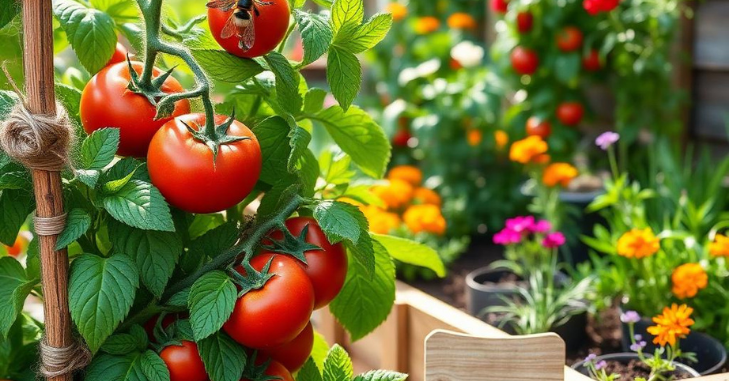
Tomatoes are nutrient-hungry plants and vulnerable to pests such as aphids, whiteflies, hornworms, and nematodes. Companion planting offers several benefits:
- Natural Pest Control: Plants like marigolds release chemicals that deter nematodes and insects. Herbs such as basil and rosemary repel flies, mosquitoes, and other tomato pests.
- Enhanced Soil Health: Legumes, such as beans, fix nitrogen in the soil, which is essential for tomato growth. Healthy soil leads to bigger, juicier fruits.
- Increased Pollination: Flowers such as nasturtiums and borage attract pollinators, helping set more fruit.
- Improved Flavor: Studies and gardening experts suggest that growing basil near tomatoes can intensify their flavor, creating a superior taste for fresh salads and sauces.
- Efficient Use of Space: Companion planting allows gardeners to maximize small garden areas by growing plants together in mutually beneficial arrangements.
Best Tomato Companion Plants
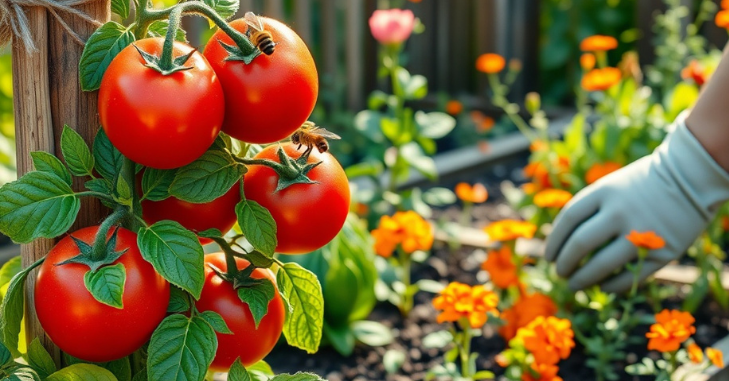
Here are the most effective tomato companion plants that experts recommend for growth, flavor, and pest protection:
1. Basil
- Benefits: Improves flavor, repels mosquitoes and flies.
- Tip: Plant basil near tomato roots to ensure adequate sunlight and water.
2. Marigold
- Benefits: Repels nematodes and harmful insects.
- Tip: Use French or African marigolds around tomato beds for best results.
3. Borage
- Benefits: Attracts pollinators, deters tomato hornworms.
- Tip: Interplant borage with tomatoes to encourage pollination and larger fruits.
4. Carrots
- Benefits: Break up soil, improve aeration.
- Tip: Plant around the edges of tomato beds to avoid shading small tomato plants.
5. Chives and Onions
- Benefits: Repel aphids, improve growth.
- Tip: Plant in rows beside tomatoes for maximum protection.
6. Nasturtiums
- Benefits: Trap pests like aphids away from tomatoes and attract beneficial insects.
- Tip: Allow them to trail around tomato plants for natural pest control.
7. Garlic
- Benefits: Repels spider mites and aphids.
- Tip: Plant cloves near tomato stems, but leave enough space for airflow.
8. Spinach and Lettuce
- Benefits: Shade the soil, prevent weed growth.
- Tip: Plant under tomato plants to protect the roots from extreme heat.
Plants to Avoid with Tomatoes
Not all plants are compatible with tomatoes. Avoid planting:
- Cabbage family (broccoli, cauliflower, kale): Compete for nutrients.
- Corn: Attracts tomato pests, such as the corn earworm.
- Potatoes: Can spread blight and diseases to tomatoes.
- Fennel: Inhibits tomato growth and flavor.
How to Plan Your Tomato Companion Garden?
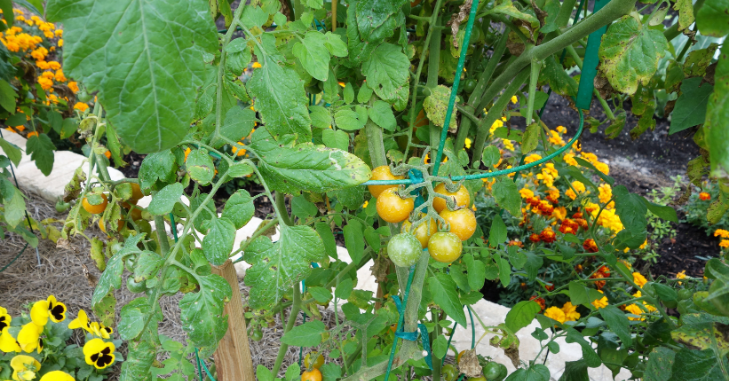
A successful tomato companion garden requires careful planning. Follow these steps:
- Identify Goals: Decide if you want to improve flavor, increase yield, or control pests.
- Select Companions: Pick plants that serve your goals and are compatible with your climate.
- Plan Layout: Taller plants should not shade tomatoes. Interplant herbs and flowers strategically.
- Monitor Soil Health: Rotate crops each season to prevent nutrient depletion and diseases.
- Observe and Adjust: Track growth, fruit size, and pest activity to refine your companion planting strategy.
Expert Tips for Maximum Tomato Growth
- Watering: Water at the base to avoid fungal diseases.
- Mulching: Use organic mulch to retain soil moisture and suppress weeds.
- Pruning: Remove lower leaves to improve airflow and reduce disease risk.
- Companion Density: Avoid overcrowding; give each plant enough space.
- Pollinator-Friendly Flowers: Include borage, marigolds, or nasturtiums to attract bees.
These tips combine traditional gardening knowledge with modern horticultural science, making your tomato garden more productive and sustainable.
Companion Planting Layout Example
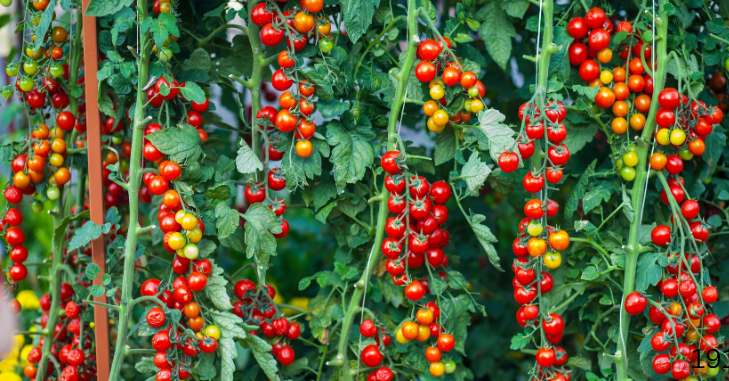
Here’s an example of a simple companion planting layout for a medium-sized tomato bed:
| Tomato Plant | Companion Plant | Benefit |
| Tomato | Basil | Improves flavor, repels insects |
| Tomato | Marigold | Repels nematodes, attracts pollinators |
| Tomato | Borage | Attracts bees, deters hornworms |
| Tomato | Carrot | Loosens soil, increases aeration |
| Tomato | Garlic | Repels aphids and spider mites |
| Tomato | Lettuce | Shade soil prevents weeds |
| Tomato | Nasturtium | Trap pests, attracts beneficial insects |
This strategic planting helps maximize your garden’s productivity and minimizes chemical use.
Conclusion
Using tomato companion plants is a natural, science-backed way to increase fruit size, improve flavor, and reduce garden pests. From aromatic herbs like basil to pest-repelling flowers like marigolds and nasturtiums, carefully chosen companions create a balanced ecosystem that supports tomato growth. By planning your garden layout, rotating crops, and observing plant interactions, you can achieve healthier, more productive tomato plants while maintaining an organic and environmentally friendly garden.
Companion planting is not just a gardening technique; it is a holistic approach to sustainable agriculture that combines expert knowledge, plant science, and practical experience. Start experimenting with companion plants today, and watch your tomatoes flourish like never before.
Want to know about The Ultimate Guide to Crispy Fried Mushrooms: Easy Recipes, Cooking Hacks, and Delicious Ideas Check out our Food category.
Frequently Asked Questions (FAQs)
Yes, tomatoes can grow on their own, but companion plants naturally enhance growth, protect against pests, and improve flavor, making your harvest more productive.
Plant herbs like basil 12 inches apart from tomato stems. Flowers like marigolds can be planted along the edges of the bed. Avoid overcrowding to maintain airflow.
Yes. Herbs like basil and oregano release beneficial compounds that can enhance tomato taste. Many gardeners report juicier, sweeter fruits when paired with aromatic herbs.
Yes. Avoid potatoes, corn, fennel, and plants in the cabbage family, as they compete for nutrients or encourage disease.
Absolutely. Plants like marigolds, garlic, and nasturtiums naturally repel pests, reducing the need for chemical treatments.