


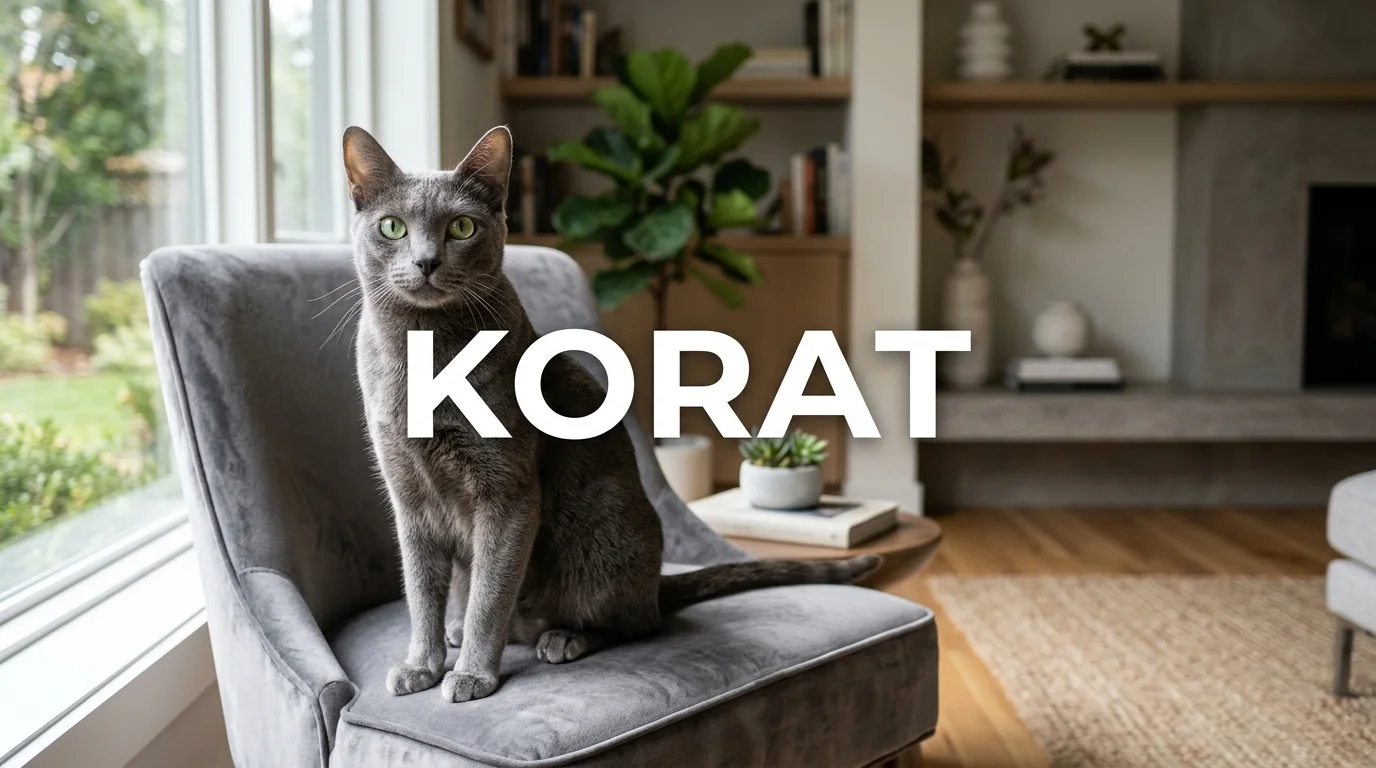
The Korat is a rare Thai cat known for its silver-blue coat, green eyes, and close bonds with people. This breed can suit owners who want an intelligent, playful, affectionate companion with modest grooming needs. It also needs daily attention, mental stimulation, and careful health screening before you buy one. Elsewhere on the site: Pitbull Husky Mix.
Quick Facts
| Feature | What to Know |
|---|---|
| Origin | Thailand |
| Size | Small to medium |
| Typical weight | About 6–10 pounds |
| Coat | Short, single, silver-tipped blue coat |
| Eyes | Large and green at maturity |
| Temperament | Affectionate, intelligent, playful, people-focused |
| Grooming | Low; weekly brushing is usually enough |
| Lifespan | Often 10–15 years, with longer lives reported |
| Main inherited concern | GM1 and GM2 gangliosidosis |
| U.S. availability | Uncommon, with limited breeder availability |
The Korat is a rare Thai cat with a silver-tipped blue coat, heart-shaped head, and luminous green eyes. It is intelligent, affectionate, playful, and strongly attached to people. U.S. owners should expect low grooming needs, daily interactive play, careful GM1 and GM2 screening, and limited availability.
Key Takeaways
- The breed has one accepted coat color: silver-tipped blue.
- Adult females often weigh 6–8 pounds, while males may reach 10 pounds or more.
- These cats form strong bonds and may dislike long periods alone.
- Weekly brushing usually keeps the single coat in good condition.
- Daily play and puzzle-based enrichment help satisfy their active minds.
- GM1 and GM2 gangliosidosis are important inherited conditions to screen for.
- The breed is not considered hypoallergenic.
- Russian Blues look similar but have a different head shape and double coat.
- U.S. buyers should verify registration, health testing, and breeder practices before paying a deposit.
What Makes the Korat Cat Distinctive?
The breed has a compact, muscular body that can feel heavier than it looks. Its short coat lies close to the body and carries silver tipping across the blue hairs. The face forms a broad heart shape, while mature eyes develop a vivid green color.
Eye color develops slowly, so young cats may not show the final green shade immediately. TICA says full maturity can take several years, including development of adult eye color. Appearance alone cannot confirm pedigree, because mixed-breed blue cats can share several visible traits.
Personality and Home Fit
This Thai breed is social, observant, and strongly interested in household activity. Many individuals follow their people, seek lap time, and enjoy interactive games or simple training. TICA also notes that they can become withdrawn when ignored for long periods.
A quieter home often suits this sensitive breed better than constant noise and disruption. Some individuals live well with children and other pets after careful introductions. Others can become jealous or territorial when competing for attention, so personality still matters.
Daily Care, Exercise, and Grooming
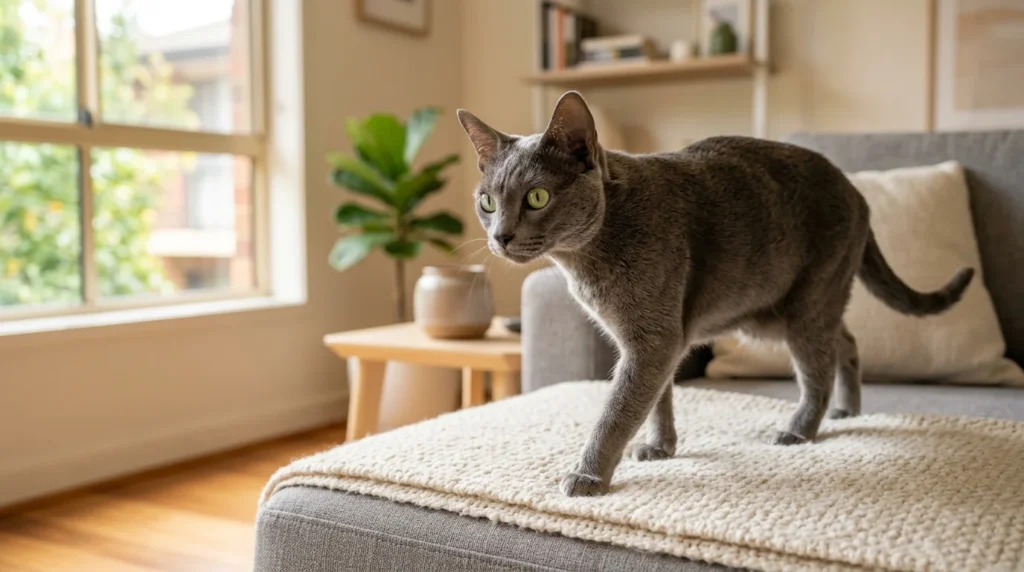
The single coat has no thick undercoat, so grooming is usually simple. A gentle weekly brushing removes loose hair and keeps the coat smooth. Regular nail trimming, dental care, and routine veterinary visits still belong in the care plan.
Mental exercise matters as much as coat care for this intelligent cat. Use short play sessions, climbing spaces, fetch games, and food puzzles during the day. For litter setup, Mindspaper’s guide to crystal cat litter explains practical U.S. litter choices and maintenance.
Health and Lifespan
Published lifespan estimates vary, with many sources placing these cats around 10–15 years. TICA reports that healthy individuals can live 15 years or longer, with some reaching their twenties. Good preventive care, nutrition, dental care, and early veterinary attention still shape individual outcomes.
GM1 and GM2 gangliosidosis deserve special attention because both can cause fatal neurologic disease. UC Davis offers DNA tests for the known breed-associated variants and explains their recessive inheritance. Buyers should request documented parental testing rather than accepting a verbal health claim.
Watch for changes in appetite, movement, balance, grooming, breathing, or litter-box habits. Those signs do not automatically indicate an inherited disorder, but they can justify veterinary evaluation. Mindspaper’s cat illness guide covers common warning signs and when owners should seek care.
How This Breed Differs From a Russian Blue
Both breeds can have blue-gray coats and green eyes, so people often confuse them. Their coat structure, head shape, body type, and breed history are different. Those differences become clearer when you compare several traits together.
| Trait | This Thai breed | Russian Blue |
|---|---|---|
| Coat | Short, close-lying single coat | Plush double coat |
| Head | Broad heart shape | More wedge-shaped |
| Body | Compact and muscular | More slender and elongated |
| Eyes | Large green eyes at maturity | Green eyes |
| General impression | Powerful for its size | Fine-boned and elegant |
A pedigree remains more reliable than visual guessing when breed identity matters. Coat color alone cannot prove ancestry, especially among blue domestic cats. If you’re interested in eye function, Mindspaper’s guide to feline night vision explains how cat eyes work in dim light.
History and Cultural Significance
The breed comes from Thailand and appears in the historic Thai Cat-Book Poems. Those writings describe several cats associated with good fortune, including this silver-blue type. Thai tradition also connected the cat with prosperity and wedding gifts.
According to CFA and TICA, the first documented pair reached the United States in 1959. CFA later accepted the breed for championship competition in 1966. PetMD still describes the breed as rare, citing limited availability and a relatively small gene pool.
Finding a Healthy Cat in the United States
Availability is limited, so buyers may face waiting lists or long travel distances. PetMD describes the breed as rare because of its small gene pool and limited availability. A pedigree kitten can cost up to about $2,000, although breeder quotes vary.
Ask for registry details, veterinary records, vaccination history, and written health guarantees before sending money. Request proof that breeding cats were screened for both GM1 and GM2 variants. TICA also maintains breeder resources for people seeking registered cats from participating breeders.
Avoid choosing a seller based only on photos, rarity claims, or pressure to pay quickly. A responsible breeder should answer questions about socialization, health testing, contracts, and return policies. Adoption is less predictable, but shelter and breed searches can still be worth checking.
Frequently Asked Questions
Are Korat cats good family pets?
They can be good family companions when you respect their need for attention and predictable routines. Many enjoy play, affection, and close contact with familiar people. Homes with children or pets should introduce them slowly and provide private retreat spaces.
Are these cats hypoallergenic?
No cat breed is completely allergy-free, and this breed is not considered hypoallergenic. Its single coat may shed less than some breeds, but allergens still come from skin and saliva. People with allergies should spend time around the breed before committing.
How much grooming do they need?
Their short single coat usually needs brushing about once each week. The coat does not mat as easily as many longer or double coats. Owners should also maintain nails, teeth, ears, and routine veterinary care.
Why are these cats considered rare?
The U.S. breeding population has remained relatively small since the first imports arrived in 1959. Limited breeder availability and a carefully managed gene pool also restrict supply. Buyers may need patience when looking for a pedigreed kitten.
What should I ask a breeder before buying?
Ask for pedigree records, health documentation, vaccination records, and the purchase contract. Request written proof of GM1 and GM2 testing for the breeding parents. You should also ask how kittens are socialized and what support follows placement.
The Bottom Line
This breed suits people who want a smart, affectionate cat that provides steady companionship. Grooming is simple, but social and mental needs require daily attention. Health screening matters because responsible breeding can greatly reduce known inherited risks.
Take time to verify records, meet the breeder or rescue, and consider your household routine before committing. You can also browse Mindspaper’s Pets section for more practical care guidance. A careful match gives both the owner and the cat a stronger start.