



Your conditioner has about sixty seconds to work. A hair mask gets ten to twenty minutes, a thicker formula, and enough oil and protein to reach past the cuticle. That gap explains why one jar rescues straw-like ends while another leaves fine hair flat by Tuesday. Choosing the right kind matters far more than choosing the priciest.
Five kinds of hair mask, compared
Store shelves file all of these under one word, but the formulas do different jobs. Prices below are what US shoppers were paying in August 2026.
| Type | What it does | Best for | Leave on | Typical US price |
|---|---|---|---|---|
| Moisture/hydrating | Pulls water into the cortex, then seals it in with butters and fatty alcohols | Dry, coarse, coily or sun-worn ends | 10 to 20 minutes | $8 to $30 |
| Protein / bond repair | Deposits hydrolyzed proteins or bonding agents into the weak spots | Bleached, relaxed or heat-fried hair that snaps | 5 to 10 minutes | $20 to $75 |
| Pre-wash oil | Coats and partly soaks in before shampoo strips the natural lipids | Fine hair that goes limp, plus frizz | 20 to 60 minutes before washing | $6 to $25 |
| Leave-in cream | Stays on damp hair and keeps working while you get on with your day | Curls, coils, anyone short on shower time | No rinse | $15 to $40 |
| Clarify-then-condition | A chelating wash lifts mineral buildup, then a rich cream goes on clean cuticles | Hard water areas, swimmers, heavy product users | 10 minutes, after the wash | $12 to $35 |
Buying only one? Make it a moisture formula. It suits most heads most weeks, and it fails gently, because the worst case is soft roots for a day. Protein is the specialist you call in when strands actually break. None of these belong on your scalp, though. If itch or tightness up top is the real complaint, a proper head massage will do more for you than any jar.
- Moisture formulas: soft, shiny results inside one wash but heavy on fine hair if you run them weekly.
- Protein and bond builders: real strength back in bleached hair, though overuse leaves strands stiff and snappy.
- Pre-wash oils: cheap, gentle, almost impossible to overdo. Messy, and they need a proper shampoo afterward.
- Leave-in creams: no shower time needed at all. They can read grease on straight hair.
- Clarify-then-condition pairs: the one combination that cuts through hard water. Drying if you repeat it every week.
Key takeaways
- Once a week suits most people. Bleached and coily hair can take two.
- Ten to twenty minutes is the ceiling, not a starting point.
- Mid-lengths and ends first. The roots almost never need it.
- Alternate protein and moisture instead of picking a side.
- A $12.97 jar you use every Sunday beats a $60 jar you ration.
Protein or moisture? The wet strand test
Pull a shed strand off your brush. Wet it, hold both ends, and stretch it slowly. Stretches a long way and then hangs there limp? It is holding plenty of water and not much structure, so protein is what it wants. Barely gives, then snaps almost at once, feeling rough between your fingers? That one is thirsty, and moisture wins.
Most heads sit somewhere between the two extremes. Alternating is the honest answer: protein one week, moisture the next, and a rethink whenever the feel changes.
How often to use one
| Hair type | Sessions per week | Sign you got it wrong |
|---|---|---|
| Fine, straight, oily at the roots | 1 every 10 to 14 days | Flat, greasy roots by day two |
| Normal, medium density | 1 | Little to watch for |
| Color-treated or bleached | 1 to 2 | A mushy, stretchy feel when wet |
| Curly or coily | 2 | Ends dry again within three days |
| Relaxed, or heat-styled daily | 2, one protein and one moisture | Breakage at the mid-lengths |
Treat that table as a starting dial, not a rule. Hair changes with the season, with a haircut, and with a summer of chlorine. Run one session a week for a month, note how your hair feels on day three, then move up or down a notch.
How long to leave it on, and why overnight backfires
The number on the label is not marketing. Most of the uptake happens in the first ten to fifteen minutes, and after that the formula is mostly sitting there. Porosity decides where in the range you land. Low porosity hair has a cuticle that lies flat, so it soaks slowly. Give it twenty minutes under a shower cap, plus the gentle heat of a warm towel. High porosity hair, the kind that dries fast and drinks up product, is done in five to ten minutes.
Overnight is where people go wrong. Hair swells when it is wet and shrinks as it dries, and repeating that cycle for eight hours causes hygral fatigue, a slow weakening of the strand from the inside. Wet hair is also more fragile against a pillowcase. You are not banking extra repair overnight. You are trading it away.
Seven mistakes that waste a jar
- Applying it to soaking wet hair. Squeeze and towel-blot first. A film of water blocks the formula from reaching the cuticle.
- Starting at the roots. Work from the ends up. The ends are the oldest part of the strand and the part that is actually worn out.
- Ignoring mineral buildup. Hard water leaves calcium and magnesium on the cuticle, and nothing gets through it. A chelating shampoo first, once a month, resets the surface.
- Leaving it on overnight. See above. Twenty minutes is the ceiling.
- Fine hair using it after the shampoo. Flip the order. Apply it dry as a pre-shampoo step, wait half an hour, then wash it out, and your roots will stay lifted.
- Skipping conditioner after a protein formula. Protein grips the cuticle and can leave hair squeaky. Thirty seconds of ordinary rinse-out conditioner puts the slip back.
- Buying a new jar whenever something feels off. Nine times out of ten, you already own the fix. You just used the wrong one of the two last Sunday.
None of this is guesswork on a stylist’s part. Reading porosity, elasticity, and damage by touch is bench work covered in cosmetology training. A two-minute question at the shampoo bowl beats an hour of scrolling reviews.
What a good one costs in the US
Here is the number nobody puts in a buying guide: cost per use. A SheaMoisture Intensive Hydration Masque, 11.5 oz, ran $12.97 at Walmart in August 2026. Mid-length hair uses roughly an ounce per session, so that jar is about eleven sessions, or a little over a dollar each time.
Now price the other end. Sephora’s category runs from $20 to $75, and the priciest of those come in small tubs. A $75 jar at the same rate per session lands closer to $8 a go. Sometimes the chemistry justifies it, particularly with bond-repair formulas after bleach. Often it does not.
Set a floor instead of a budget. Drugstore jars in the $8 to $15 band do the moisture job perfectly well. Save the prestige money for the protein and bond side, where the ingredients genuinely cost more. If you are three jars deep and your ends still look chewed, the problem is the haircut, not the shelf. That is the point of booking a salon appointment and having the damage cut out.
Kitchen masks: what works, what just makes a mess
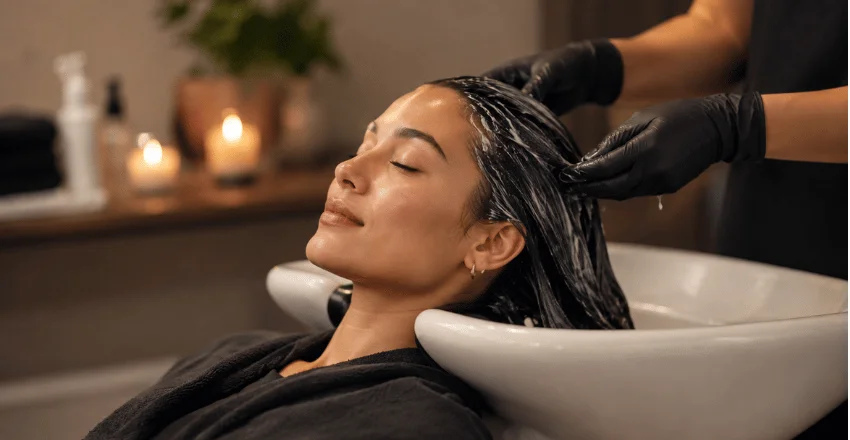
Coconut oil is the one cupboard ingredient with a genuine claim. Its small, straight molecule slips between the cuticle scales instead of sitting on top, which is why it is used as a pre-wash oil rather than a topping. Mayonnaise, egg, and yogurt are a different story. The proteins in them are far too large to enter a strand, so they coat, they smell, and they rinse away.
Olive and avocado oil coat nicely too, and there is nothing wrong with that on dry ends, as long as you expect surface shine rather than repair. Honey pulls in humidity, which helps in a dry winter and works against you in a humid August.
The bottom line
Pick moisture as your default, keep a protein formula on the shelf for the weeks your hair feels stretchy, and run one session a week from the mid-lengths down. Time it with a kitchen timer, rinse it out cool, and give it a month before you judge. Do that with the $13 jar before you spend $75.
Hair mask FAQ
Indirectly, yes. Too much protein makes strands stiff and brittle, and too much moisture, or long overnight soaks, leaves them soft and stretchy. Both come from repeating one type instead of reading what your hair is telling you.
After a moisture formula, you rarely need to, since it already does the conditioner’s job. After a protein or bond formula, a short rinse-out conditioner is worth it for detangling.
In practice, the two words are used interchangeably on packaging. Both mean a thicker, longer-dwelling version of your rinse-out conditioner. Read the ingredient order rather than the front label.
Yes, and fine hair often prefers it that way. Applied to dry hair before shampooing, an oil-rich formula softens the ends without leaving the roots heavy.
Judge on day three, not in the shower. Everything feels good wet. Look for ends that still bend rather than snap, less frizz on a humid morning, and a brush that pulls through without catching.