


Order a Thai iced tea, and you get a tall orange glass, sweet and creamy and colder than anything else on the menu. It looks like dessert. So does Thai tea have caffeine, or is it a safe late order? It carries caffeine, and the amount lands closer to a mug of tea than to a cup of coffee.
Here is the part the recipe blogs skip—the milligrams. A 16 fluid ounce Thai iced tea from a boba shop carries roughly 45 to 95 mg of caffeine. An 8 fluid ounce glass poured at home lands nearer 25 to 50 mg. So one large cup sits between a mug of black tea and a small drip coffee. Estimated caffeine by serving size
| Serving | Estimated caffeine | What drives it |
|---|---|---|
| 8 fl oz, poured at home | 25 to 50 mg | Half the glass is ice and milk |
| 12 fl oz, small shop cup | 35 to 70 mg | Standard concentrate, heavy ice |
| 16 fl oz, standard boba size | 45 to 95 mg | Brew strength varies by shop |
| 24 fl oz, large | 70 to 135 mg | More liquid, same ratio |
| 8 fl oz undiluted concentrate | 90 to 140 mg | No ice, no milk, full strength |
TL;DR: the quick version, if you only read one box.
- It has caffeine, because the base is black tea leaf, not an herb.
- A large shop cup runs about 45 to 95 mg, roughly a third of a same-size drip coffee.
- The orange color comes from dye, and dye has nothing to do with strength.
- Sugar, not caffeine, is the number worth watching in a sweet glass.
Does Thai Tea Have Caffeine? What Sits in the Glass
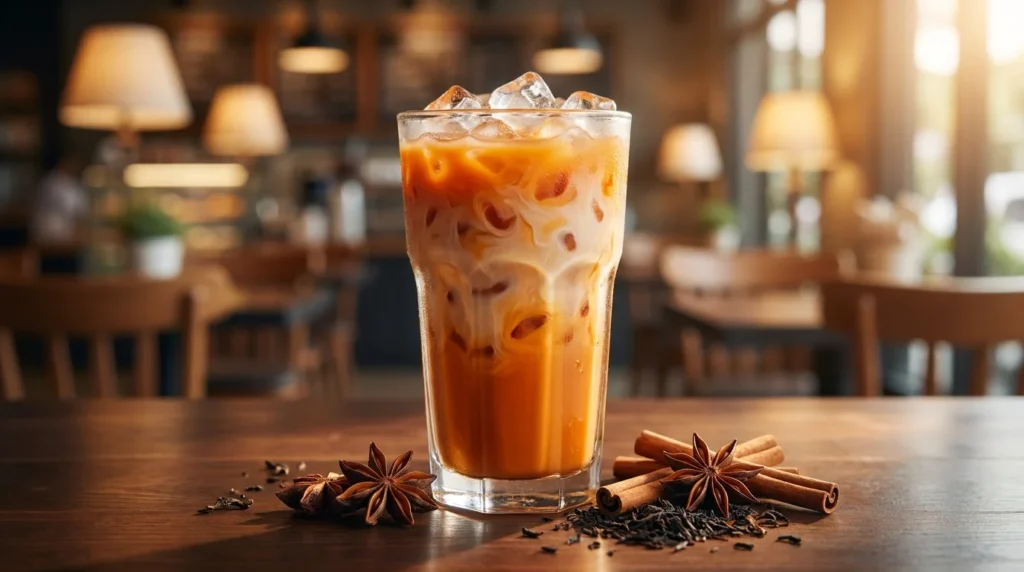
The drink starts as strong black tea. Most mixes use Ceylon leaf, and some use bai miang, a landrace Assam grown in northern Thailand. Cooks steep it hard, sweeten it with sugar and condensed milk, then float evaporated milk over the top. Black tea leaf carries caffeine, so the glass in front of you does too.No herbal shortcut hides in there. Star anise, vanilla and cardamom turn up in plenty of American recipes, and none of them touch the leaf underneath. Any truly ccaffeine-freeversion would have to start with something that is not a tea plant at all.
You will find it poured almost everywhere now. Thai restaurants, boba counters, and food halls all carry it, and sweet drinks earn their menu space on margin, the same math running through this Wingstop franchise cost breakdown. Wider availability means wider variation in what lands in your cup.
Working Out the Milligrams, Cup by Cup
Does Thai tea have caffeine? Start from a federal baseline. The FDA puts a 12 fluid ounce serving of brewed black tea at 71 mg of caffeine, which works out to near 6 mg per fluid ounce at ordinary strength. Nobody brews this at ordinary strength. Home recipes steep 2 tablespoons of tea mix in 2 cups of water for ten minutes, which is three teaspoons of leaf per cup. Loose black tea normally goes in at one teaspoon per cup. The pot therefore starts at about triple concentration.
Then your glass cuts it straight back down. Ice takes a third to a half of a shop cup, and the condensed and evaporated milk take another slice. What reaches your mouth per fluid ounce ends up close to an ordinary cup of black tea. Three things move the final number:
- Scoops of mix per cup of water, which shops rarely measure the same way twice
- How long the leaf sits in the hot water before it comes out
- How much of your cup is ice and dairy rather than tea
Ranges beat single numbers here for a reason. According to MedlinePlus, the consumer health service of the National Library of Medicine, an 8 fluid ounce cup of tea can hold anywhere from 14 to 60 mg. That is a fourfold spread on plain tea. Any page quoting one exact figure for a hand-poured, hand-iced drink is guessing and rounding.
Thai Tea vs Coffee, Green Tea and Cola
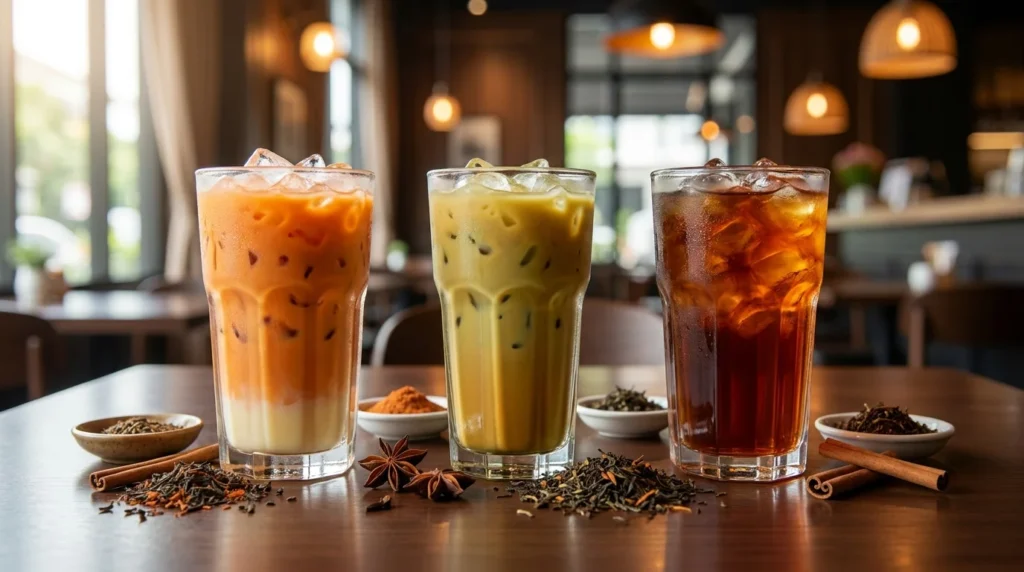
Same cup size, five drinks, one table. Federal figures where they exist, our working estimate where they do not. Caffeine per 12 fluid ounce serving
| Drink | Caffeine | Source of the figure |
|---|---|---|
| Brewed coffee | 113 to 247 mg | FDA |
| Black tea | 71 mg | FDA |
| Thai iced tea | 35 to 70 mg | Estimated here from the FDA baseline |
| Green tea | 37 mg | FDA |
| Cola | 35 to 45 mg | MedlinePlus |
Coffee wins comfortably. A large sweet tea and a small black coffee are in the same neighborhood, which surprises people who assume the creamy one must be gentler.
The Orange Color Is Food Coloring, Not Caffeine
That glowing orange is dye. Commercial mixes include added food coloring, which is why the drink looks nothing like the brown liquid you would get from the same leaf without it. Buy an uncolored mix and brew it identically, and the caffeine stays exactly where it was.
Color persuades us the way packaging does. A vivid drink reads as strong, a pale one reads as weak, and neither impression survives contact with a measurement. Consumer claims lean on that instinct constantly, and it is the same instinct behind the marketing around what pheromone perfume claims to do. Believing a thing works changes the experience of it. It does not change the chemistry.
Green, Red and Gold Mixes Change Your Cup
Walk into an Asian grocery and the shelf offers several versions, not one.
- Original orange mix: black tea with coloring, the standard cha yen, and the basis for every number above.
- Green mix, cha keow: green tea leaf instead of black. Expect less caffeine, nearer the 37 mg per 12 fluid ounces the FDA lists for green tea, though the milk and sugar stay the same.
- Red gold or uncolored mix: the same black tea without the dye. The color goes, the caffeine does not.
Ordering Out: Boba Shops, Thai Restaurants and Cans
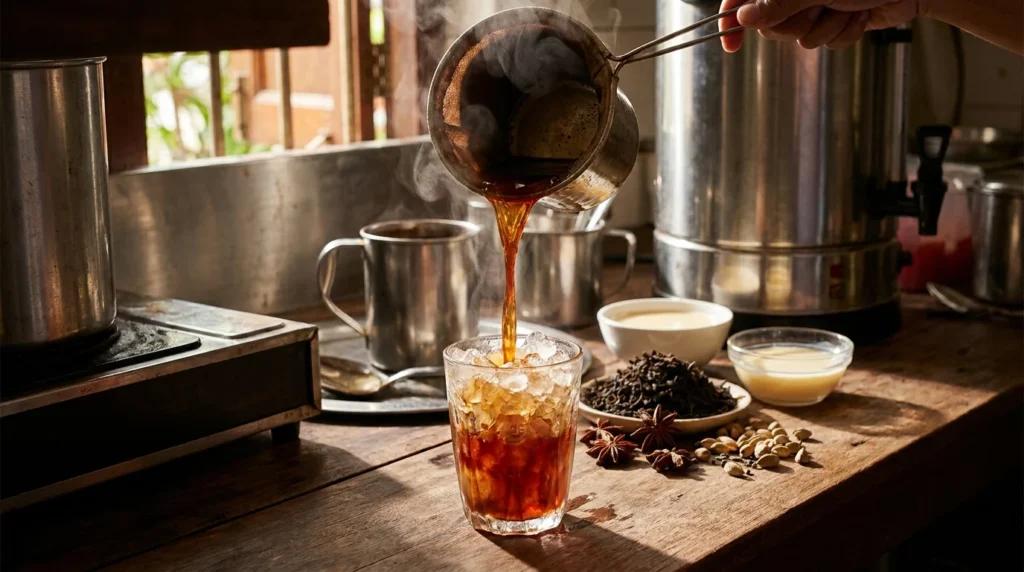
Does Thai tea have caffeine? Shops brew a batch of concentrate in the morning and pour from it all day. Strength drifts as the batch ages and as staff tops it up, so two cups from the same counter on the same afternoon are not identical. That is the biggest reason a printed number would mislead.
Tapioca pearls add chew, sugar and calories, and zero caffeine. Watch instead for shops that spike the drink with a shot of espresso, which quietly adds another 60 to 80 mg to a cup you thought you understood. Expect to pay around $5 to $7 for a 16-fluid-ounce cup in most US cities, and a dollar more with pearls. Canned and bottled versions behave differently again. Manufacturers brew to a fixed recipe, so the strength stays consistent, and the label rarely states a caffeine figure, since federal labeling rules do not require one.
How to Take the Caffeine Down at Home
Home brewing puts you in control, starting with the water. Use cold water from the tap rather than the hot side, and if the tap itself is overdue, choosing a new kitchen faucet is a separate weekend job. Then work down the list.
- Halve the mix. One tablespoon per 2 cups of water instead of two, which cuts the caffeine close to proportionally.
- Pull the leaf at four minutes rather than ten. Shorter contact time means less extraction.
- Pour over more ice and add more milk, so each sip carries less tea.
- Re-steep the used leaf once. The second batch is weaker, though it is never caffeine-free, since plenty of caffeine survives the first pour.
- Use decaf black tea with the same spices and a drop of coloring. You keep the flavor and lose most of the stimulant.
- Brew rooibos with condensed milk for a glass with none at all. The taste shifts, and some people prefer it.
How Much Is Too Much, and When to Stop
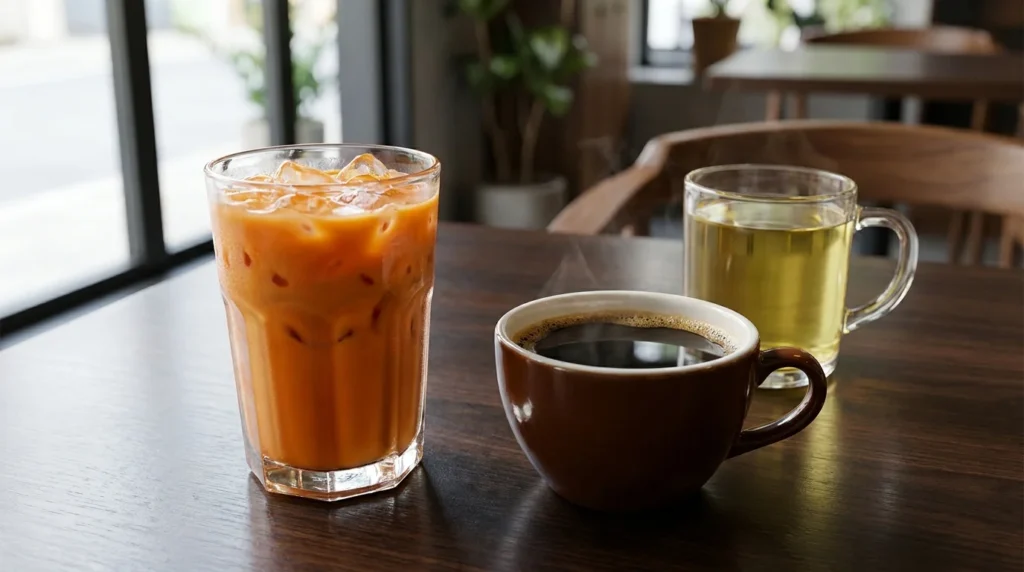
According to the FDA, 400 mg a day is the amount not generally associated with negative effects for most healthy adults. At 45 to 95 mg per large cup, you would need four to eight of them to get there. Sugar becomes the real problem first, at roughly 24 grams in a typical 8-fluid-ounce glass, close to six teaspoons.
Pregnancy is a different calculation. The FDA recommends talking to your health care provider about whether you need to limit caffeine if you are pregnant, trying to become pregnant, or breastfeeding. Have that conversation before you start counting cups. Sleep is the other one. Caffeine keeps working for hours after the ice melts, so a 4 p.m. order can still be in your system at bedtime. Move your last glass to before mid-afternoon for a week and judge the difference yourself.
So, Should You Order One?
Yes, with your eyes open. This is a moderate caffeine drink hiding inside a sugary one, and the sweetness deserves more attention than the stimulant. Next time you are at the counter, ask two questions: what size the cup actually is, and whether the shop will make it half sweet. Order the small, drink it before three o’clock, and see how the evening goes. If you brew at home, weigh your mix once with a kitchen scale, and you will know your own number better than any label could tell you.
FAQs
Yes. Ice dilutes the drink but removes nothing. A tall iced serving usually holds more total caffeine than a small hot one, simply because there is more liquid in the cup.
No. A 12-fluid-ounce brewed coffee runs 113 to 247 mg by the FDA’s figures, against roughly 35 to 70 mg for the same volume of this drink. You would need two or three glasses to match one coffee.
Not off the shelf in most stores. The workaround is decaf black tea brewed with the same spices and milk, or rooibos if you want none at all.
No. Tapioca pearls are starch and sugar. They add texture and calories, nothing that acts on you.
Usually, yes. Green leaf carries less caffeine than black, and the FDA puts green tea at 37 mg per 12 fluid ounces, compared to 71 mg for black.