


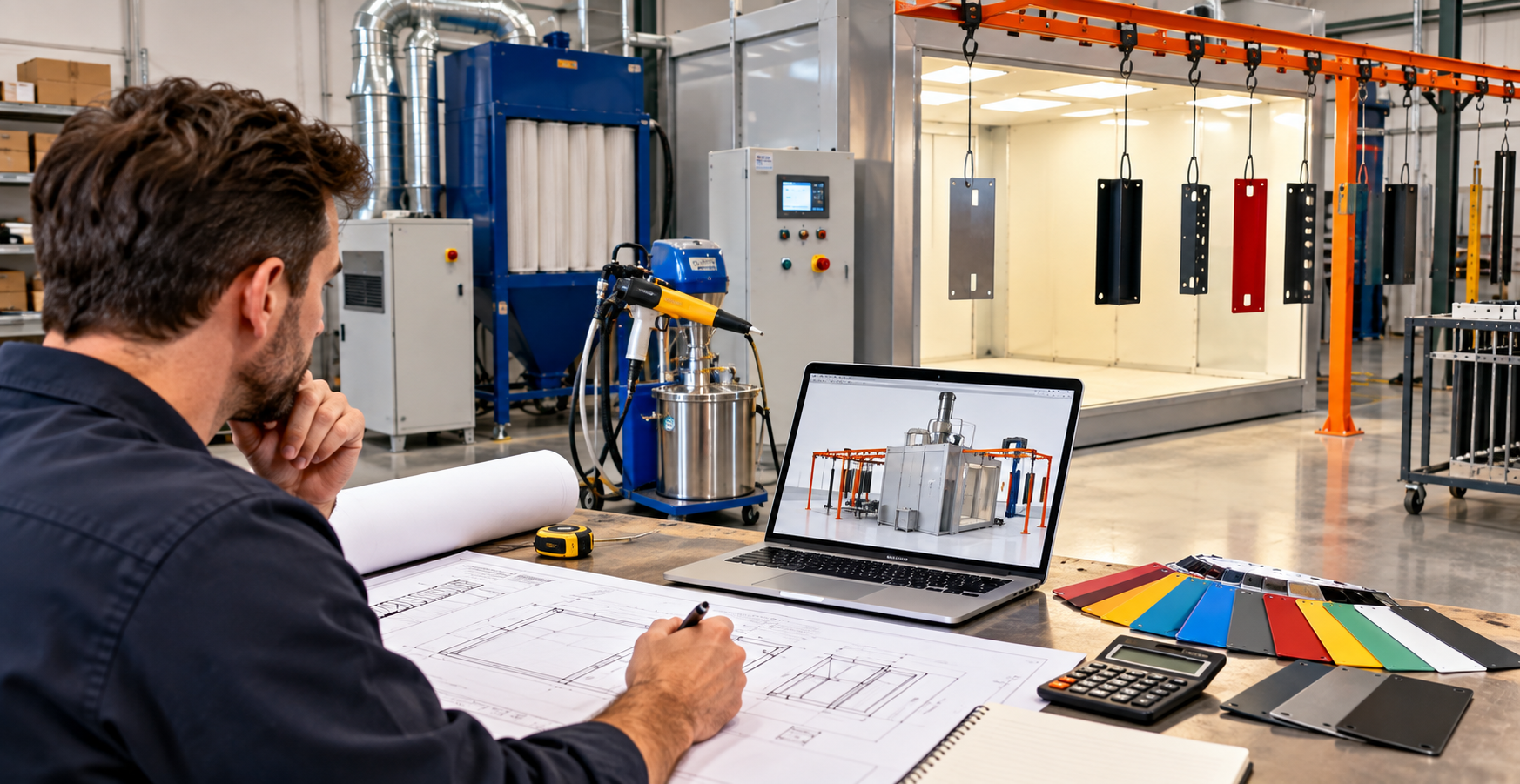
Planning a powder coating system starts well before equipment reaches the shop floor. Manufacturers make stronger decisions when they define part size, volume, curing demands, utilities, and space before comparing models. Careful preparation lowers the chance of installing a line that works today but becomes restrictive as orders or part sizes increase.
Define the Daily Workload Before Comparing Equipment
Production records give a shop the clearest starting point because equipment capacity should reflect the work that moves through the facility most often. Teams can document common part dimensions, metal thickness, rack weight, color frequency, daily quantities, and expected shifts before reviewing Reliant powder coating equipment for sale, giving the business a clearer basis for comparing systems.
Historical job data can also show whether volume stays steady or rises sharply during certain seasons, contracts, or product launches. Accurate numbers help manufacturers avoid paying for unused capacity while allowing Reliant powder coating equipment enough headroom to support realistic growth, new customers, and heavier production without forcing another major purchase.
Match Curing Capacity to the Metal, Not Just the Part Size
Physical fit matters, but an oven large enough to hold a component may still be undersized for the heat demand created by dense steel or heavily loaded racks. Configured Reliant powder coating ovens can support dependable production when chamber volume, airflow, burner capacity, insulation, and recovery are selected around actual thermal mass rather than dimensions alone.
Thermal planning should also consider how quickly fresh loads enter the chamber during a normal shift. Properly sized powder coating ovens help businesses keep curing from becoming the slowest stage, making batch timing easier to predict while reducing unnecessary dwell time caused by uncertainty about part-metal temperature.
How Much Floor Space Does the Complete Package Really Need?
Floor planning should include more than the footprint shown on an equipment drawing. Operators need space for booth and oven doors, racks, carts, filter service, powder storage, cooling, inspection, control panels, and safe maintenance access around a Reliant powder coating equipment package.
Workflow drawings often expose problems before installation, such as an oven door opening into an aisle or a loaded cart needing more turning room than the layout provides. Smart placement helps a business shorten transfers, preserve fabrication space, and keep employees from working around equipment that fits the building but interferes with production.
Confirm Power, Gas, Air, and Ventilation Before Ordering
Electrical service, fuel supply, compressed air, ventilation, and exhaust requirements can change both equipment selection and project cost. Facilities considering a Reliant industrial powder coating oven should verify available gas capacity, electrical service, clearances, and exhaust needs early so the heating system and circulation equipment can operate without requiring last-minute building changes.
Utility planning reduces the risk of equipment arriving before the site is ready. Early coordination with electricians, gas contractors, and other qualified trades gives businesses time to complete panel upgrades, piping, or ventilation work before Reliant powder coating systems are installed, helping the line reach production with fewer delays.
Design Material Handling Around the Actual Parts
Heavy, long, or awkward components can slow an otherwise capable finishing line if employees must repeatedly lift, rotate, or reposition them between stages. Racks, carts, floor tracks, overhead rails, and loading clearances should be planned alongside booth and oven dimensions so parts follow a straightforward path from preparation through application, curing, cooling, and inspection.
Movement becomes more important as daily volume rises because a few extra handling minutes can multiply across dozens of loads. Efficient flow helps a business get more value from a Reliant powder coating oven for sale by reducing idle chamber time, protecting uncured surfaces from accidental contact, and keeping labor focused on production instead of unnecessary transfers.
Build Process Control Into the Package From the Beginning
Repeatable finishing depends on knowing what operators can measure and control during spraying and curing. Temperature monitoring, airflow adjustment, documented gun settings, grounding checks, and clear operating procedures help Reliant powder coating systems support consistent production across different employees, shifts, colors, and part configurations.
Quality records give supervisors useful evidence when coating performance changes unexpectedly. Logged part temperatures, cure times, rack arrangements, filter changes, and maintenance notes help businesses identify patterns faster, reduce rework, and make better scheduling decisions instead of relying on memory or extending process times as a precaution.
Leave Service Access and Expansion Room in the Layout
Maintenance access should be planned before permanent equipment positions are finalized because filters, fans, burners, probes, motors, seals, and control panels all require routine attention. Adequate clearance around Reliant powder curing ovens makes inspections and component replacement easier, helping businesses preserve heating performance while reducing the chance that a minor service task turns into a lengthy shutdown.
Future production deserves space in the same layout conversation, even if the first installation is sized for demand. Reliant Finishing Systems gives manufacturers access to powder coating ovens built for the realities of industrial curing, from changing thermal loads to demanding production schedules. Selecting the right oven early can give a finishing line the heating capacity, recovery performance, and usable chamber space it needs to handle current work while staying ready for larger or heavier parts later.