


In St. Louis, Missouri, pest prevention is most effective when it becomes part of regular home care rather than a response to a surprise problem. From spring rain and humid summer evenings to fall leaf buildup and winter indoor shelter-seeking, each season changes the conditions around a home. Homeowners researching pest control in St. Louis can find local service information from Pointe Pest Control, a provider whose St. Louis page explains residential inspections, customized treatment plans, and ongoing seasonal options for Eastern Missouri, Western Illinois, O’Fallon, and surrounding communities.
The goal is not to make a home sterile or to spray at every insect. It is to make food, water, shelter, and entry points harder for pests to find. A practical routine of cleaning, repair, monitoring, and targeted action can help St. Louis homeowners spot small concerns before they become more complicated.
Why Pest Prevention Works Better Than Last-Minute Treatment
Pests generally need the same basic resources people do: food, moisture, warmth, and a protected place to stay. A drip below a sink, crumbs beneath an appliance, a torn screen, or dense vegetation against siding can create an opportunity. Addressing those conditions early is often simpler than reacting after pests have settled in.
This approach is commonly called integrated pest management. It combines sanitation, exclusion, monitoring, habitat changes, and carefully selected treatments as needed. In other words, a product can be one tool, but it should not be the entire plan.
Spring: Inspect the Home After Winter
Spring is a useful reset after freeze-thaw cycles, wind, and wet weather. Walk slowly around the exterior, especially where utilities, masonry, porches, and landscaping meet the structure. Look for openings that were easy to miss during winter.
- Check window screens, door sweeps, foundation vents, and weatherstripping for damage.
- Seal small gaps around pipes, wires, and utility penetrations with appropriate materials.
- Watch for ants near kitchens, bathrooms, windows, and exterior utility lines.
- Inspect basements, crawl spaces, and attics for moisture, droppings, or staining.
- Clean gutters and make sure downspouts carry water away from the foundation.
- Trim branches and plants that rest against siding, rooflines, or window areas.
- Keep firewood raised off the ground and stored away from the home.
Summer: Reduce Food, Water, and Outdoor Shelter
Summer gatherings, open doors, grilling, and frequent rain can create more opportunities for mosquitoes, flies, ants, wasps, and other pests. A few short outdoor cleanup habits can make patios, garages, sheds, and play areas easier to enjoy.
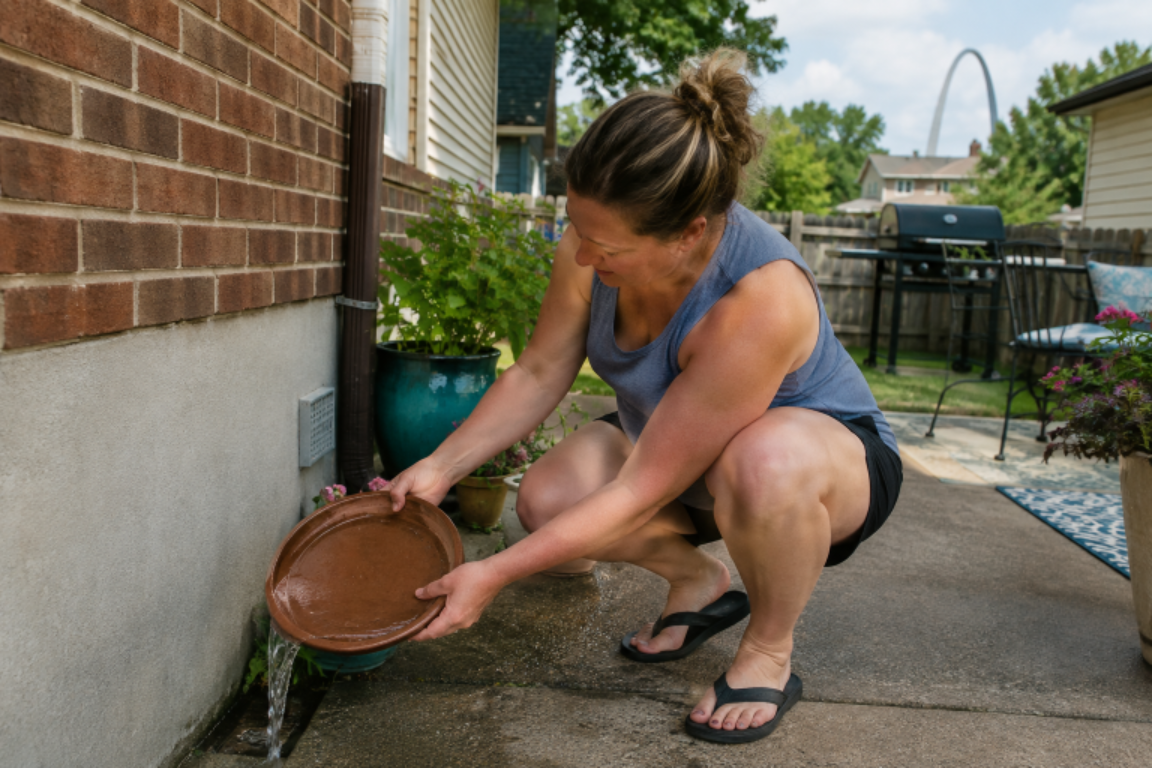
- Empty water from buckets, toys, planters, tarps, and flowerpot saucers.
- Refresh outdoor pet water often and clean birdbaths regularly.
- Keep trash lids closed and rinse food containers before placing them in recycling.
- Clean food and drink spills from patios after cookouts or parties.
- Mow grass as needed and remove deep leaf piles or clutter near the foundation.
- Inspect sheds, grills, play equipment, and garage corners before using them.
Mosquito awareness deserves special attention during warm weather in St. Louis. Repairing screens, removing water-holding containers, and using repellents according to their labels are reasonable layers of protection, and the CDC recommends checking and emptying containers that collect water at least weekly.
Fall: Stop Pests Before They Move Indoors
Fall is an important transition season. As temperatures change, small gaps around a home can become convenient access points for rodents, spiders, stink bugs, and other overwintering pests. Prioritize exclusion before colder conditions make repairs less convenient.
- Repair loose mortar, damaged siding, cracked caulk, and worn door sweeps.
- Check attic vents, chimney screens, basement windows, and garage-door seals.
- Move cardboard boxes off the basement floors and leave space between stored items and walls.
- Rake leaves, branches, and debris away from the foundation.
- Inspect firewood outdoors, rather than carrying it inside far in advance of use.
- Keep an eye out for gnawing, droppings, webbing, and insect activity near storage areas.
Winter: Focus on Indoor Warning Signs
Cold weather may limit outdoor activity, but a heated home can still offer shelter, water, and food. Winter is a good time to examine the spaces that get less attention during the rest of the year, including utility rooms, appliance voids, pantry corners, garages, and unfinished storage areas.
- Look for droppings, gnaw marks, nesting material, shed skins, or unusual odors.
- Store pantry foods and pet food in durable, sealed containers.
- Fix plumbing leaks promptly and dry damp flooring or cabinetry.
- Vacuum baseboards, corners, closets, and under stored items.
- Reduce clutter so new signs of activity are easier to notice.
A Simple Monthly Pest Prevention Checklist
- Walk around the exterior and check for cracks, loose screens, standing water, and clutter.
- Inspect food storage, recycling, trash cans, and pet feeding areas.
- Look for droppings, nests, wings, shed skins, or damaged wood.
- Check under sinks and near appliances for leaks or moisture.
- Record what you saw, where it appeared, and the date.
- Take a clear photo before using a product or arranging an inspection.
When DIY Pest Control Makes Sense
A minor, identified issue may respond to cleaning, sealing, trapping, or removing the condition that attracted the pest. Start with the least disruptive option that fits the situation. If a product is appropriate, choose one labeled for the specific pest and location, follow every label instruction, and keep children, pets, food, and food-contact surfaces protected as directed. Never mix products or use an outdoor product indoors unless its label specifically permits it.
When to Call a Pest Professional
Professional help may be the better choice when activity continues after basic repairs and cleaning, when the pest cannot be confidently identified, or when the issue involves a difficult-to-reach area. An inspection is also sensible for possible termites, carpenter ants, structural wood damage, rodents in walls or ceilings, bed bugs, or stinging-insect nests near entryways and high-use areas.
How to Choose a Local Pest Control Provider
Ask prospective providers what pest they believe is present, how they plan to address it, what preparation is needed, whether follow-up visits are included, and what the total cost covers. Request a written plan, confirm licensing and training, and compare estimates when practical. Clear answers are more useful than vague promises or pressure to make an immediate decision.
Common Questions About Year-Round Pest Prevention
Do homes need pest prevention in every season?
Every property has different needs, but every season offers a reason to inspect. Year-round prevention does not mean identical treatment each month. It means adapting home maintenance to current conditions and monitoring evolving risks.
What attracts pests to a St. Louis home?
Food residue, standing water, plumbing leaks, clutter, damaged screens, foundation gaps, dense vegetation, and firewood stored too close to the house are common attractants or access aids.
Are quarterly treatments always necessary?
No single schedule fits every home. Service frequency can depend on the property’s condition, past pest activity, surrounding areas, the pest involved, and the chosen treatment plan.
Conclusion
A comfortable St. Louis home does not need to be perfect to be well protected. Consistent cleaning, dry surroundings, sealed entry points, thoughtful storage, and seasonal inspections can reduce many common pest opportunities. When warning signs point to a larger or uncertain issue, timely professional guidance can help homeowners choose the next step with confidence.