


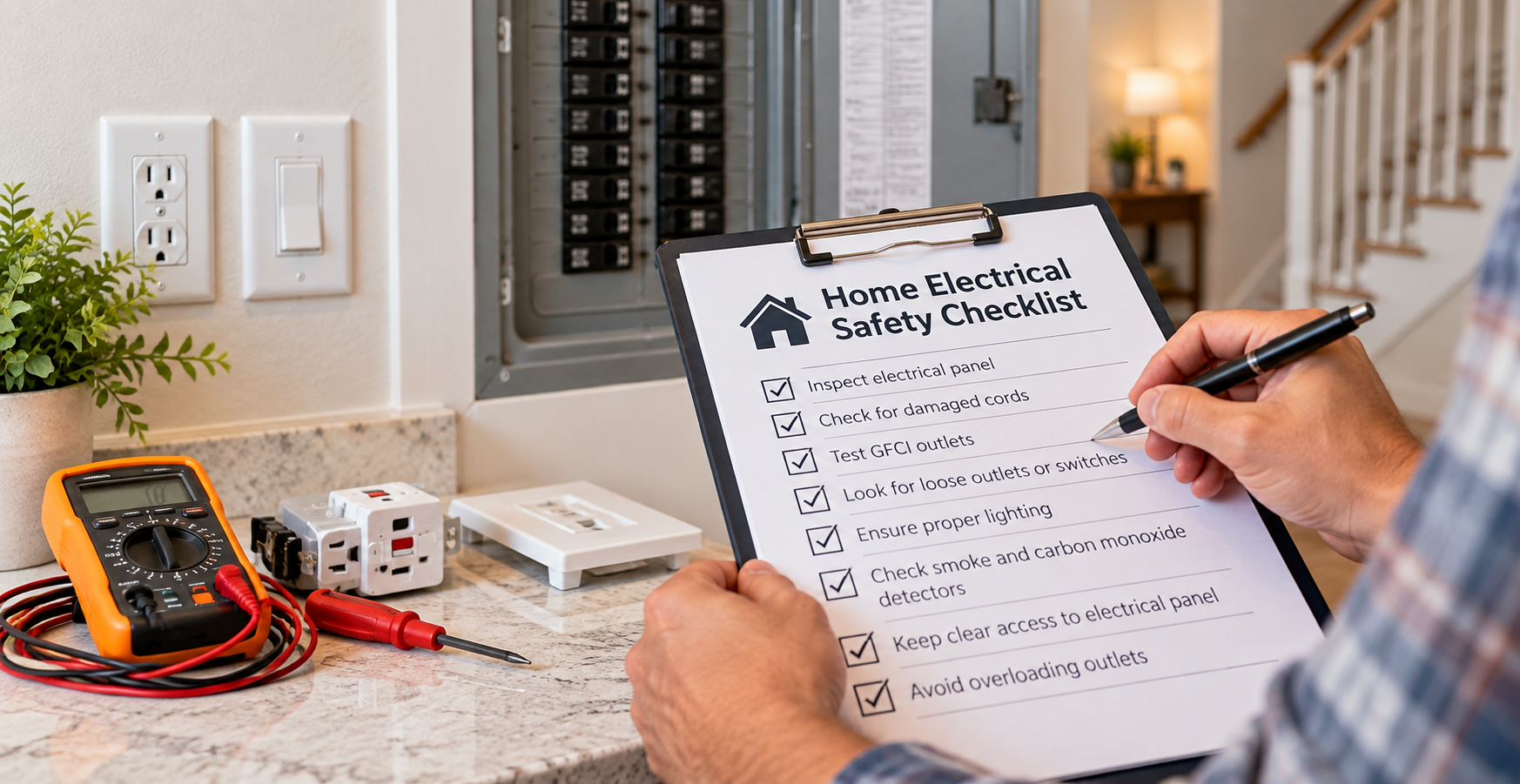
Most home electrical problems do not begin with a dramatic failure. A loose outlet, damaged cord, overloaded power strip, or breaker that trips occasionally can be an early warning that deserves attention. When a concern involves wiring, heat, or repeated power issues, consulting an electrician can help identify the cause without turning a small issue into a larger hazard.
A routine visual walkthrough gives homeowners a practical way to notice changes in their electrical system. It is not a substitute for a professional inspection, and it should never involve removing outlet covers, opening a panel, or touching exposed wiring. The goal is simple: spot warning signs early, stop using unsafe equipment, and document anything unusual.
Why Home Electrical Checks Matter
Electrical faults can create shock, fire, and equipment-damage risks, particularly when heat, damaged insulation, or overloaded circuits are involved. The home electrical safety checklist from the U.S. Consumer Product Safety Commission encourages homeowners to identify potential problems before they become emergencies.
Pay attention to changes rather than assuming they are normal. A lamp that begins flickering, an outlet that no longer holds a plug, or a breaker that trips after the same appliance is used can provide useful clues. Record where and when the issue occurs, then avoid repeated resets or makeshift repairs.
Monthly Electrical Safety Checklist
A short monthly walkthrough is manageable for most households. For questions about upgrades, capacity, or repairs that go beyond visible checks, professional electrical services may be appropriate.
- Test smoke alarms and carbon monoxide alarms according to their instructions.
- Use the test buttons on GFCI-protected outlets where installed, then reset them if they operate normally.
- Look for outlets or switches that are cracked, loose, discolored, or warm.
- Inspect extension cords and power strips for fraying, flattened sections, loose plugs, or damaged insulation.
- Check that high-wattage appliances are not crowded onto one outlet or strip.
- Keep the electrical panel accessible and free of stored items.
- Write down flickering lights, buzzing sounds, and recurring breaker trips.
Warning Signs That Need Attention
Some symptoms call for immediate caution. Stop using an outlet, appliance, or cord if you notice smoke, sparking, a burning odor, melted plastic, or unusual heat. If it is safe to do so, turn off the power at the breaker. Do not use water on an electrical fire, and call emergency services if there is an active fire or immediate danger.
- Lights that dim or flicker without an obvious reason
- Buzzing, crackling, or sizzling near switches, outlets, or fixtures
- Scorch marks, loose covers, or melted plug faces
- Breakers that trip repeatedly after being reset
- Shocks or tingling sensations when touching an appliance
Inspecting Outlets, Switches, and Cords
Stay with visible, hands-off observations. Check that cover plates are intact and that plugs fit securely. For example, an outlet that shifts when a plug is inserted, or one that lets the plug fall out, should not be ignored. Keep cords away from water, rugs, heat sources, sharp edges, and doorways where they can be pinched or damaged.
Simple Checks To Include
- Replace damaged cords instead of relying on tape as a permanent repair.
- Use extension cords only for temporary needs, not as permanent wiring.
- Do not run cords under carpeting or heavy furniture.
- Use outdoor-rated cords only for outdoor equipment.
Checking the Electrical Panel
The electrical panel distributes power through breakers that are designed to interrupt electricity during an overload or fault. Keep its path clear, make sure labels are readable, and note rust, moisture, discoloration, or unusual warmth around the enclosure. Never remove the panel cover, force a breaker to remain on, or repeatedly reset a breaker that trips.
Preparing for Modern Electrical Demand
Homes in 2026 may support more electrical loads than they did a decade ago. Electric-vehicle charging, heat pumps, induction ranges, home-office equipment, battery systems, and connected devices can change how power is used throughout the day. Before adding major equipment, consider whether the service capacity, panel space, wiring, and circuit protection are suitable for the full load.
Questions To Ask Before Adding Major Equipment
- Does the home have enough electrical capacity for the new load?
- Will the equipment need a dedicated circuit?
- Could simultaneous appliance use overload part of the system?
- Are permits or inspections required locally?
Storm and Power Outage Safety
Prepare before severe weather arrives. Unplug sensitive electronics when it is safe, use flashlights instead of candles during outages, and stay well away from downed power lines. The power outage safety guidance from the American Red Cross also advises keeping generators outdoors and away from windows, never connecting one to a wall outlet, and having flood-affected electrical equipment inspected before use.
What Homeowners Can Check Safely
Homeowners can test safety devices as directed, replace alarm batteries, inspect visible cords, read breaker labels, and keep the panel area clear. Electrical work belongs to a different category. Opening a panel, replacing breakers, adding outlets, changing wiring, or investigating shocks and burning smells should be left to a qualified professional.
When to Call a Qualified Electrician
Arrange a professional evaluation for heat, smoke, exposed wiring, water damage, repeated breaker trips, or any problem with an uncertain cause. Before work begins, ask whether permits are needed, what the written estimate includes, whether damaged materials will be replaced, and how the finished work will be tested.
Common Questions About Home Electrical Safety
How Often Should Electrical Safety Checks Be Done?
A brief monthly review is useful, with a more thorough assessment after remodeling, storm damage, water intrusion, or moving into an older home.
Why Does a Breaker Keep Tripping?
It may indicate an overloaded circuit, a damaged appliance, a short circuit, or another fault. Do not keep resetting it without finding the cause.
Are Power Strips Safe?
They can be safe within their rated capacity, but avoid connecting multiple strips together or using them for several heat-producing appliances at once.
Should Older Wiring Be Replaced?
Age alone is not enough to decide. Condition, grounding, previous alterations, capacity, and inspection findings are more important.
Final Checklist
Inspect visible components, test safety devices as directed, avoid overloaded circuits, keep the panel accessible, and take heat, odors, shocks, and recurring trips seriously. Addressing a warning sign early is usually safer and less disruptive than waiting for a failure.