


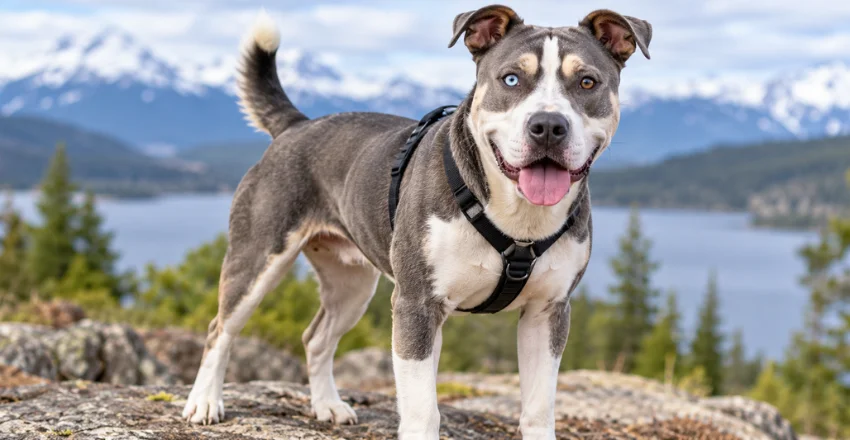
A pitbull husky mix, often called a “pitsky,” combines the traits of a Husky with those of a pit bull-type parent. That combination can produce an athletic, affectionate dog with significant exercise and training needs. Because this is not a standardized breed, adult size, coat, behavior, and care needs can vary considerably.
A Pitsky is a mixed dog combining Husky ancestry with a pit bull-type parent. Most are athletic, people-focused, and energetic, but coat, size, drive, and sociability can vary widely. U.S. owners should plan for consistent training, secure containment, regular grooming, and careful checks of housing or local breed rules.
| Pitbull Husky Mix | What owners should expect |
|---|---|
| Common name | Pitsky |
| Parentage | Husky plus a pit bull-type dog |
| Typical size | Medium to large |
| Common reported weight | About 30–80 pounds |
| Common reported height | About 16–25 inches |
| Coat | Short coat or dense double coat |
| Energy | Usually high |
| Training | Early, consistent training is recommended. |
| Shedding | Low-to-heavy, depending on coat |
| Common reported lifespan | About 12–16 years |
| Best fit | Active households with time for training |
| U.S. consideration | Check housing, insurance, and local rules. |
Key Takeaways
- Pitskies vary more than standardized purebred dogs because their parentage differs.
- Most need substantial daily activity, mental work, and consistent training.
- Coat type can range from short and smooth to a thick double coat.
- Health screening should match the actual breeds represented in the parents.
- U.S. owners should verify housing and local breed policies before adopting.
What Is a Pitbull Husky Mix?
The name usually refers to an American Pit Bull Terrier crossed with a Siberian Husky. However, shelter labels may use “pit bull” broadly for several similar-looking breeds and mixes. That makes parent records or reliable DNA testing more useful than appearance alone. Neither appearance nor parent breed guarantees a specific personality.
Husky ancestry can add stamina, independence, vocal behavior, and a strong urge to run. Pit bull-type ancestry may contribute strength, athleticism, close human attachment, and terrier intensity.
How Big Does a Pitsky Get?
Most Pitskies land in the medium-to-large range, but a puppy’s adult size is hard to predict. Recent breed guides commonly report about 30 to 80 pounds and roughly 16 to 25 inches tall. Those figures are estimates because no formal breed standard governs this cross. Parent size gives a better clue than color, eye shade, or paw size. UKC lists desirable American Pit Bull Terrier weights around 30 to 60 pounds, depending on sex. AKC lists Siberian Huskies at 35 to 60 pounds, with males usually larger.
What Can a Pitsky Look Like?
One dog may have a short, smooth coat and broad head. Another may inherit a dense double coat, erect ears, and stronger Husky markings. Blue eyes can occur, but brown eyes and mixed eye colors are also possible. Body shape can also differ considerably between littermates. Some dogs look lean and Husky-like, while others develop a wider chest and heavier musculature. Appearance alone cannot reliably identify every breed in a mixed dog.
Temperament and Family Life
Expect energy before expecting any fixed temperament label. Many Pitskies are social and affectionate, yet individual dogs can differ in prey drive and dog sociability. Early experiences, health, training, and daily management also shape behavior. Families with children need the same safeguards used with any strong, active dog.
Supervise young children, teach respectful handling, and give the dog a quiet retreat. Do not assume a friendly puppy will automatically tolerate rough play as an adult. Do not label a mixed dog dangerous or safe based on appearance alone. The ASPCA recommends evaluating dogs as individuals rather than judging behavior solely by breed labels. Owners should respond to actual behavior and seek qualified help when problems appear.
Exercise and Training Needs
Most healthy adults need more than a brief potty walk. Plan daily physical activity plus sniffing, problem-solving, and short training sessions. Adjust intensity for age, conditioning, weather, and veterinary advice. Start recall, leash skills, door manners, and impulse control early. Husky experts specifically warn about running, digging, and escape behavior, so secure containment matters. Positive reinforcement and consistent routines can make training clearer and easier for the dog.
Hot weather calls for extra caution, especially for dogs with dense coats. Exercise earlier or later, provide water, and never leave a dog inside a parked car. Mindspaper also offers practical guidance for handling unexpected problems during dog travel.
Grooming and Shedding
Grooming depends heavily on which coat your dog inherits. A short coat may need simple weekly brushing, while a double coat often sheds much more. AKC recommends weekly brushing for Siberian Huskies, with heavier shedding during seasonal coat changes. Bathing frequency should reflect activity, skin health, and how dirty the coat becomes.
Nails also need regular checks, while teeth benefit from consistent dental care. Dogs with heavy undercoats may need more frequent brushing during major shedding periods.
Health Issues and Responsible Screening
A mixed dog can inherit health risks from either side, but inheritance is never guaranteed. Responsible screening should match the actual registered parent breeds, not a generic label. Ask a veterinarian to interpret screening records when parentage or test results are unclear. For Siberian Huskies, the national parent club recommends hip, yearly eye, and specific genetic testing.
Its current guidance includes screening for SPS1 and Siberian Husky Polyneuropathy Type 1. These recommendations apply to breeding stock, not to diagnosing an individual pet. For American Staffordshire Terriers, the parent club recommends hip, cardiac, thyroid, and NCL-A screening. Those recommendations may not match every pit bull-type parent represented in a mixed dog.
Screening should therefore follow the documented parent breed whenever that information is available. Keep your dog lean, active, and up to date on routine veterinary care. Report limping, exercise intolerance, vision changes, seizures, or persistent skin problems promptly. A veterinarian can tailor preventive care to age, weight, environment, and family history.
Feeding and Weight Management
Choose a complete diet appropriate for your dog’s life stage and body condition. Portion needs can change with age, activity, neuter status, and calorie density. Your veterinarian can help set a target weight when growth or weight seems unusual. Highly active dogs may need different calorie amounts from quieter household companions.
Avoid judging portions based only on how much another Pitsky eats. Monitor body condition and adjust feeding with professional guidance when needed.
U.S. Housing, Insurance, and Local Rules
Before adoption, confirm that your lease, homeowners policy, or local rules allow your dog. Some U.S. jurisdictions and housing policies regulate pit bull-type dogs or mixes. Rules vary, so verify the current policy for your exact address before committing. Home setup matters as much as paperwork. Use secure fencing, sturdy gates, durable enrichment, and a safe resting area.
If your dog chews plants, review Mindspaper’s information about snake plant toxicity and safer placement.
Is This Mix Right for Your Home?
This cross can suit an active owner who enjoys training and outdoor activity. It may frustrate someone who wants a low-energy dog with minimal shedding or containment needs. Use the comparison below as a fit test, not a promise about any individual dog.
| A better fit if you… | A harder fit if you… |
|---|---|
| Enjoy daily walks and active play. | Prefer a low-exercise companion |
| Can train consistently | Have little time for training |
| Accept possible heavy shedding. | Need a low-shedding home |
| Have secure containment. | Depend on an unsecured yard |
| Can manage a strong dog | Struggle with leash strength |
| Check housing rules first. | Face strict pet restrictions. |
| Enjoy mental enrichment. | Leave dogs bored for long periods. |
Apartments are not automatically unsuitable for an energetic dog. Exercise, noise, enrichment, and dependable routines often matter more than square footage alone. AKC notes that Siberian Huskies can live in apartments when owners consistently meet their activity needs.
Adopting or Buying a Pitsky
Adult rescue dogs offer one practical advantage because their size and everyday behavior are easier to observe. Puppies carry more uncertainty, especially when parentage or health records are incomplete. Ask shelters about handling, dog interactions, escape attempts, resource guarding, and known medical history.
If buying from a breeder, ask for verifiable health results on both parents. Be wary of sellers emphasizing color or blue eyes while avoiding health documentation. A DNA panel alone should not replace orthopedic, eye, cardiac, or other breed-specific screening. Price varies by location, breeder, age, and rescue organization.
Recent U.S. guides commonly list breeder puppies around $500 to $2,000, while rescue fees are often lower. Budget beyond purchase price for veterinary care, food, training, grooming tools, and secure equipment.
Final Take
A Pitsky can be a rewarding companion for people who want an active, involved dog. Choose the individual dog, verify health information, and build training into everyday life. For more practical pet guidance, browse Mindspaper’s Pets section before planning your next step.
Frequently Asked Questions
How much exercise does a pitbull husky mix need?
Most healthy adults need substantial daily activity, not one short walk. Split exercise across walks, play, sniffing, and training to reduce boredom. Ask your veterinarian about limits for puppies, seniors, or dogs with health issues.
Are Pitskies aggressive?
No breed label can predict an individual dog’s behavior with certainty. Genetics, socialization, learning history, health, fear, and management all matter. Judge the dog in front of you and use qualified behavior help when needed.
Do Pitskies shed a lot?
They can, especially when they inherit the Husky’s double coat. Short-coated dogs may shed less, although they still lose hair throughout the year. Regular brushing makes loose hair easier to manage inside the home.
Can a Pitsky live in an apartment?
Yes, some can live successfully in apartments when their exercise and enrichment needs are met. Noise, alone-time tolerance, and lease restrictions can matter as much as square footage. Secure routines and dependable daily activity are essential in smaller homes.
How long do Pitskies live?
Mixed-breed guides commonly estimate a lifespan of about 12 to 16 years. Individual lifespan depends on genetics, preventive care, accidents, weight, and disease. Treat every published lifespan range as a broad estimate, not a guarantee.
Are Pitskies good family dogs?
Many can be affectionate family companions in active, structured homes. Supervise young children because these dogs can be strong and exuberant. Assess compatibility with other pets individually, especially if prey drive appears high.